



ARTICLE CONTENTSOn this page 6 sections
Art
Performance Objectives
By the end of the lesson, students should be able to:
- explain the meaning of Arts;
- state the types of Arts;
- state the functions of arts;
- produce art works (drawing, painting, pottery, sculpture).
Meaning of Art
Art is the expression of human creativity, imagination, and skill, usually in a visual, auditory, or performing form.
It is a way for people to share their ideas, feelings, and observations about the world around them. Art can be beautiful, thought-provoking, or simply a way to decorate a space. It helps people communicate without using words.
Types of Art
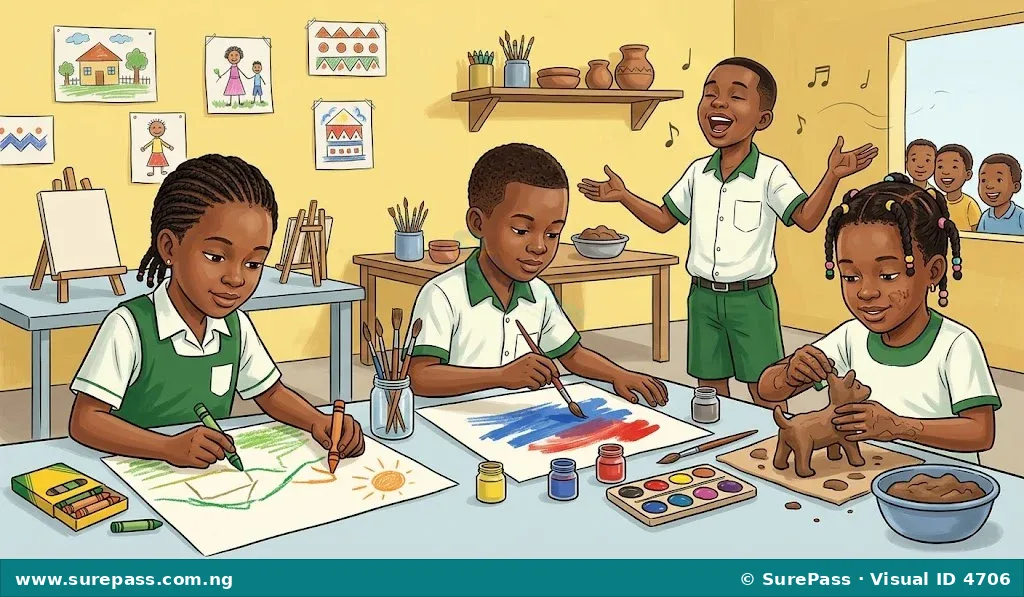
Art can be divided into different types based on how it is created and experienced. The two main types are visual art and non-visual art.
Visual Art
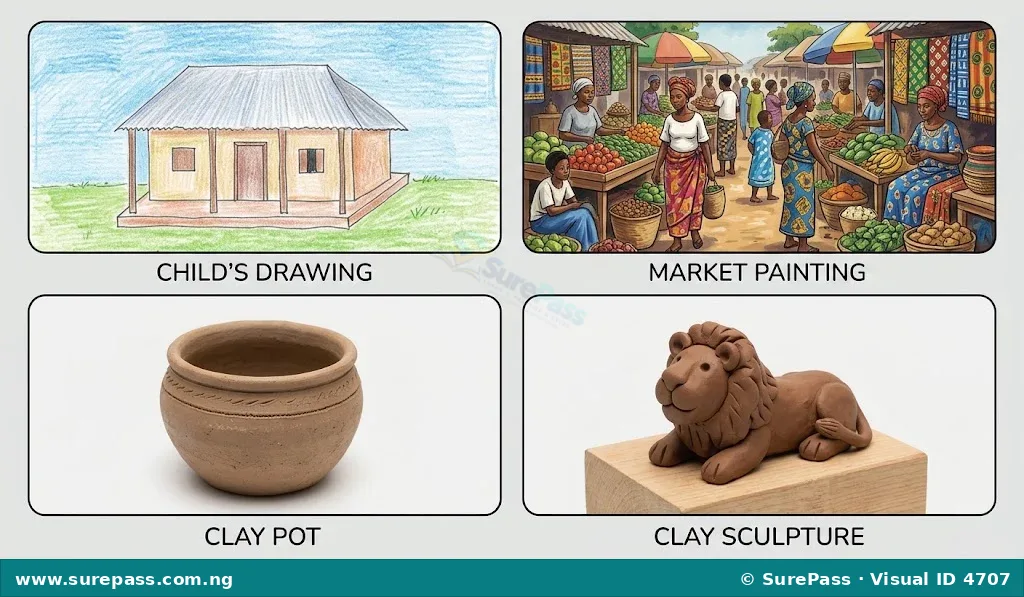
Visual art is any art form that can be seen. It includes creations that are made to be looked at and appreciated with the eyes.
Visual art can be further divided into:
- Fine Arts: These are art forms created mainly for their beauty and intellectual value. They are often unique pieces.
- Applied Arts: These are art forms that combine artistic design with practical use. They are often functional objects that are also beautiful.
Examples of visual art include:
- Drawing: Making pictures or designs with pencils, charcoal, or crayons on paper.
- Painting: Using colours and brushes to create images on surfaces like canvas or paper.
- Sculpture: Creating three-dimensional forms by shaping materials like clay, wood, or metal.
- Pottery: Making useful and decorative objects like pots, plates, and bowls from clay.
- Weaving: Creating fabrics or patterns by interlacing threads or fibres.
- Fashion Design: Creating designs for clothing and accessories.
Non-Visual Art
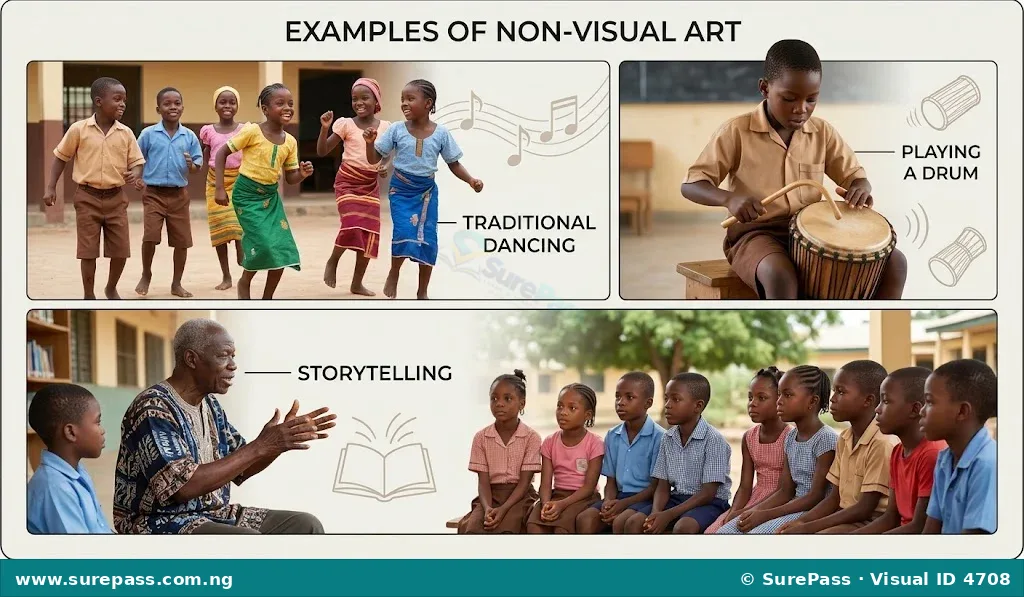
Non-visual art is any art form that is experienced through sound, movement, or words, rather than just by sight. It involves performance or storytelling.
Non-visual art can be further divided into:
- Performing Arts: These are art forms where artists use their bodies, voices, or instruments to create a live experience for an audience.
- Literary Arts: These are art forms that use written or spoken words to create stories, poems, or other forms of expression.
Examples of non-visual art include:
- Music: Creating sounds with instruments or voices to make melodies and rhythms.
- Dance: Expressing ideas and emotions through body movements and rhythm.
- Drama: Performing stories through acting, dialogue, and stage movements.
- Storytelling: Narrating tales and legends, often with expressive voices and gestures.
- Poetry: Writing verses that express feelings or ideas using rhythm and imagery.
- Songs: Combining words and music to tell a story or express an emotion.
Functions of Art
Art serves many important purposes in our lives and communities. It is not just for looking at or listening to; it also helps us in different ways.
The functions of art include:
- Expression: Art allows people to express their feelings, thoughts, and ideas. An artist might paint a picture to show happiness or sadness.
- Communication: Art can communicate messages, stories, or cultural values from one person to another, or from one generation to the next.
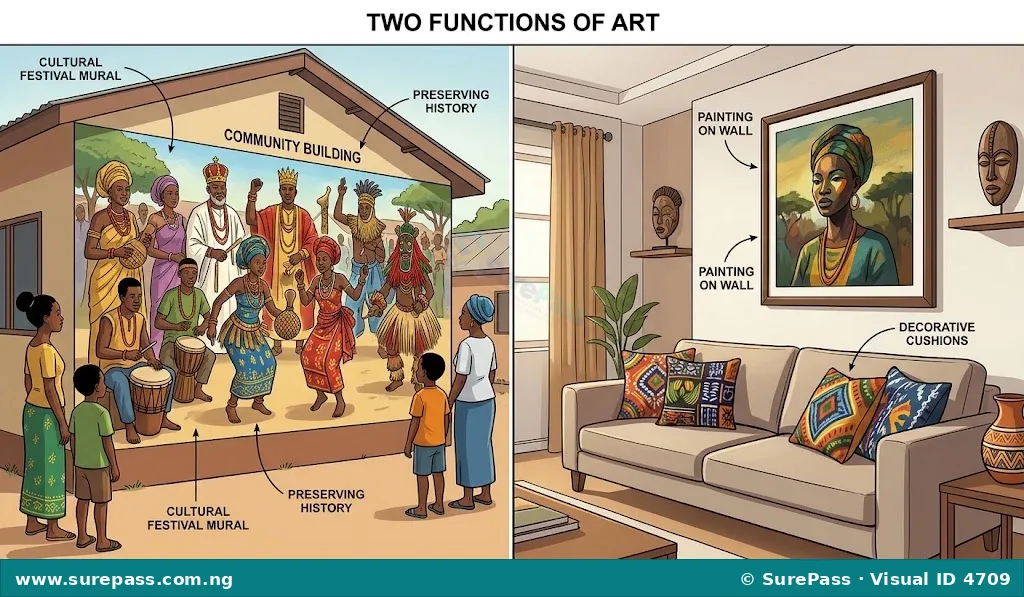
- Decoration: Art is used to make places and objects beautiful. Paintings on walls, patterns on clothes, and designs on pottery all serve to decorate.
- Preservation of Culture: Art helps to keep cultural traditions, history, and beliefs alive. Traditional dances, songs, and artworks tell us about our heritage.
- Education: Art can teach us about different cultures, historical events, or even scientific concepts in an engaging way.
- Entertainment: Many forms of art, like music, dance, and drama, are created to entertain and bring joy to people.
Creating Artworks
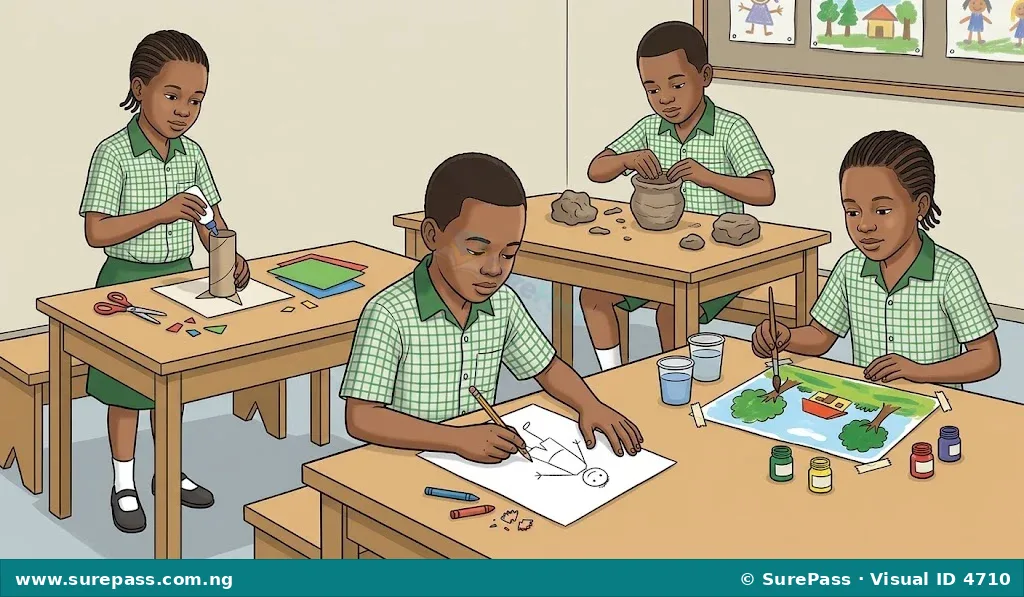
Creating art is a practical skill that allows people to bring their ideas to life. It involves using different materials and techniques to make visual art pieces.
Drawing
Drawing is one of the most basic ways to create visual art. It involves making marks on a surface to form images.
To draw, you will need:
- A sketch pad or drawing paper.
- Pencils of different hardness (e.g., HB, 2B) or crayons.
- An eraser.
The procedure involves the following steps:
- Choose an object or scene to draw, or imagine something from your mind.
- Hold your pencil lightly and sketch the basic shapes of your subject.
- Add details and refine the lines.
- Use shading to show light and shadow, making your drawing look more real.
Painting
Painting uses colours to create images and express feelings. It can be done on various surfaces.
To paint, you will need:
- Drawing paper or canvas.
- Paint (e.g., poster paint, watercolour).
- Paint brushes of different sizes.
- A palette or plate for mixing colours.
- A container of water for cleaning brushes.
The procedure involves the following steps:
- Prepare your painting surface and set out your paints and brushes.
- Mix colours on your palette to get the shades you need.
- Apply paint to your paper or canvas using brushes.
- Paint different areas of your artwork, paying attention to colours and shapes.
- Allow your painting to dry completely.
Pottery
Pottery is the art of making objects from clay. These objects can be useful, like bowls, or decorative, like small figures.
To make pottery, you will need:
- Clay.
- A flat surface to work on.
- Simple tools for shaping (e.g., a plastic knife, a stick).
The procedure involves the following steps:
- Prepare your clay by kneading it to remove air bubbles.
- Decide what you want to make, such as a small pot or an animal figure.
- Use techniques like pinching (squeezing clay into a shape) or coiling (rolling clay into ropes and stacking them) to form your object.
- Smooth the surface of your artwork.
- Allow the clay object to dry slowly in a cool place.
Sculpture
Sculpture is the art of making three-dimensional artworks. Unlike drawing or painting which are flat, sculptures have height, width, and depth.
To make a simple sculpture, you will need:
- Clay, paper, or other soft materials like playdough.
- Found objects like bottle caps, sticks, or leaves (optional).
- Simple tools for shaping or joining.
The procedure involves the following steps:
- Choose your material, such as clay or paper.
- Decide on the form you want to create, like a person, an animal, or an abstract shape.
- Begin to shape the material, adding or removing parts to build your form.
- If using paper, you can cut, fold, and glue pieces together.
- Add details and refine the overall shape of your sculpture.


0 comments
Open the discussion when you need it. Comments stay collapsed until requested so the initial article remains light.