


ARTICLE CONTENTSOn this page 6 sections
Meaning, Elements and Functions of Drama for Primary 4
Performance Objectives
By the end of the lesson, students should be able to:
- define drama.
- state forms of drama;
- list functions of drama;
- practice staging a drama.
What is Drama?
Drama is a story told through action and dialogue, performed by actors for an audience.
It is a way of showing a story using people who pretend to be different characters. These actors speak words and perform actions as if they are the characters in the story. Drama can be performed on a stage, in a school hall, or even in an open space.
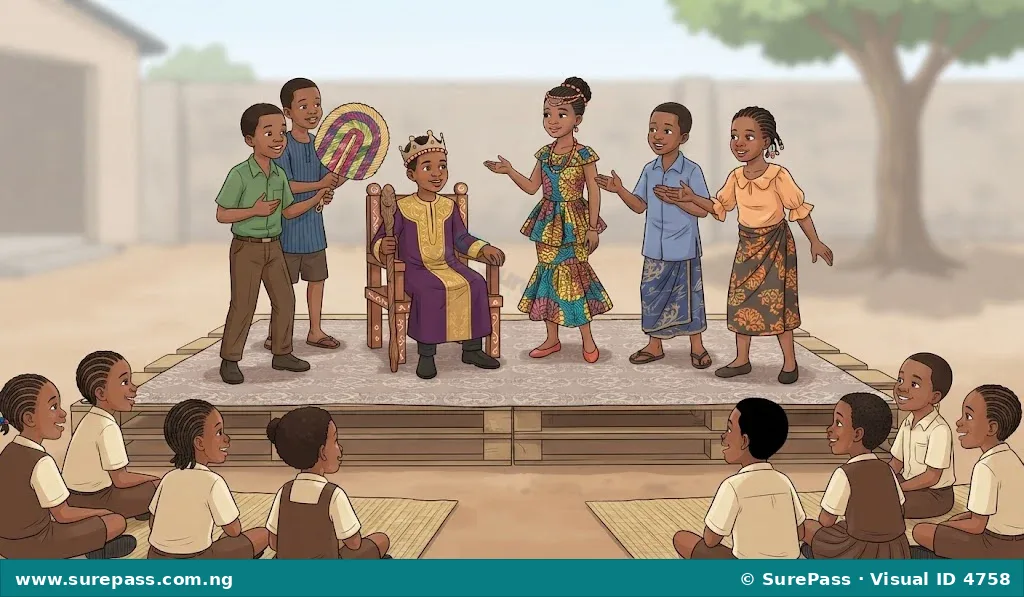
In drama, actors use their voices, body movements, and facial expressions to bring the characters and story to life. They make the audience feel different emotions, such as happiness, sadness, or excitement.
Forms of Drama
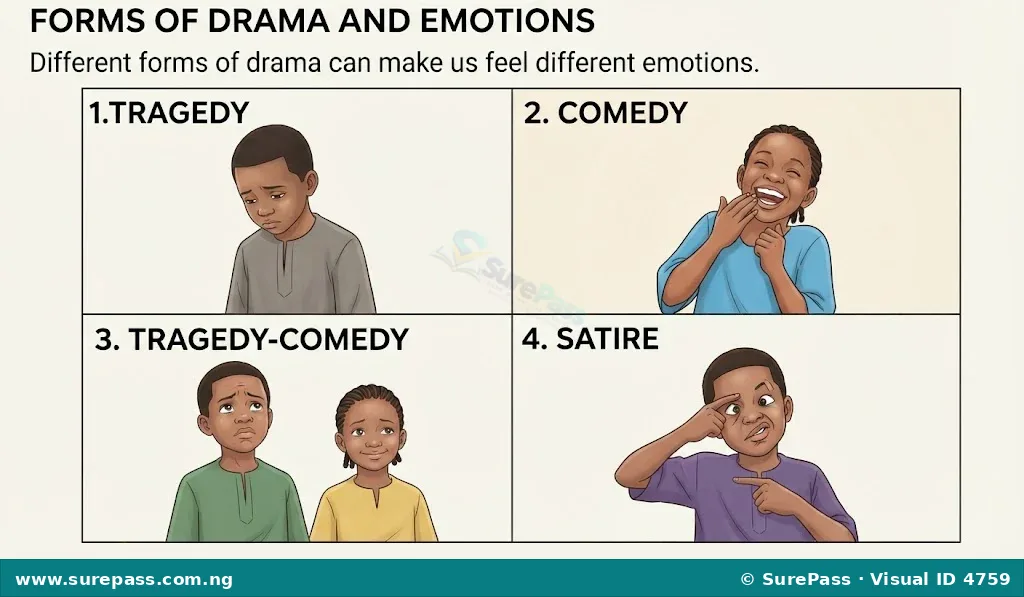
Drama can be presented in different ways, each with its own style and purpose. The main forms of drama include:
- Tragedy: This form of drama tells a serious story, often about characters facing big problems or difficulties. Tragedies usually have a sad or unfortunate ending. They explore serious themes like loss, struggle, or difficult choices.
- Comedy: Comedy is a form of drama that aims to make the audience laugh. These stories are usually light-hearted and funny, with characters often getting into silly situations. Comedies usually have a happy ending, where problems are solved, and everyone is joyful.
- Tragedy-Comedy: This form of drama mixes elements of both tragedy and comedy. It can have serious or sad parts, but it also includes funny moments. Tragedy-comedies often end happily or with a hopeful feeling, even after some difficult events.
- Satire: Satire is a type of drama that uses humour, irony, or exaggeration to make fun of people’s foolishness, bad habits, or problems in society. The main goal of satire is to teach a lesson or make people think about how they behave, often by showing things in a funny or exaggerated way.
Functions of Drama
Drama serves many important purposes in our lives and society. Some of the functions of drama include:
- Entertainment: Drama is a great way to entertain people. It can make audiences laugh, cry, feel excited, or simply enjoy a good story. People watch drama for fun and relaxation.
- Education: Drama can teach important lessons. It can show historical events, cultural traditions, moral values, or how to deal with different situations in life. For example, a drama might teach about the importance of honesty or hard work.
- Information: Drama can be used to share information or ideas. It can highlight current issues in the community or explain complex topics in an easy-to-understand way.
- Cultural Preservation: Drama helps to keep our culture alive. Traditional stories, dances, and customs can be performed through drama, passing them down from older generations to younger ones. This helps people remember their heritage.
- Social Commentary: Drama can make people think about problems in society. Through stories, it can show unfairness, bad behaviour, or things that need to change, encouraging discussions and solutions.
Acting Drama: Staging a Simple Performance
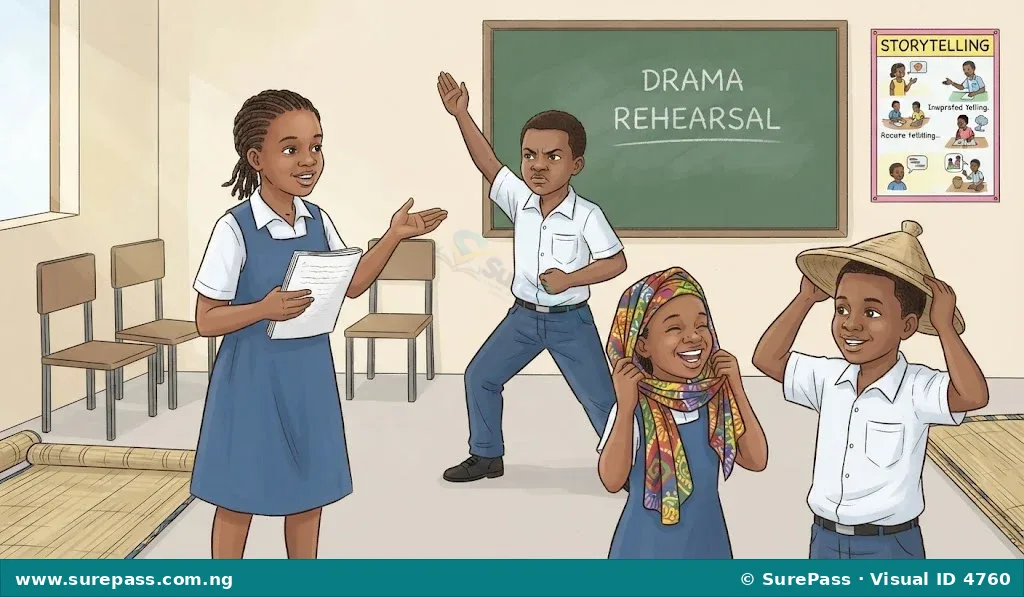
Staging a drama means preparing and performing a play for an audience. It involves several steps to bring a story to life on stage.
Materials for a Simple Drama
To stage a simple drama, the following materials may be useful:
- A simple story or script (can be written by pupils or chosen from a book).
- Costumes (simple clothes or fabrics to represent characters).
- Props (everyday objects like a stick for a staff, a bowl, or a book).
- A clear space for performance (a classroom corner, school hall, or open field).
Steps to Stage a Drama
The procedure for staging a simple drama involves the following steps:
- Choose a Story: Select a short, simple story that is easy to understand and has clear characters. It could be a folktale, a story about school life, or a made-up adventure.
- Assign Roles: Decide which pupil will play each character. Some pupils can also help with props or costumes.
- Read the Script: Read the story or script aloud together. Understand what each character says and does.
- Practice Lines and Actions: Rehearse the drama many times. Actors should learn their lines and practice their movements and expressions. They should speak clearly and loudly enough for everyone to hear.
- Use Costumes and Props: Put on simple costumes and use props during practice. This helps actors feel more like their characters and makes the performance more interesting.
- Set the Stage: Arrange the performance space simply. Decide where characters will enter and exit.
- Perform: Present the drama to an audience. Remember to act with confidence and enjoy the performance.



0 comments
Open the discussion when you need it. Comments stay collapsed until requested so the initial article remains light.