


ARTICLE CONTENTSOn this page 6 sections
Introduction to Dance
Performance Objectives
By the end of the lesson, students should be able to:
- define dance;
- state types of dances;
- list benefits of dance;
- perform some dance movements.
What is Dance?
Dance is a way of expressing feelings and ideas through body movements, usually to music.
When people dance, they move their bodies in different ways, using their hands, feet, head, and whole body. These movements often follow a rhythm or beat from music, drums, or other sounds. Dance can be a lot of fun and a way to tell stories or show emotions without words.
Types of Dances
There are many different types of dances around the world. These dances can be grouped into two main types: indigenous dances and foreign dances.
Indigenous Dances
Indigenous dances are traditional dances that come from a particular place or group of people. In Nigeria, indigenous dances are those that belong to our different ethnic groups and communities. These dances are often very old and have been passed down from parents to children for many years.
Indigenous dances are usually performed during special events like festivals, weddings, naming ceremonies, or religious ceremonies. They often tell stories about the community, its history, or its beliefs.
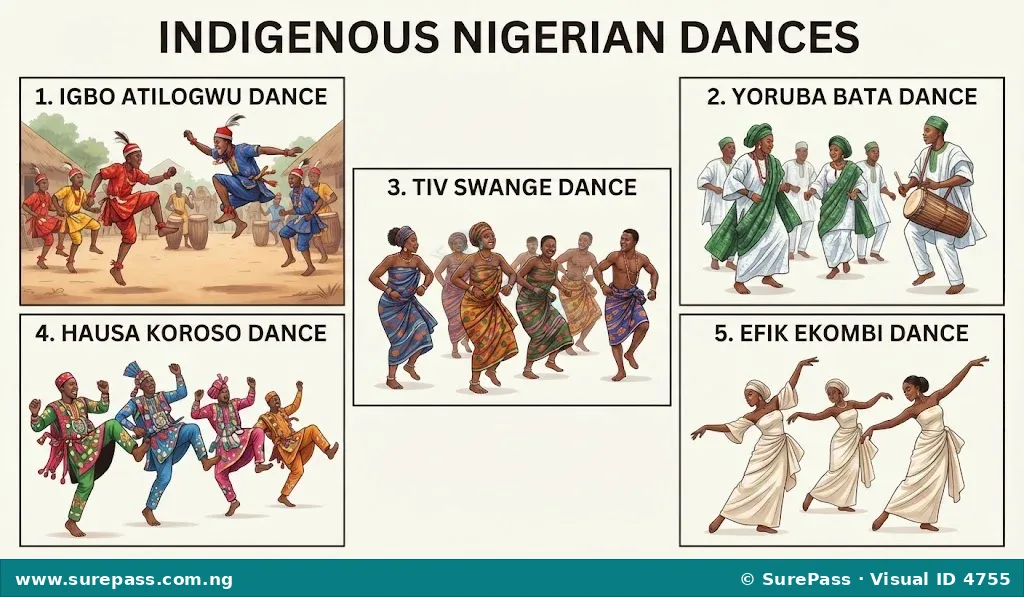
Examples of indigenous dances in Nigeria include:
- Atilogwu Dance: This is a lively and energetic dance from the Igbo people, known for its acrobatic movements.
- Bata Dance: A traditional dance of the Yoruba people, often performed during religious festivals and ceremonies, using Bata drums.
- Swange Dance: This is a popular social dance of the Tiv people, known for its rhythmic waist movements.
- Koroso Dance: A colourful and energetic dance from the Hausa people, usually performed by young men during festivals.
- Ekombi Dance: A beautiful and graceful dance from the Efik people, often performed by women.
Foreign Dances
Foreign dances are dances that come from other countries outside Nigeria. These dances have their own unique styles, music, and movements, and they are popular in many parts of the world, including Nigeria.
Foreign dances can be performed for entertainment, competition, or social gatherings. They often reflect the culture and traditions of the countries where they originated.
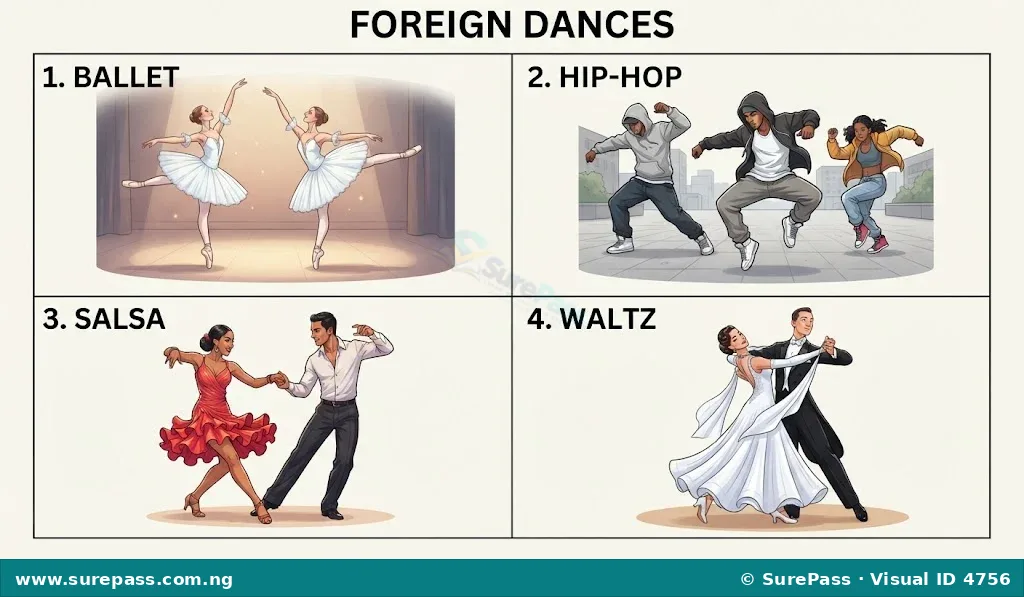
Examples of foreign dances include:
- Ballet: A classical dance from Europe known for its graceful, precise, and often acrobatic movements, usually performed on stage.
- Hip-hop Dance: An energetic and freestyle dance style that originated in the United States, often seen in music videos and street performances.
- Salsa Dance: A lively and rhythmic partner dance from Latin America, known for its quick steps and turns.
- Waltz Dance: A smooth and elegant partner dance from Europe, often performed in a ballroom setting with flowing, rotational movements.
Benefits of Dance
Dancing is not just fun; it also has many good benefits for the body and mind. Some of the benefits of dance include:
- Keeps the Body Healthy: Dance is a form of exercise that helps to make the body strong and fit. It improves flexibility, balance, and coordination.
- Makes People Happy: Dancing can lift spirits and reduce stress. It is a joyful activity that helps people express themselves and feel good.
- Helps to Express Feelings: People can use dance to show happiness, sadness, excitement, or other emotions without speaking.
- Teaches About Culture: Indigenous dances help learners understand the traditions, stories, and history of their own people and other communities. Foreign dances introduce learners to cultures from other parts of the world.
- Builds Confidence: Performing dance movements, whether alone or with others, can help children feel more confident and comfortable in their own skin.
- Improves Social Skills: Dancing with others, especially in group dances, helps people learn to cooperate and interact with each other.
Performing Simple Dance Movements
Performing dance movements means moving the body in a rhythmic way, often to music. It is a practical skill that helps learners understand and enjoy dance.
To perform simple dance movements, learners can use music from a CD player, drum, gong, or rattle, as available.
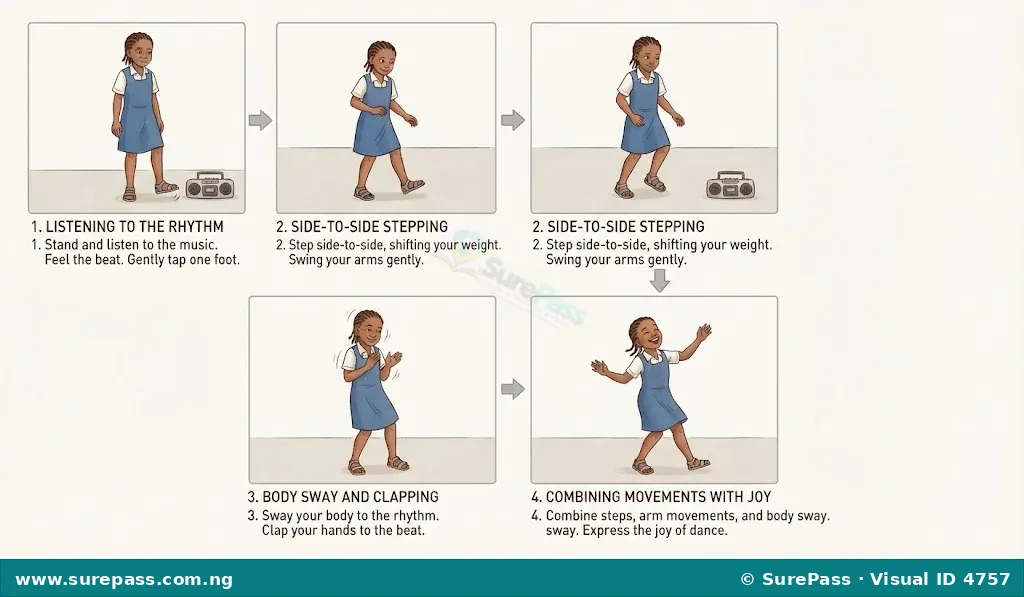
The procedure involves the following steps:
- Listen to the Music: Pay attention to the beat and rhythm of the music. Feel the pulse of the song.
- Start with Basic Steps: Begin by tapping the feet gently to the beat. Try stepping from side to side or forward and backward.
- Move the Hands and Arms: Swing the arms gently, clap the hands, or raise them up and down to the rhythm.
- Sway the Body: Gently sway the body from side to side or rotate the waist in a simple motion.
- Combine Movements: Try putting together foot steps, hand movements, and body swaying. For example, step forward while swinging arms, then step back.
- Express Yourself: Let the music guide the movements. Do not be afraid to try different ways of moving the body to show how the music makes one feel.
- Practise Regularly: The more one practises, the better the movements will become.



0 comments
Open the discussion when you need it. Comments stay collapsed until requested so the initial article remains light.