



ARTICLE CONTENTSOn this page 6 sections
Culture
Performance Objectives
By the end of the lesson, students should be able to:
- explain culture;
- identify different cultures;
- list the functions of culture in the society;
- create artworks with observable cultural features.
Meaning of Culture
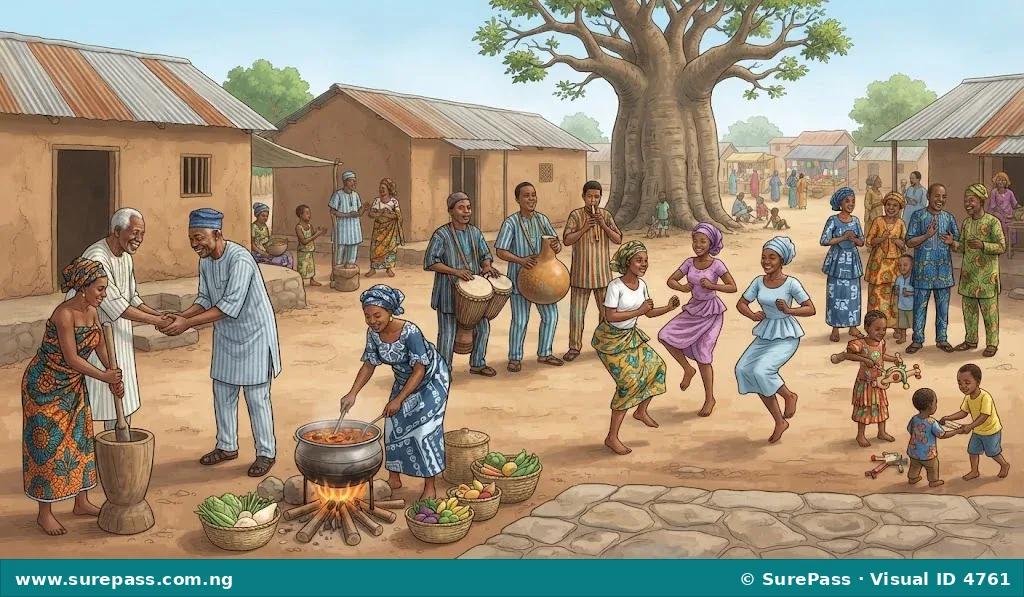
Culture is the way of life of a group of people.
It includes everything people learn, share, and pass on from one generation to another. This involves their beliefs, customs, traditions, language, food, clothing, music, dances, and artworks. Culture helps to define who a group of people are and how they interact with the world around them.
Types of Culture
Culture can be divided into two main types:
- Material culture
- Non-material culture
Material Culture
Material culture refers to the physical objects that people create and use.
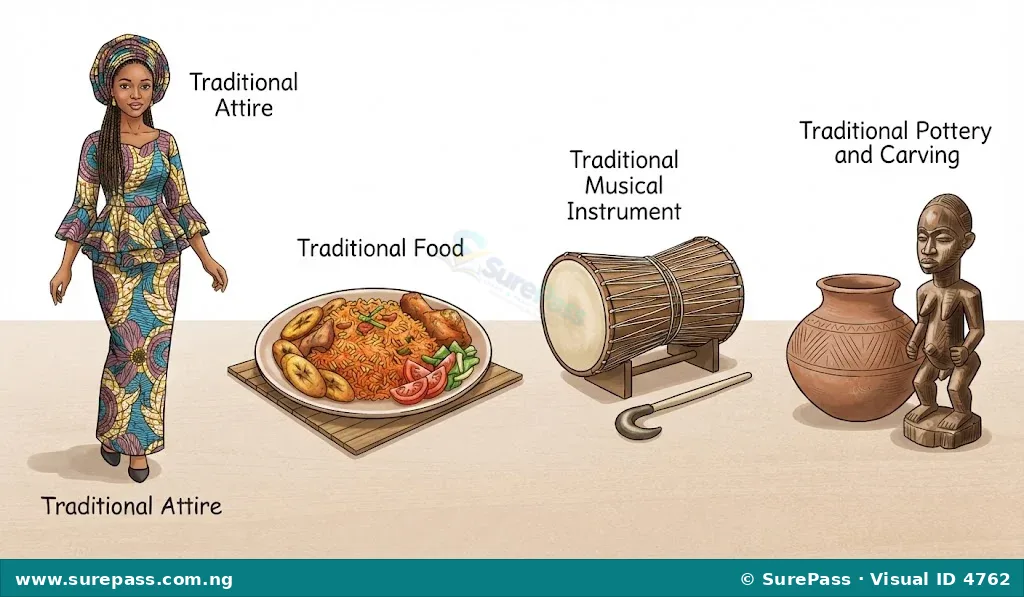
These are the things that can be seen, touched, and held. They show how people live, what they value, and how they interact with their environment. Examples of material culture in Nigeria include traditional clothing, food, tools, houses, musical instruments, and artworks.
Examples of material culture include:
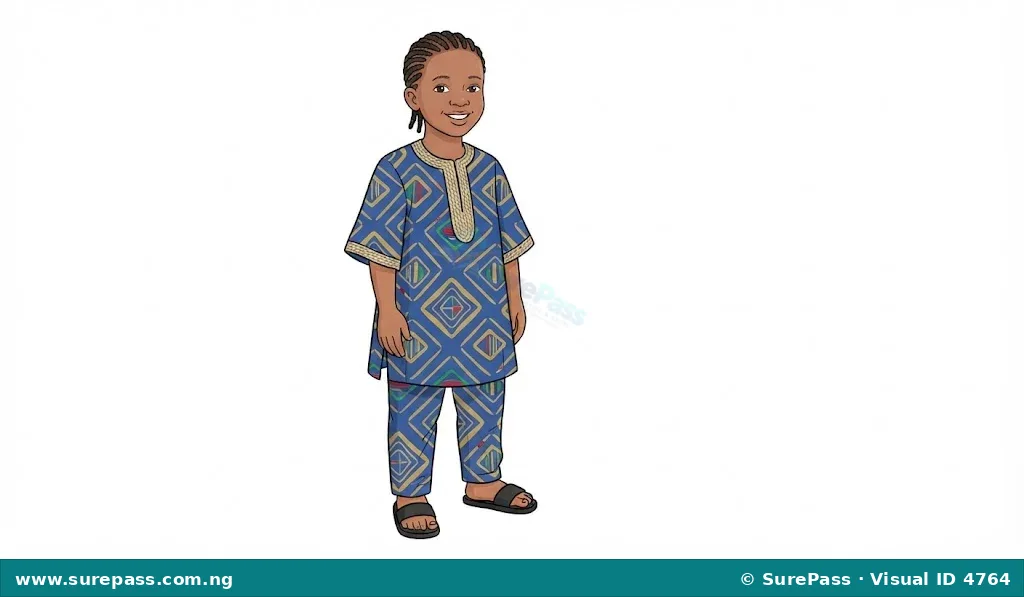
- Traditional Attires: Clothes like agbada, iro and buba, isiagu, and wrappers worn by different Nigerian tribes.
- Traditional Foods: Dishes such as pounded yam, jollof rice, fufu, tuwo shinkafa, and akpu.
- Tools and Utensils: Items like calabashes, grinding stones, traditional hoes, and cooking pots.
- Artworks: Sculptures, carvings, pottery, and paintings that reflect cultural beliefs and stories.
- Musical Instruments: Drums, gongs, flutes, and string instruments used in traditional music.
Non-Material Culture
Non-material culture refers to the ideas, beliefs, values, customs, and traditions that a group of people share.
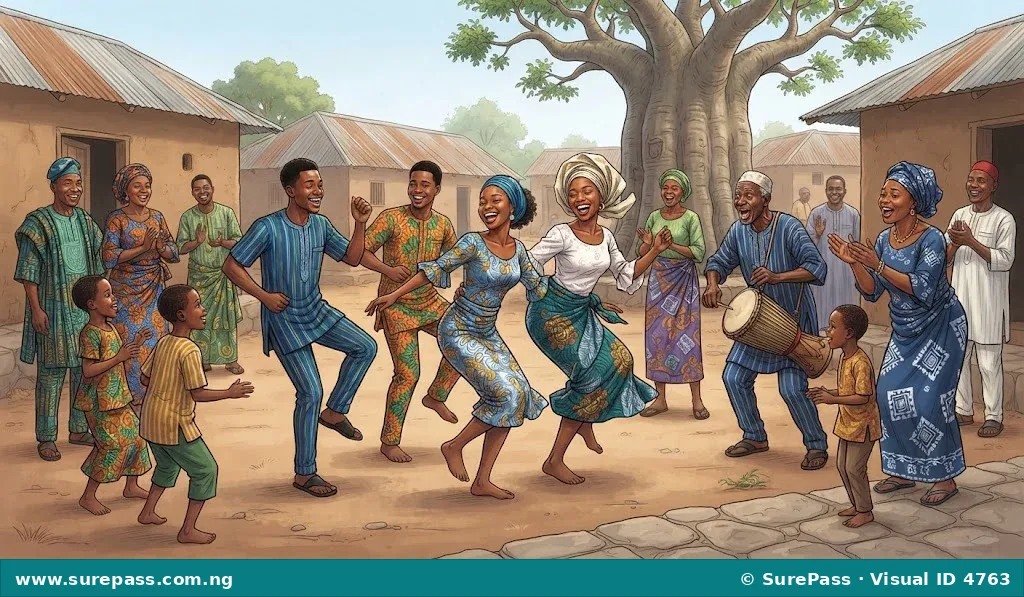
These are not physical objects but are important parts of how people think and behave. They are learned and passed down through stories, songs, and daily interactions. Examples of non-material culture in Nigeria include languages, greetings, traditional dances, storytelling, festivals, and religious beliefs.
Examples of non-material culture include:
- Languages: The many languages spoken in Nigeria, such as Hausa, Igbo, Yoruba, Efik, and Tiv.
- Greetings: Traditional ways of greeting elders or visitors, showing respect.
- Traditional Dances: Cultural dances performed during festivals, celebrations, or ceremonies.
- Storytelling: The practice of sharing folktales, myths, and historical accounts to teach lessons and preserve history.
- Festivals: Celebrations like Argungu Fishing Festival, Eyo Festival, New Yam Festival, and Calabar Carnival.
- Beliefs and Values: Ideas about right and wrong, respect for elders, and community spirit.
Functions of Culture in Society
Culture plays many important roles in a society. It helps people live together, understand each other, and keep their history alive. Some key functions of culture include:
- Provides Identity: Culture gives people a sense of who they are and where they come from. It helps them feel connected to their community and their past.
- Guides Behaviour: Culture teaches people how to behave in different situations. It sets rules and expectations for how people should act, speak, and interact with others.
- Promotes Communication: Language, greetings, and symbols are part of culture. They help people understand each other and share ideas effectively.
- Unites People: Shared cultural practices like festivals, ceremonies, and traditions bring people together. They create a sense of belonging and community spirit.
- Preserves Knowledge: Culture helps to pass down knowledge, skills, and wisdom from older generations to younger ones through storytelling, apprenticeship, and traditional education.
- Provides Entertainment: Traditional music, dances, drama, and games are cultural expressions that provide enjoyment and relaxation for people.
Creating Artworks with Cultural Features
Creating artworks with cultural features allows people to express their understanding and appreciation of different cultures. This skill involves using elements from material or non-material culture to inspire a creative piece.
The procedure for creating an artwork with cultural features involves the following steps:
- Choose a Cultural Feature: Decide which cultural feature you want to represent in your artwork. This could be a traditional attire, a pattern from a cultural fabric, a musical instrument, or a scene from a festival.
- Gather Materials: Collect your art materials, such as drawing paper, pencils, erasers, crayons, coloured pencils, or paints.
- Sketch the Outline: Lightly draw the main shapes and outlines of your chosen cultural feature on your paper. For example, if you are drawing a person in traditional attire, sketch the figure and the basic shape of the clothing.
- Add Details and Patterns: Carefully add the specific details that make the cultural feature unique. This might include intricate patterns on fabric, specific designs on an instrument, or facial features that reflect a particular cultural style.
- Colour the Artwork: Use colours that are commonly associated with the cultural feature or that you find appealing. Pay attention to how different colours are used in traditional designs.
- Refine and Finish: Go over your lines, erase any unwanted marks, and ensure your colours are vibrant and well-applied.
- Display Your Artwork: Once finished, you can share your artwork with others to show what you have learned about culture.
Important safety tips for creating artworks:
- Always use art materials carefully.
- Keep your workspace clean and tidy.
- Wash your hands after using paints or crayons.
- Ask an adult for help if you need to use sharp tools like scissors.




0 comments
Open the discussion when you need it. Comments stay collapsed until requested so the initial article remains light.