


ARTICLE CONTENTSOn this page 5 sections
Nigerian Arts
Performance Objectives
By the end of the lesson, students should be able to:
- identify Nigerian art works;
- list types of Nigerian traditional art;
- make a Nigerian artwork.
Meaning of Nigerian Art
Nigerian art refers to the beautiful and creative works made by people in Nigeria. These artworks show the culture, history, beliefs and daily lives of different Nigerian communities.
Nigerian art can be made from many materials such as wood, clay, metal, stone, fabrics, beads, and leather. Artists use these materials to create sculptures, carvings, paintings, textiles, and other decorative items.
Types of Nigerian Traditional Art
Nigeria has a rich history of traditional art from different ancient kingdoms and communities. These artworks are known for their unique styles and meanings.
Nok Art
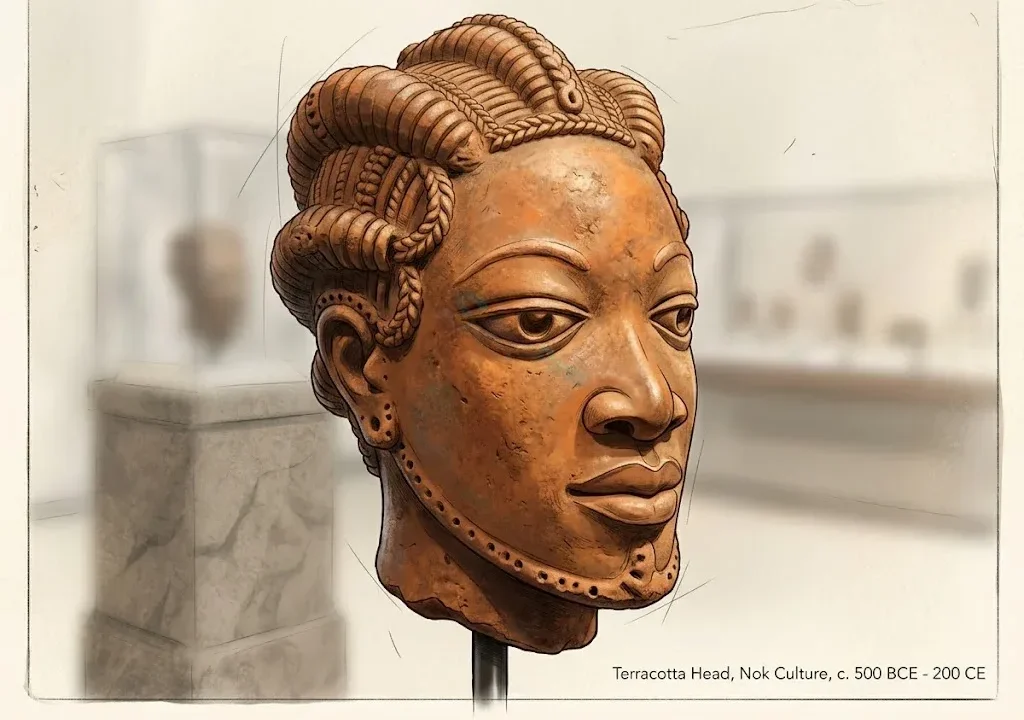
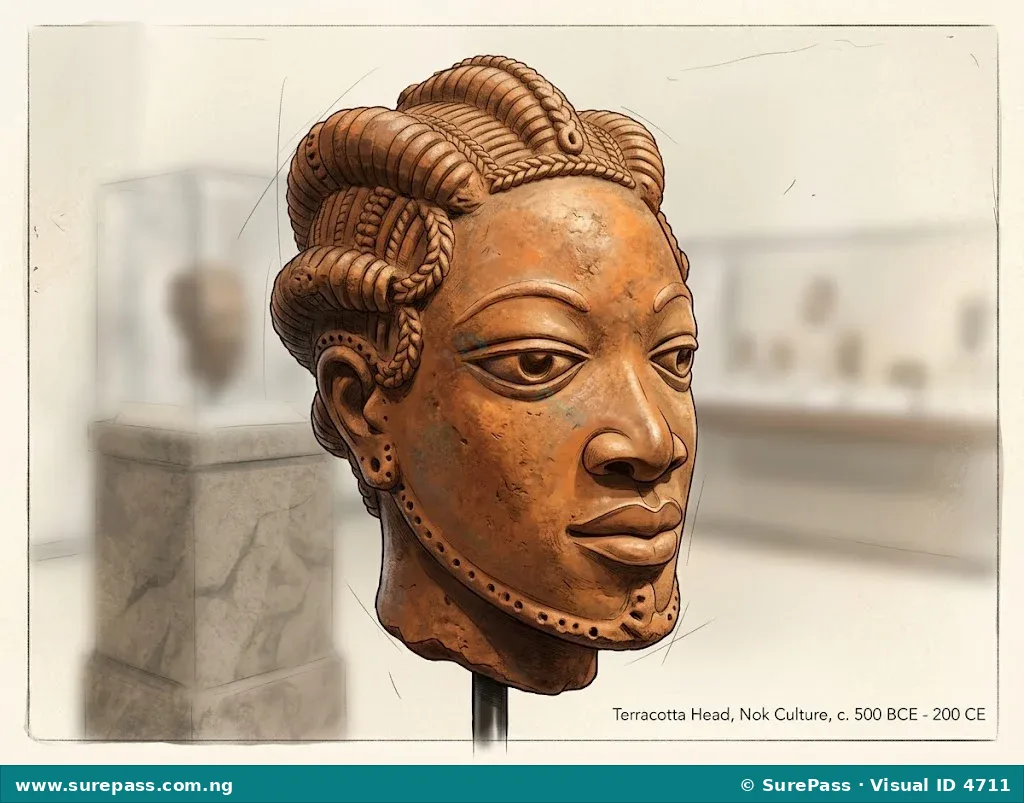
Nok art is one of the oldest forms of art in Nigeria. It comes from the Nok culture, which existed in parts of central Nigeria. Nok artists are famous for making terracotta sculptures, especially human heads and figures.
These sculptures often have distinctive features like almond-shaped eyes and elaborate hairstyles. They were made from clay and then fired to make them hard and durable.
Esie Art
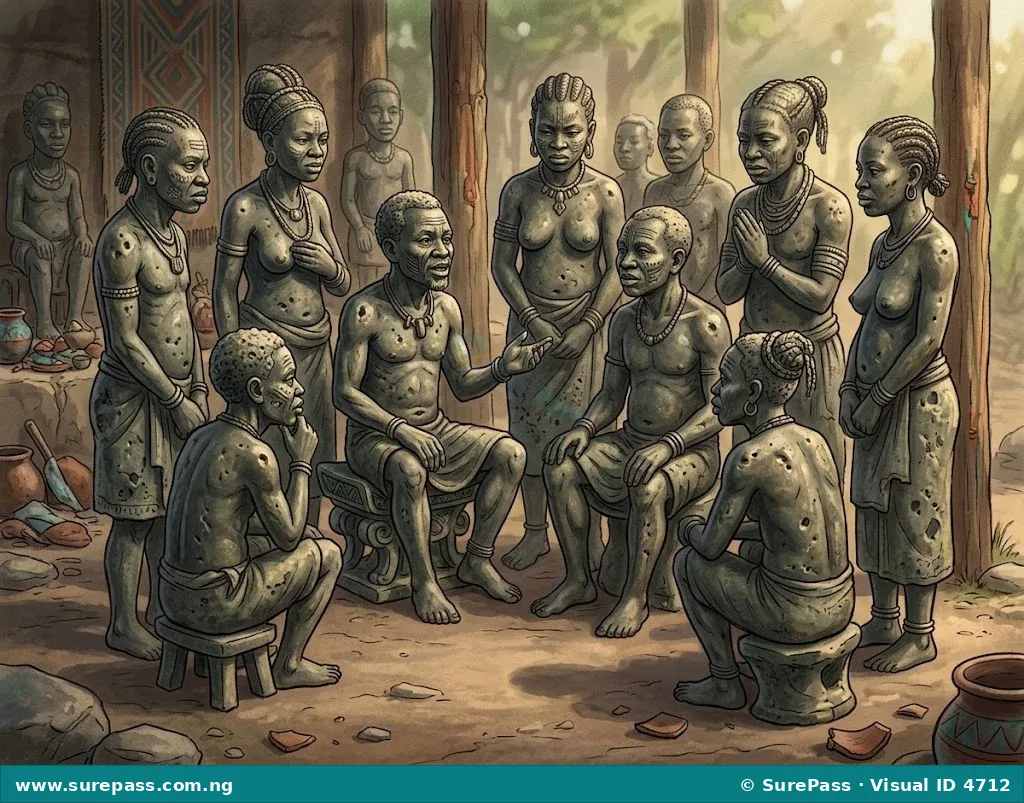
Esie art is known for its large collection of stone figures, mostly found in Esie, Kwara State. These figures are made from soapstone and represent human beings in various postures.
The Esie figures are often seated or standing and show different expressions and details of clothing or adornment. The exact meaning and purpose of these figures are still studied by historians.
Ife Art
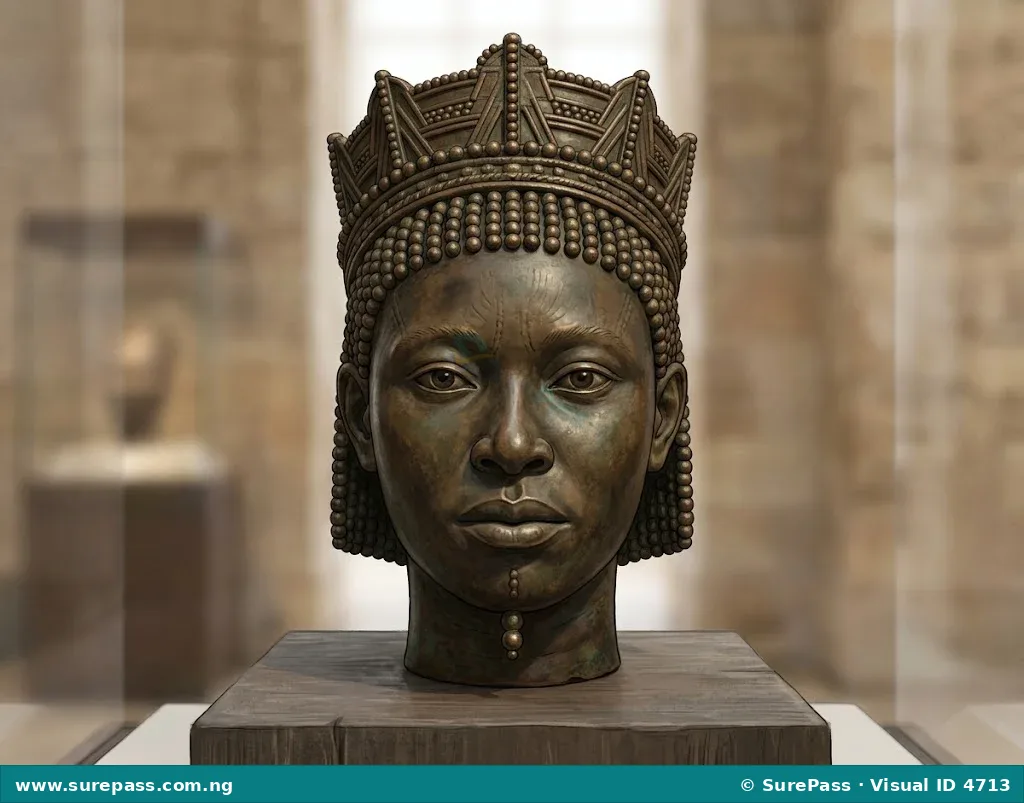
Ife art comes from the ancient city of Ile-Ife in Osun State, which is considered the spiritual homeland of the Yoruba people. Ife artists were highly skilled in making naturalistic sculptures from bronze, brass, and terracotta.
The artworks from Ife are known for their realistic portrayal of human faces and figures, often showing rulers and important people. They are admired for their beauty and detailed craftsmanship.
Igbo-Ukwu Art
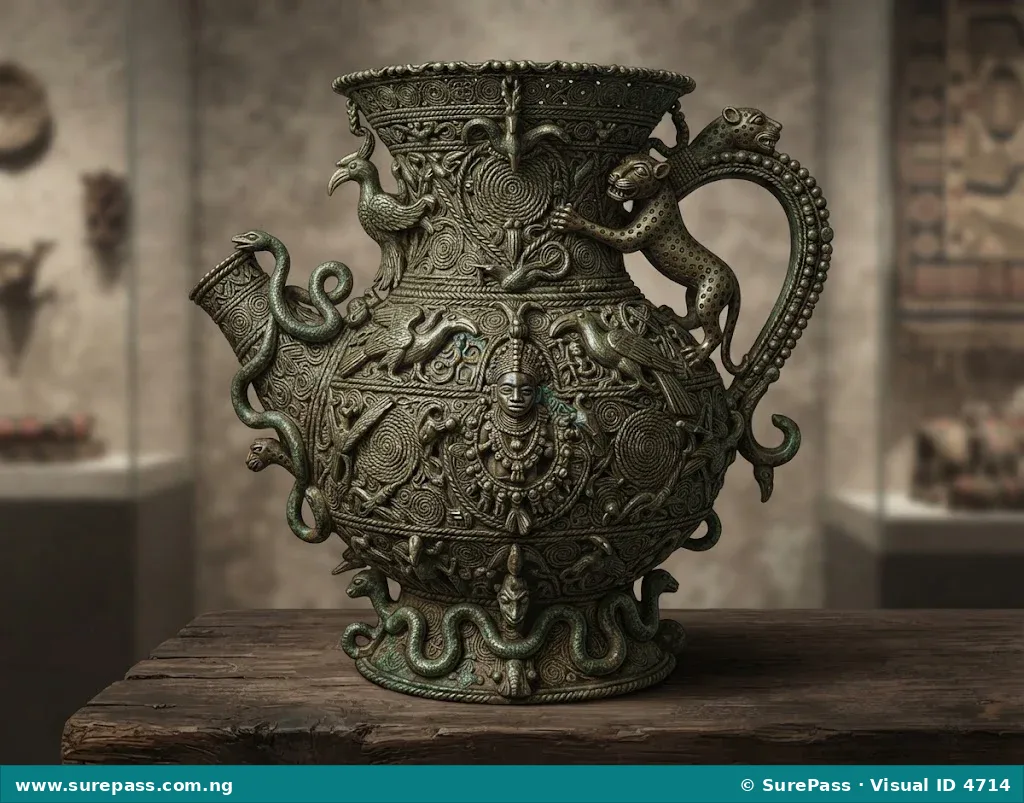
Igbo-Ukwu art is from an ancient site in Anambra State. This art is famous for its elaborate bronze and copper objects, which were discovered during archaeological excavations.
The artworks from Igbo-Ukwu include intricate ceremonial vessels, ornaments, and regalia. They show advanced metalworking techniques, such as lost-wax casting, and often feature detailed patterns and animal motifs.
Benin Art
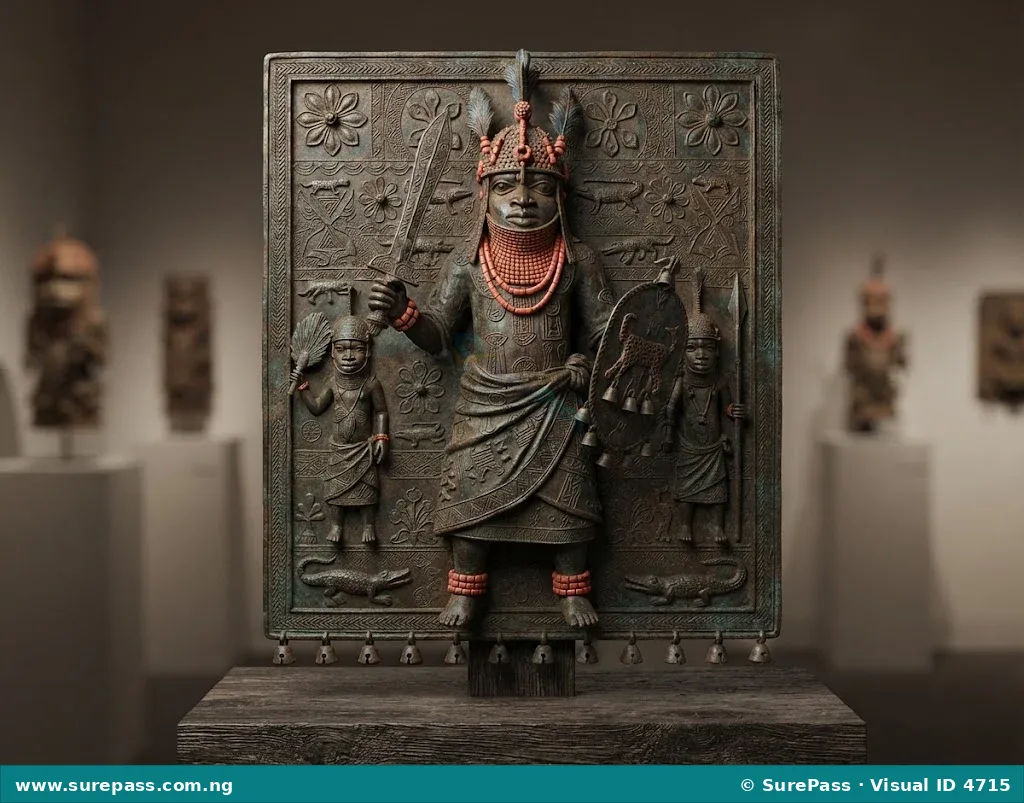
Benin art comes from the ancient Kingdom of Benin, located in present-day Edo State. Benin artists are renowned for their bronze plaques, commemorative heads, and ivory carvings.
These artworks often depict the Oba (king), chiefs, warriors, and historical events. They served to record history, honour rulers, and decorate the royal palace. Benin art is known for its powerful imagery and detailed storytelling.
Making a Nigerian Artwork
Creating art with indigenous features allows people to express their creativity and connect with Nigerian culture. A simple artwork can be made using readily available materials like clay or paper.
This activity will guide the creation of a simple clay pot decorated with traditional Nigerian patterns.
Materials Needed:
- Modelling clay (air-dry clay is suitable for school projects)
- A flat surface (like a table or a piece of cardboard)
- Small bowl of water
- Simple tools for shaping and decorating (e.g., plastic knife, toothpick, blunt pencil)
Steps to Make a Clay Pot with Indigenous Features:
The procedure involves the following steps:
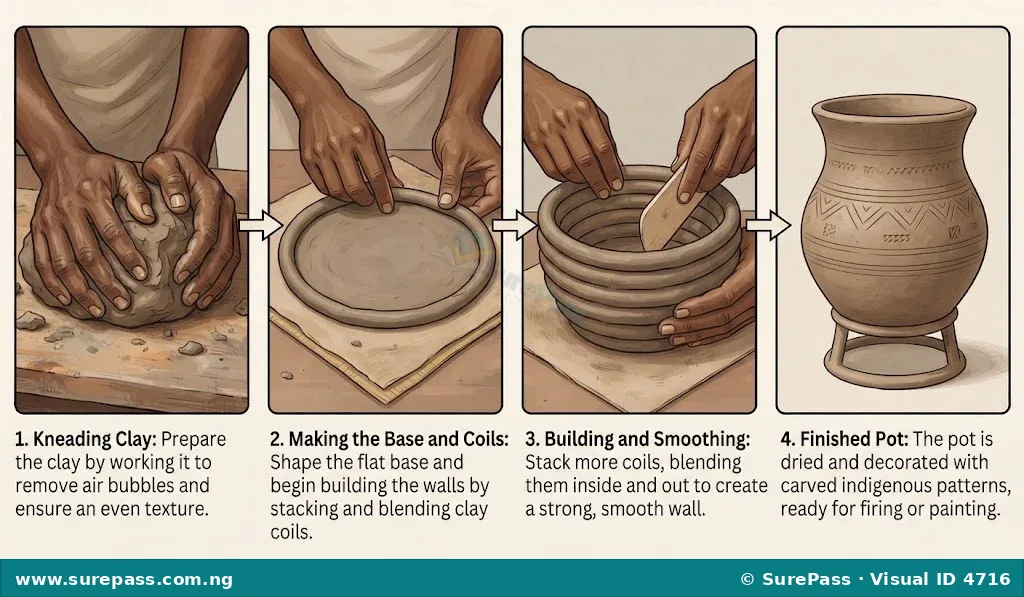
- Prepare the Clay: Take a piece of modelling clay and knead it gently to make it soft and easy to work with.
- Form the Base: Roll a small ball of clay and flatten it into a circular disc. This will be the base of the pot.
- Build the Walls: Roll long, thin coils of clay. Place the first coil around the edge of the base. Gently press it onto the base to join them.
- Add More Coils: Continue adding more coils on top of each other, pressing each coil firmly to the one below it. Smooth the inside and outside surfaces of the pot with your fingers, using a little water if the clay becomes too dry.
- Shape the Pot: As you add coils, you can shape the pot to be wider or narrower at the top, creating a desired form.
- Smooth the Surface: Once the desired height and shape are achieved, use your fingers and a little water to smooth out the entire surface of the pot, removing any visible coil lines.
- Decorate with Indigenous Patterns: Use a toothpick or blunt pencil to carve simple patterns onto the pot. These patterns can be lines, dots, zigzags, or shapes inspired by traditional Nigerian designs seen on fabrics or carvings.
- Dry the Artwork: Place the finished clay pot in a safe place to dry completely. If using air-dry clay, it will harden over a few days.
- Optional: Paint and Seal: Once dry, the pot can be painted with colours and, if desired, sealed with a clear varnish to protect it.



0 comments
Open the discussion when you need it. Comments stay collapsed until requested so the initial article remains light.