


ARTICLE CONTENTSOn this page 8 sections
Arts Professionals
Performance Objectives
By the end of the lesson, students should be able to:
- describe a professional artist;
- identify individual artists
- list the style of their works;
- state characteristics of their works;
- make sketches from their works.
- create artwork by following their styles.
What is a Professional Artist?
A professional artist is a person who creates art as their main job or career. They use their skills, talent, and training to make different kinds of artworks that people enjoy, buy, or use.
Professional artists spend a lot of time learning and practising their craft. They might go to art schools or learn from other experienced artists. Their work is often recognised for its quality and unique style.
Forms of Works by Professional Artists
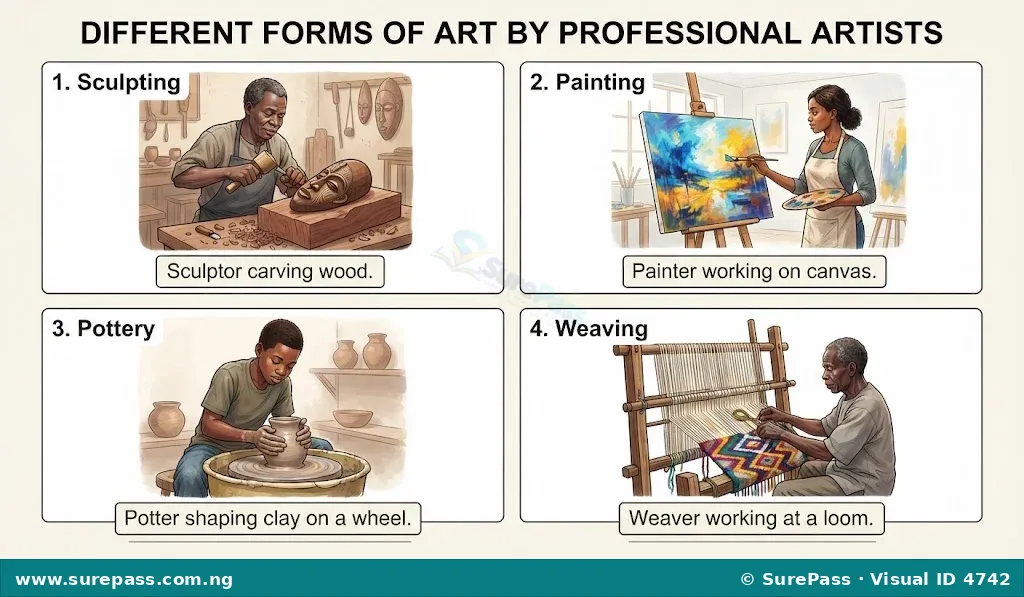
Professional artists create many different forms of art. These forms can be seen in homes, schools, and public places. Some common forms of art created by professionals include:
- Sculpture: This involves creating three-dimensional artworks by shaping materials like wood, stone, clay, or metal. Sculptors use tools to carve, mould, or assemble these materials into figures, objects, or abstract forms.
- Painting: Artists use brushes, paints, and other tools to create images on surfaces like canvas, wood, or walls. Paintings can show landscapes, portraits, still life, or abstract designs.
- Drawing: This involves using pencils, charcoal, pastels, or ink to create images on paper or other surfaces. Drawings can be sketches, detailed illustrations, or finished artworks.
- Pottery: Potters shape clay into useful or decorative objects like pots, plates, bowls, and vases. These items are often fired in a kiln to make them hard and durable.
- Weaving: Weavers create fabrics, mats, or baskets by interlacing threads, fibres, or other materials. This art form is common in many cultures for making clothes, rugs, and decorative items.
Characteristics of Works by Professional Artists
The works of professional artists often have special qualities that make them stand out. These characteristics help people appreciate the art and recognise the artist’s skill.
Some characteristics of professional artworks are:
- Skill and Craftsmanship: Professional artists show great skill in how they handle their materials and tools. Their work is usually well-made and carefully finished.
- Creativity and Originality: Professional artworks often show new ideas and unique ways of expressing them. They are not just copies but come from the artist’s own imagination.
- Expression and Emotion: Many artworks express feelings, ideas, or messages. A professional artist can use colours, shapes, and forms to communicate these deeply.
- Attention to Detail: Professional artists pay close attention to small details, which makes their work rich and interesting to look at.
- Durability: Especially for sculptures and pottery, professional works are often made to last a long time, using strong materials and proper techniques.
- Unique Style: Each professional artist often develops a unique way of creating art, known as their style. This style makes their work recognisable.
Identifying Individual Artists and Their Styles
It is possible to identify individual artists by looking closely at their work and understanding their unique style. An artist’s style is like their artistic fingerprint; it is the special way they create art.
For example, one sculptor might always carve smooth, flowing shapes, while another might prefer sharp, angular forms. A painter might use bright, bold colours, while another prefers soft, muted tones. These choices are part of their individual style.
When you see different artworks, try to notice:
- The types of materials the artist uses most often.
- The colours they prefer.
- The shapes and forms they create.
- The subjects they choose to show in their art.
- The overall feeling or message their art conveys.
By observing these things, you can begin to recognise the work of different artists and appreciate their unique contributions to art.
Making Sketches from Artworks
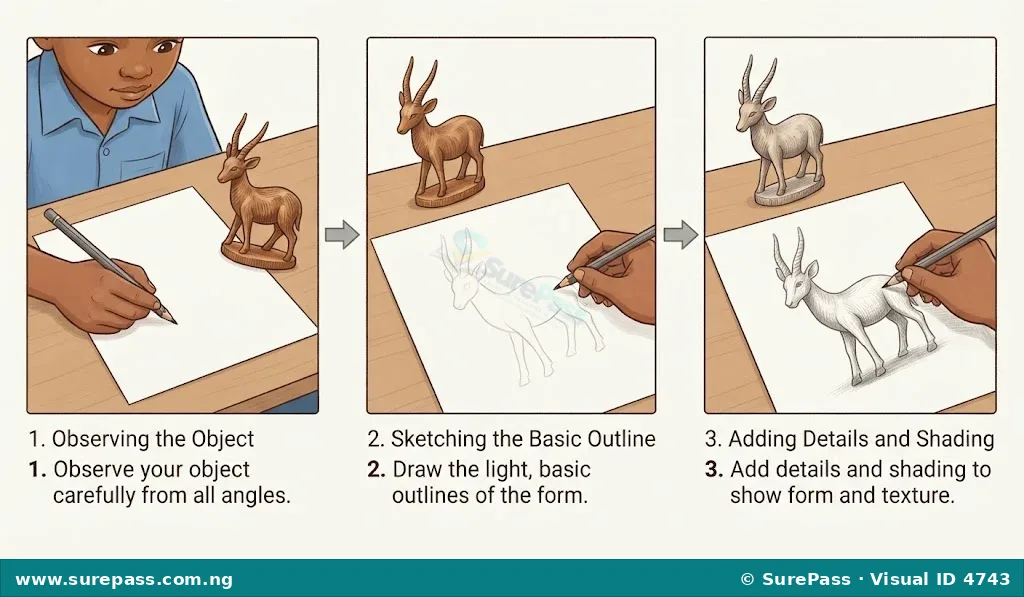
Sketching is a quick drawing that helps you capture the main ideas, shapes, and details of an artwork. It is a good way to study and understand how an artist created their piece.
The procedure for making a sketch from an artwork involves the following steps:
- Observe the Artwork: Look carefully at the artwork you want to sketch. Notice its overall shape, the main lines, and the different parts.
- Identify Main Shapes: Find the biggest and most important shapes in the artwork. Do not worry about small details yet.
- Draw Light Outlines: Using a pencil, lightly draw the main outlines of these shapes on your paper. Keep your lines loose and do not press too hard.
- Add Key Details: Once the main shapes are in place, start adding important details like eyes, mouths, patterns, or textures.
- Refine Lines: Go over your light lines to make them clearer where needed. You can also add shading to show light and shadow if you wish.
- Practise Regularly: The more you sketch, the better you will become at capturing the essence of artworks quickly.
Creating Artworks by Following Professional Styles
Creating artwork by following the style of a professional artist means trying to make your own art using some of the ideas, techniques, or visual elements that a particular artist uses. This helps you learn and experiment with different ways of making art.
For example, if you admire a sculptor who uses simple, smooth shapes in their wood carvings, you could try to create your own artwork using simple, smooth shapes with clay or even by drawing. If a painter uses bright, bold colours, you could try to use similar colours in your own painting or drawing.
The process involves the following steps:
- Choose an Artist or Style: Select a professional artist or a type of art (like wood carving or pottery) whose style you like.
- Study Their Work: Look at many examples of their art. Notice the colours, shapes, textures, and subjects they use. How do they make their art look unique?
- Identify Key Elements: Pick out one or two main characteristics of their style that you want to try in your own work. For example, “simple shapes” or “bright colours.”
- Gather Materials: Choose materials that are safe and easy for you to use, such as paper, crayons, paint, or modelling clay. For creating a work on wood, you could use a small, flat piece of wood and draw or paint on it.
- Create Your Artwork: Start making your own piece, keeping the chosen style elements in mind. For example, if you are inspired by a sculptor’s smooth forms, try to make your clay model or drawing with smooth, rounded edges.
- Reflect: After you finish, compare your work to the professional artist’s work. What did you learn? How did trying their style change your own art?
When creating a work on wood, remember that actual carving tools can be sharp. Always ask an adult for help and supervision if you are using any sharp tools. For Primary 4, it is safer to draw, paint, or glue small pieces onto a flat piece of wood to create your artwork.



0 comments
Open the discussion when you need it. Comments stay collapsed until requested so the initial article remains light.