


ARTICLE CONTENTSOn this page 8 sections
Musical Instruments and Sounds
Performance Objectives
By the end of the lesson, students should be able to:
- define musical instruments;
- identify musical instruments and sounds;
- state types of musical instruments;
- list functions of musical instruments;
- listen to music and score.
What Are Musical Instruments?
A musical instrument is an object or device made or used to produce musical sounds.
These instruments are specially designed to create different kinds of sounds, which can then be put together to make music. People use their hands, breath, or other tools to make these instruments produce sounds.
Types of Musical Instruments
Musical instruments can be grouped into different types based on where they come from. For Primary 4, we will look at two main types: indigenous musical instruments and foreign musical instruments.
Indigenous Musical Instruments
Indigenous musical instruments are those that are native to a particular place or culture. In Nigeria, these are traditional instruments that have been used by our people for many years to make music for ceremonies, festivals, and storytelling.
These instruments are often made from local materials like wood, animal skin, gourds, metal, and seeds. They produce unique sounds that are important to our cultural music.
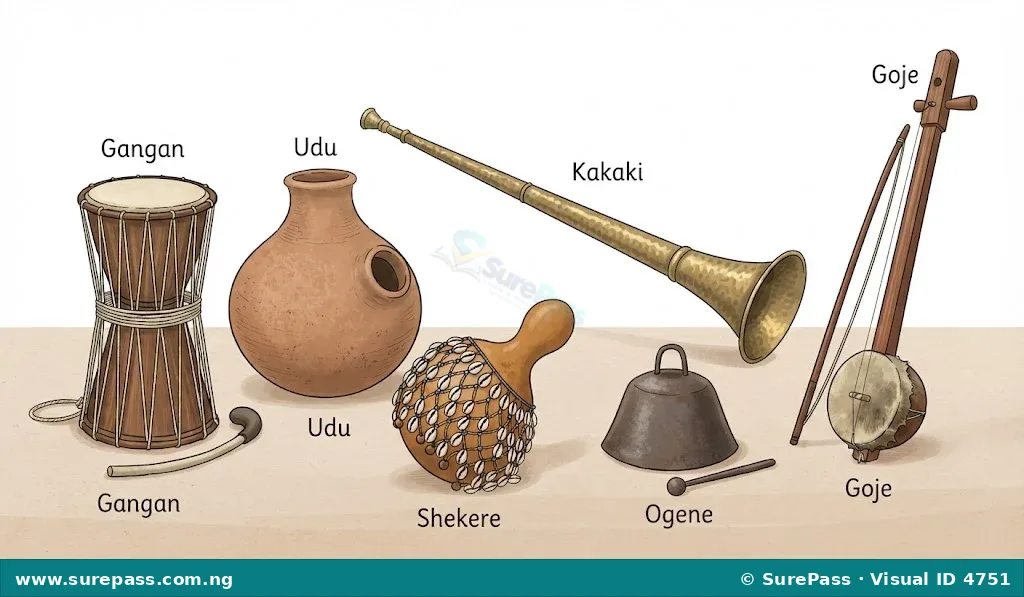
Examples of indigenous musical instruments include:
- Gangan (talking drum)
- Udu (clay pot drum)
- Kakaki (long metal trumpet)
- Shekere (gourd rattle)
- Ogene (metal gong)
- Goje (one-stringed fiddle)
Foreign Musical Instruments
Foreign musical instruments are those that originated from other countries and cultures around the world. Many of these instruments are now commonly used in Nigeria alongside our indigenous instruments, especially in modern music.
These instruments are also made from various materials and produce a wide range of sounds. They have become popular in different types of music, such as pop, rock, jazz, and classical music.
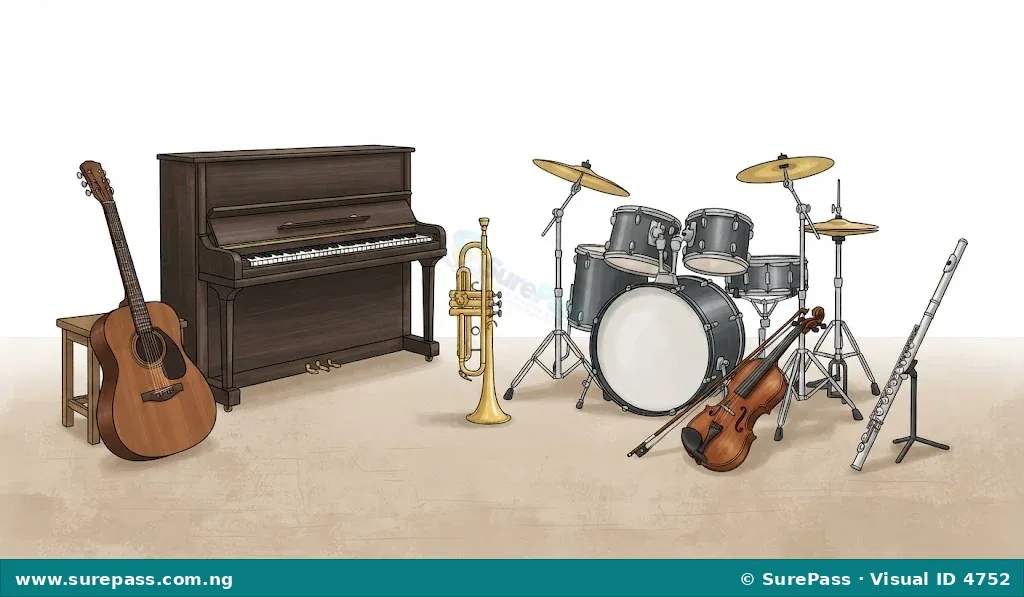
Examples of foreign musical instruments include:
- Guitar
- Piano
- Trumpet
- Drum set
- Violin
- Flute
Functions of Musical Instruments
Musical instruments serve many important purposes in music and in our daily lives. They help to create different moods and add richness to sounds.
The main functions of musical instruments include:
- Creating Melody: Instruments like the piano, guitar, or goje play the main tune of a song, which is called the melody.
- Providing Rhythm: Instruments like drums, shekere, and udu create the beat and rhythm that make people want to dance or tap their feet.
- Adding Harmony: Some instruments play supporting sounds that blend with the melody to make the music sound fuller and more pleasant.
- Setting the Mood: Different instruments and their sounds can make music sound happy, sad, exciting, or calm. For example, a soft flute sound can be calming, while loud drums can be exciting.
- Storytelling and Communication: In many cultures, especially with indigenous instruments like the talking drum (gangan), instruments are used to tell stories, send messages, or announce events.
- Accompanying Singing and Dancing: Instruments provide the background music for singers and dancers during performances, festivals, and ceremonies.
Playing Musical Instruments
Playing a musical instrument is a skill that involves learning how to make the instrument produce the right sounds and combine them to create music. It requires practice and patience.
To play an instrument, a person needs to learn how to hold it correctly, how to make sounds (for example, by striking, blowing, plucking, or bowing), and how to follow a rhythm or tune. Starting with simple instruments like a shekere or a small drum can be a good way to begin learning.
Important tips for playing musical instruments:
- Handle with Care: Always hold instruments carefully to avoid dropping or damaging them.
- Clean Regularly: Keep instruments clean to ensure they last long and produce good sounds.
- Practice Regularly: Consistent practice helps to improve playing skills and make better music.
- Listen to the Sound: Pay attention to the sounds the instrument makes and try to make them clear and pleasant.
Listening to Music and Scoring
Listening to music means paying close attention to all the different sounds and elements that make up a piece of music. It is not just hearing, but actively trying to understand what is happening in the music.
When listening to music, try to identify the different instruments being played. Can you hear the drums, the guitar, or the talking drum? Can you tell if the music is fast or slow, happy or sad?
Scoring, in a simple way for Primary 4, means identifying and noting down what you hear in the music. This could be:
- Naming the instruments you recognise.
- Describing the mood of the music (e.g., joyful, calm).
- Identifying if the music is fast (quick tempo) or slow (slow tempo).
- Recognising if the music is loud (forte) or soft (piano).
For example, if you listen to a song, you might “score” it by saying: “I hear a drum and a guitar. The music is fast and makes me feel like dancing.”
Creating Sound
Creating sound is about exploring how different objects and actions can produce sounds, which can then be used to make music or express ideas. You do not always need a formal musical instrument to create interesting sounds.
You can create sounds using your body or everyday objects around you. This helps you understand how sound is made and how it can be organised into music.
Ways to create sounds include:
- Clapping Hands: Produces a sharp, rhythmic sound.
- Stamping Feet: Creates a heavy, percussive sound.
- Snapping Fingers: Makes a light, crisp sound.
- Tapping on Objects: Tapping a pencil on a desk, or a spoon on a cup, can make different sounds.
- Shaking Objects: Shaking a container with seeds or pebbles inside can create a rattling sound, similar to a shekere.
- Humming or Singing: Using your voice to make musical tones.
By experimenting with these sounds, you can learn to combine them to create simple rhythms or even short musical pieces.




0 comments
Open the discussion when you need it. Comments stay collapsed until requested so the initial article remains light.