



ARTICLE CONTENTSOn this page 7 sections
Music
Performance Objectives
By the end of the lesson, students should be able to:
- define music;
- list types of music;
- state functions of music;
- state the benefits of music;
- practice music composition;
- practice singing, playing music.
What is Music?
Music is an art form that uses sounds organised in time. These sounds are arranged to create melody, harmony, and rhythm.
Music can be made with voices, musical instruments, or both. It is a way for people to express feelings, tell stories, or simply create beautiful sounds.
Types of Music
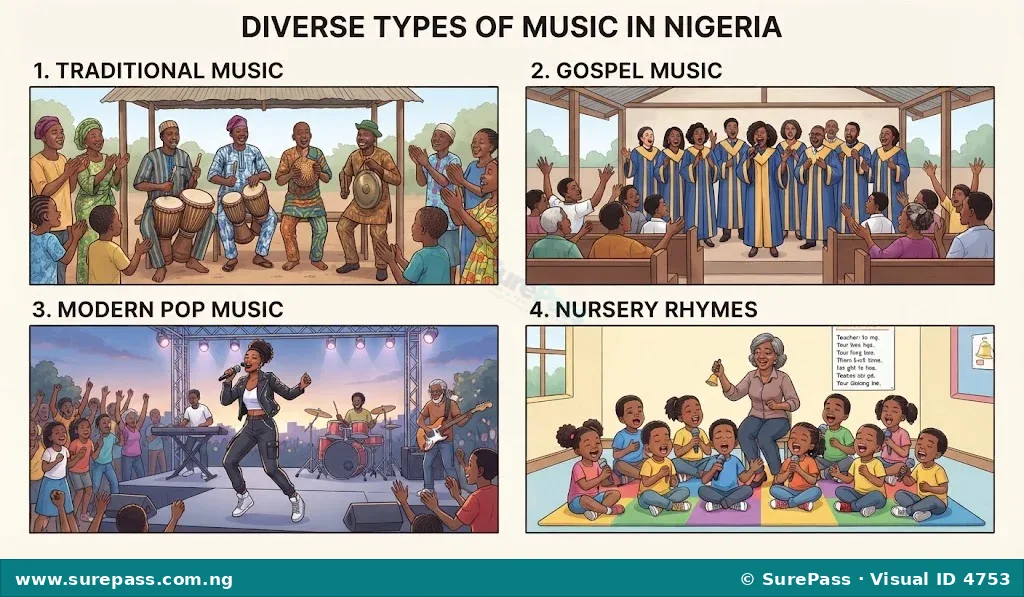
There are many different types of music around the world. Each type has its own special sound and style. People enjoy different types of music for various reasons.
Some common types of music include:
- Traditional Music: This type of music is passed down from generation to generation within a community. It often uses local instruments and tells stories about the culture, history, or daily life of the people. Examples include folk songs, praise songs for kings or chiefs, and music for traditional dances.
- Gospel Music: Gospel music is religious music that expresses Christian beliefs. It is often sung in churches and can be lively and joyful or calm and reflective.
- Pop Music: Pop music is popular music that is enjoyed by many people, especially young ones. It often has catchy tunes and simple lyrics, and it is heard on radio, television, and at parties.
- Children’s Music: This music is made specifically for children. It often has simple lyrics, repetitive rhythms, and teaches lessons or helps children learn. Examples include nursery rhymes and songs taught in school.
- Classical Music: Classical music is often played by orchestras and uses instruments like violins, pianos, and flutes. It is usually calm and can be very grand.
Functions of Music
Music serves many important purposes in our lives and communities. It is not just for entertainment; it plays a role in many activities.
The functions of music include:
- Rituals: Music is used in special religious or cultural practices. For example, traditional music is played during naming ceremonies, weddings, or funerals to mark important moments and connect with spiritual beliefs.
- Ceremonies: Music is a key part of celebrations and formal events. This includes national anthems played at official gatherings, birthday songs, graduation songs, and music for community festivals.
- Advertisement: Music is used in jingles and commercials to help sell products or services. Catchy tunes make advertisements memorable and encourage people to buy things.
- Entertainment: One of the most common functions of music is to entertain people. People listen to music for fun, to dance, or to relax. Concerts, parties, and radio shows all use music for entertainment.
- Stress Relief: Listening to calm or soothing music can help people relax and reduce stress. It can make a person feel peaceful and happy, especially after a long day.
- Educative: Music can be used to teach. Children learn the alphabet, numbers, and good manners through songs. Historical events and moral lessons can also be passed down through music.
Impact and Benefits of Music
Music has a strong impact on people and society. It brings many benefits that improve our lives.
The benefits of music include:
- Bringing Joy and Happiness: Music can lift spirits and make people feel happy and excited.
- Helping People Relax: Calm music can help people feel peaceful and reduce feelings of worry.
- Encouraging Unity: When people sing or dance to music together, it helps them feel connected and united.
- Preserving Culture: Traditional music helps to keep cultural stories, languages, and customs alive for new generations.
- Improving Learning: Songs can make learning easier and more fun, especially for children.
- Expressing Emotions: Music provides a way for people to express their feelings, whether they are happy, sad, or excited.
Practising Music Skills
Music is not just about listening; it is also about making and performing. Developing music skills can be very rewarding.
Singing
Singing is using the voice to produce musical sounds. It is a natural way to make music and express yourself.
To practice singing:
- Choose a simple song you know well, like a children’s song or a national anthem.
- Listen carefully to the melody and words.
- Try to sing along, matching the tune and rhythm.
- Practice singing clearly and loudly enough for others to hear.
- Sing with friends or family to make it more fun.
Composition of Music
Composing music means creating your own songs or musical pieces. At this level, it can be as simple as writing new lyrics to a known tune or creating a short, simple melody.
To practice music composition:
- Think of a topic or a feeling you want to express in a song.
- Write down some words or sentences that tell your story or express your feeling. This will be your lyrics.
- Try to fit your words to a simple rhythm or a tune you already know.
- You can also try to hum a new, simple tune for your words.
- Share your composed text or tune with others.
Playing of Music
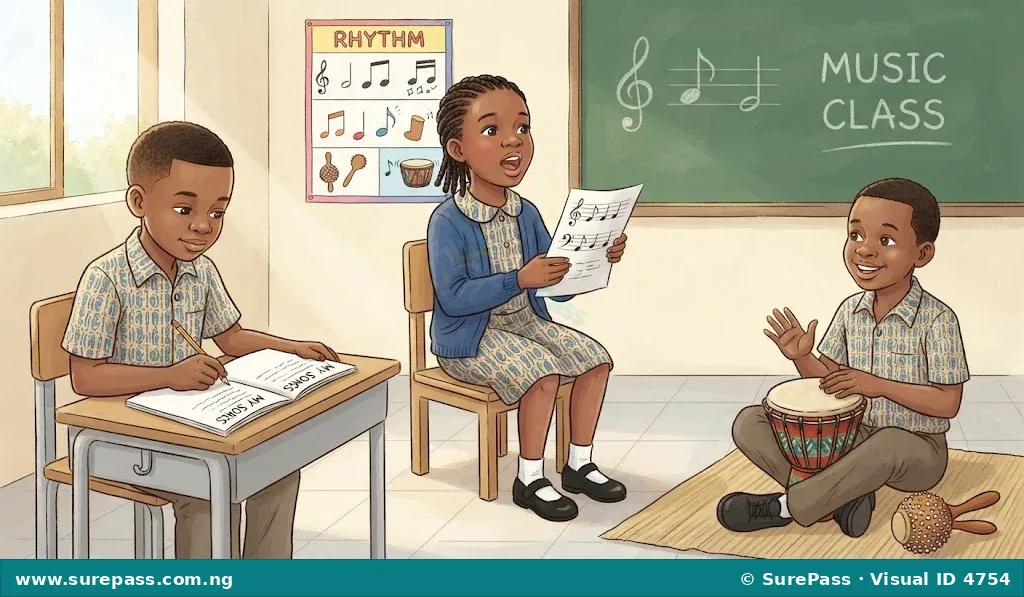
Playing music involves using musical instruments to create sounds. Even simple instruments can be fun to play.
To practice playing music:
- Choose a simple instrument like a drum, a shaker, a recorder, or even clapping your hands.
- Learn how to make different sounds with your chosen instrument. For example, hit a drum softly or loudly.
- Try to play a simple rhythm along with a song you are listening to.
- If you have a recorder, try to learn a simple tune like “Twinkle, Twinkle Little Star.”
- Practice regularly to improve your skills.



0 comments
Open the discussion when you need it. Comments stay collapsed until requested so the initial article remains light.