



ARTICLE CONTENTSOn this page 6 sections
Elements of Arts
Performance Objectives
By the end of the lesson, students should be able to:
- explain meaning of arts elements;
- describe types of elements of arts
- make illustration of each elements
- Create combined samples of art elements.
Art is all around us, from the clothes we wear to the buildings we live in and the pictures we draw. To create art, artists use basic building blocks, just like a builder uses bricks and cement to build a house. These building blocks are called the elements of art.
Meaning of Elements of Art
The elements of art are the basic visual components that artists use to create a work of art.
These elements are like the alphabet of art. When put together in different ways, they help artists express ideas, feelings, and create beautiful designs. Understanding them helps people to appreciate and create art.
Examples of Elements of Art
There are several important elements of art. Each one plays a special role in how an artwork looks and feels. The main elements of art include:
- Line
- Colour
- Form
- Space
- Texture
- Shape
Let us look at each of these elements in more detail.
Line
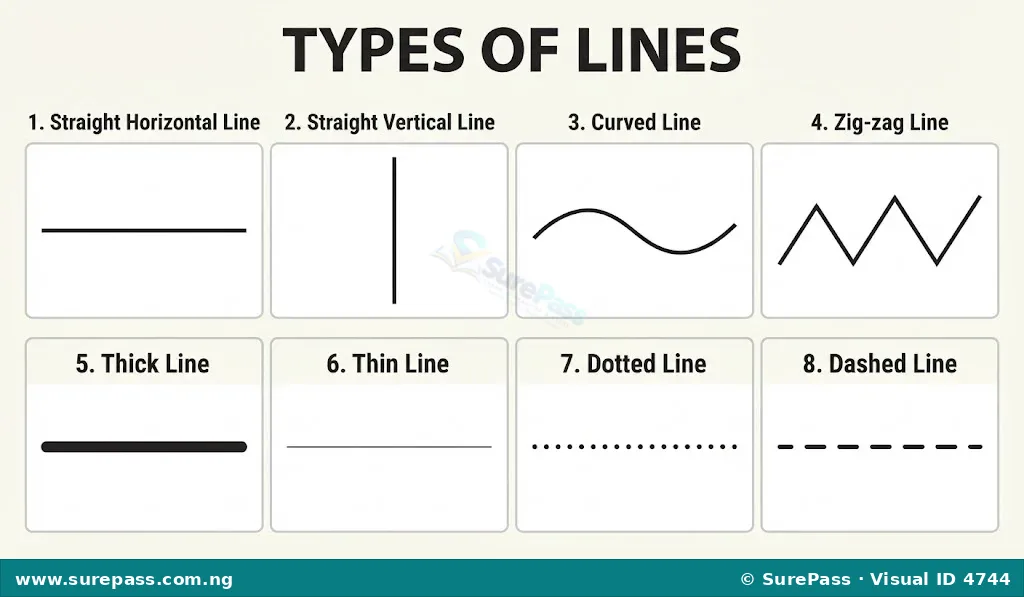
A line is a mark made on a surface by a moving point.
Lines can be straight, curved, zig-zag, thick, thin, long, or short. They can show direction, outline objects, or create patterns. For example, a straight line can show strength, while a wavy line can show movement or water.
Colour
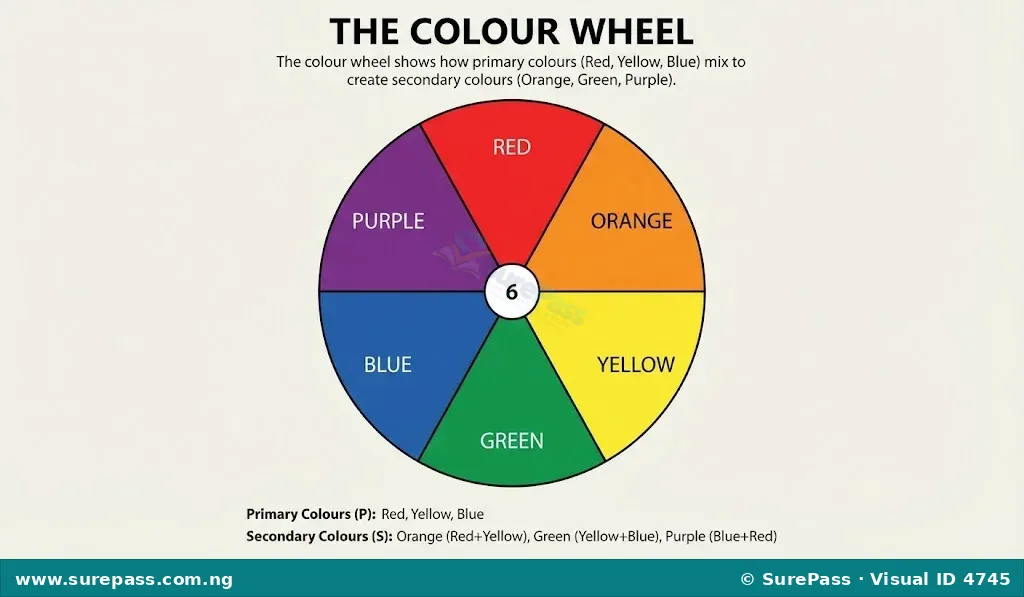
Colour is the element of art that comes from light.
Colours are seen everywhere, from the bright red of a hibiscus flower to the deep blue of the sky. Artists use colours to create mood, show feelings, and make objects look real or imaginary. Primary colours are red, yellow, and blue. Mixing these can create other colours.
Form
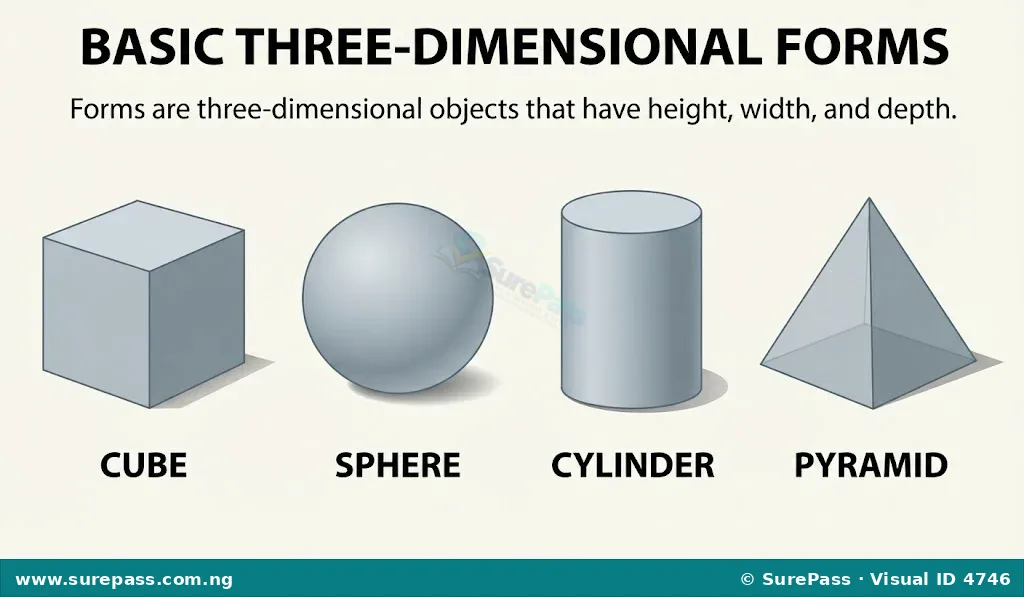
Form is an element of art that describes a three-dimensional object.
Unlike a shape, which is flat, a form has height, width, and depth. This means it can be seen from different sides and takes up space. Examples of forms include cubes, spheres (like a ball), cylinders (like a can), and pyramids. Sculptors create forms with clay, wood, or stone.
Space
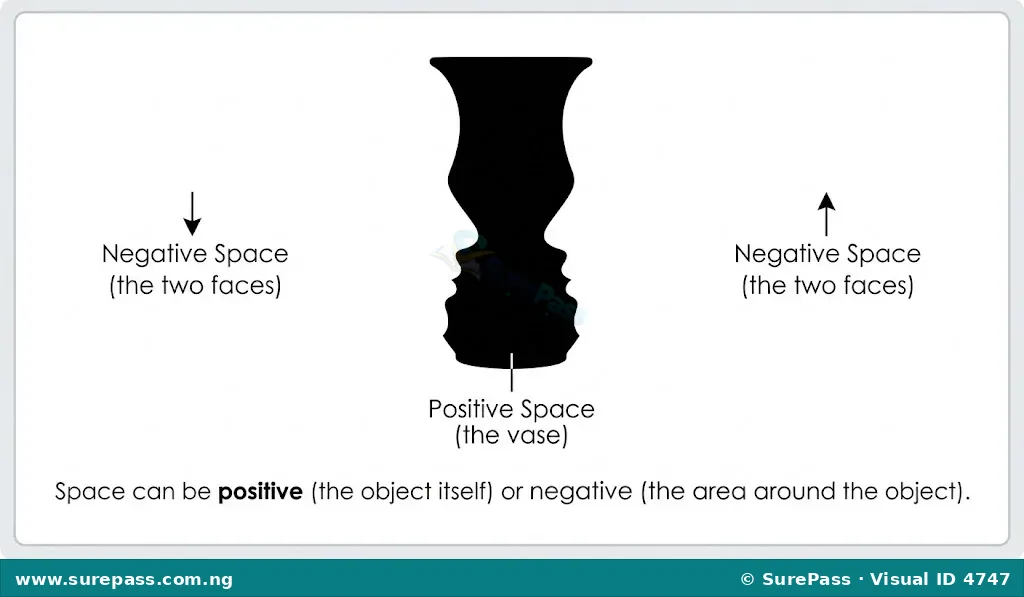
Space is the area around, between, or within objects in a work of art.
Artists use space to create a sense of depth or distance. It can be positive space (the area occupied by objects) or negative space (the empty area around objects). For example, in a drawing of a person, the person is positive space, and the background around them is negative space. Space can make objects look close or far away.
Texture
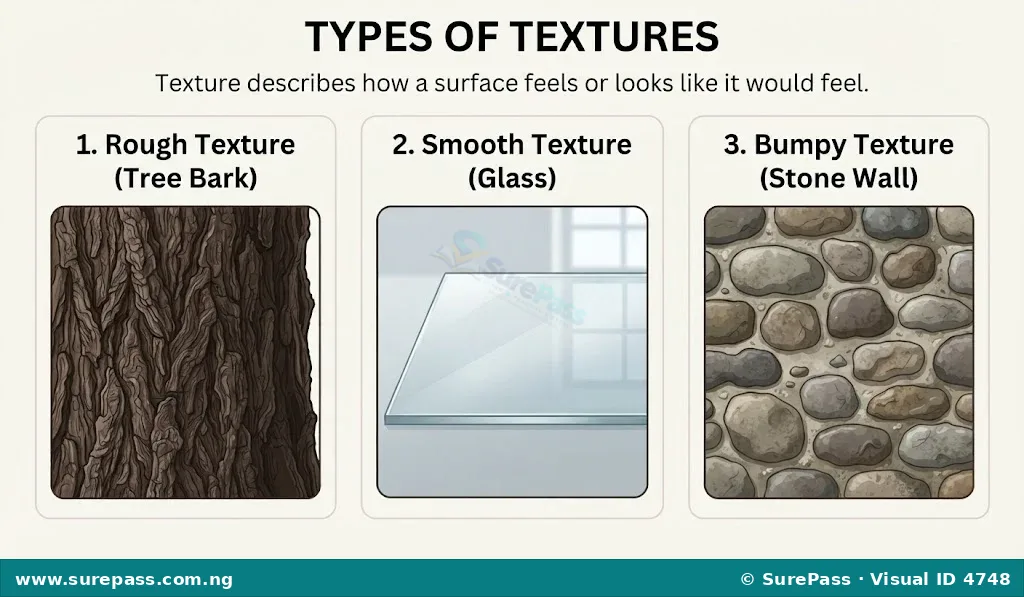
Texture is the way something feels or looks like it would feel if touched.
Texture can be rough, smooth, soft, hard, bumpy, or silky. Artists can create actual texture that can be felt, like in a sculpture, or implied texture, which is how a surface looks in a painting or drawing. For example, a drawing of a tree bark might look rough, even though the paper is smooth.
Shape
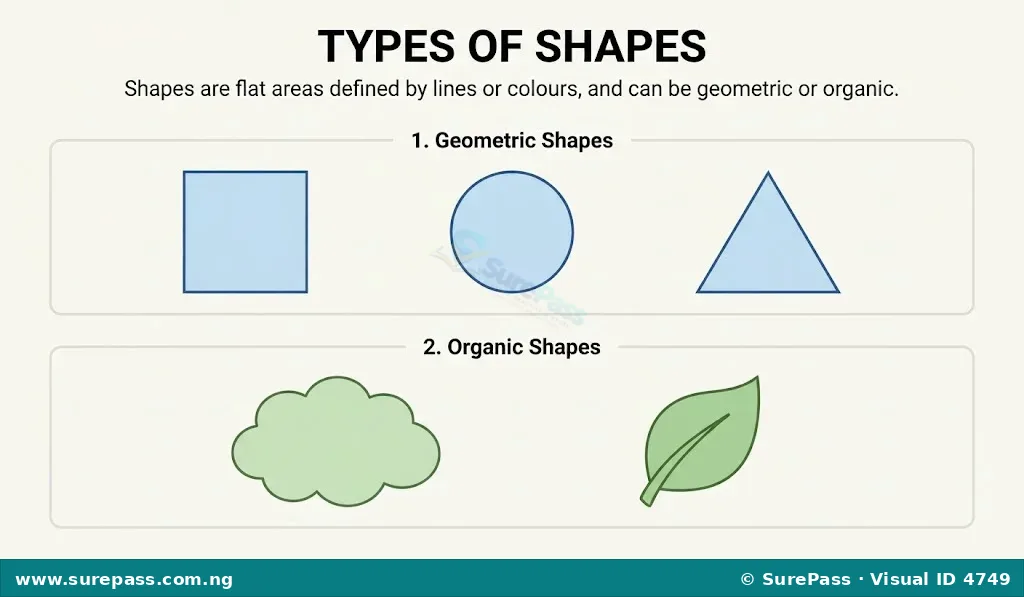
A shape is a two-dimensional area that is defined by lines or colour.
Shapes are flat and only have height and width. They can be geometric, like squares, circles, and triangles, or organic, like the irregular shapes of leaves or clouds. Shapes are used to create patterns, define objects, and add interest to an artwork.
Making Illustrations of Art Elements
Creating your own illustrations of the elements of art helps you understand them better. You can use simple materials like pencils, crayons, or coloured pencils in your drawing book.
How to Illustrate Each Element
The procedure involves the following steps:
- For Line: Draw different types of lines on a page. Include straight lines, curved lines, zig-zag lines, thick lines, and thin lines. You can make them go in different directions.
- For Colour: Draw a few simple shapes like circles or squares. Colour each shape with a different primary colour (red, yellow, blue). Then, try mixing two primary colours to create a secondary colour (e.g., red + yellow = orange).
- For Form: Try to draw objects that look three-dimensional. For example, draw a square and then add lines to make it look like a cube. Draw a circle and add shading to make it look like a ball (sphere).
- For Space: Draw a simple object, like a cup, in the middle of your page. The cup is the positive space. The empty area around the cup is the negative space. You can lightly shade the negative space to make it clearer.
- For Texture: Draw different sections on your page. In one section, try to draw lines and dots to make it look rough, like a stone. In another, draw smooth, even lines to make it look smooth, like glass.
- For Shape: Draw a variety of two-dimensional shapes. Include geometric shapes like squares, circles, and triangles. Also, draw some organic shapes, such as a cloud or a leaf.
Creating Combined Samples of Art Elements
Artists rarely use just one element of art. They combine different elements to create interesting and complete artworks. Combining elements means using lines, colours, shapes, and textures together in one drawing or design.
How to Combine Art Elements in a Design
The procedure involves the following steps:
- Choose a simple theme: Think of something simple to draw, like a house, a tree, or a fruit basket.
- Start with lines and shapes: Use lines to draw the outline of your chosen object. For a house, you might use straight lines for the walls and a triangle for the roof.
- Add colour: Fill in your shapes with different colours. Use bright colours for parts you want to stand out and softer colours for other parts.
- Think about texture: How would the roof of the house feel? Maybe rough like zinc. How would the tree trunk feel? Rough like bark. Try to draw patterns or marks that suggest these textures.
- Consider form and space: Use shading with your pencil or colours to make your shapes look like forms (three-dimensional). Think about the space around your object. Is there a background? What is in it?
- Review your work: Look at your drawing. Can you see how you used lines, colours, shapes, and textures together? Does it look interesting?
By practising these steps, you will become better at using the elements of art to create your own unique designs and artworks.



0 comments
Open the discussion when you need it. Comments stay collapsed until requested so the initial article remains light.