



ARTICLE CONTENTSOn this page 5 sections
Art tools and Equipment
Performance Objectives
By the end of the lesson, students should be able to:
- explain the meaning of art tools and equipment;
- state types of art tools and equipment;
- use art tools and equipment to produce art work.
Meaning of Art Tools and Equipment
Art tools and equipment are special items that artists and pupils use to create artworks. These items help to draw, colour, cut, glue, and shape different materials into beautiful designs and pictures.
Just like a builder needs tools to build a house, an artist needs tools to make art. These tools make it easier to express ideas and bring creative thoughts to life on paper or other surfaces.
Types of Art Tools and Equipment and Their Uses
Many different tools and pieces of equipment are used in art. Each one has a special job that helps in making different kinds of artwork. Knowing what each tool does helps artists choose the right ones for their projects.
Drawing Tools
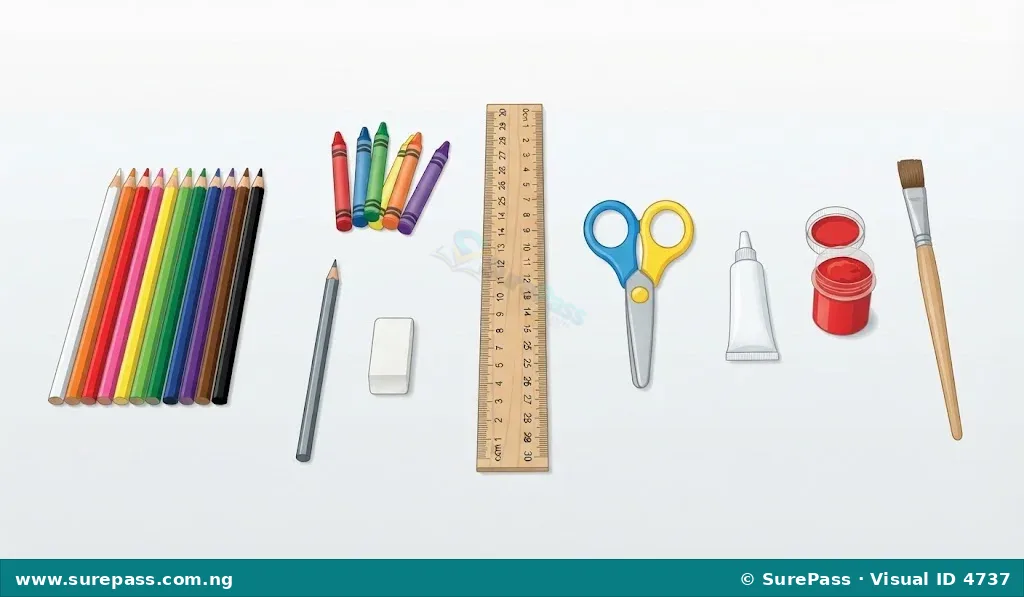
Drawing tools are used to make lines, shapes, and outlines on paper. They help to create the basic structure of an artwork.
- Pencils: Pencils are used for drawing, sketching, and writing. They come in different hardness levels, which affect how dark or light the lines are.
- Erasers: Erasers are used to remove pencil marks and correct mistakes. They help to keep drawings neat and clean.
- Rulers: Rulers are used to draw straight lines and measure distances. They are helpful for creating geometric shapes and accurate designs.
Colouring Tools
Colouring tools add colour and life to drawings and artworks. They help to fill in shapes and create different shades and effects.
- Crayons: Crayons are made of wax and come in many colours. They are used for colouring large areas and creating bold, bright pictures.
- Colour Pencils: Colour pencils are similar to regular pencils but contain coloured pigment. They are used for detailed colouring, shading, and blending colours.
- Paints: Paints come in various forms like watercolour or poster paint. They are used with paintbrushes to add liquid colour to artworks, creating smooth or textured surfaces.
- Paintbrushes: Paintbrushes are used to apply paint to paper or other surfaces. They come in different sizes and shapes for various painting techniques.
Cutting and Gluing Tools
Cutting and gluing tools are used to shape materials and join different parts of an artwork together, especially in crafts like collage.
- Scissors: Scissors are used to cut paper, fabric, and other thin materials into desired shapes. They are essential for making collages and paper crafts.
- Glue: Glue is used to stick pieces of paper, fabric, or other materials together. It helps to assemble different parts of an artwork.
Handling and Manipulating Art Tools to Produce Artwork
Using art tools correctly helps to create good artwork and keeps everyone safe. It is important to learn how to hold and use each tool properly.
Important Safety Tips for Art Tools
- Scissors: Always hold scissors by the handle. Cut away from the body and never run with scissors. Pass scissors to another person with the handles first.
- Pencils and Colour Pencils: Do not point pencils at others or put them in the mouth. Sharpen pencils carefully, or ask an adult for help.
- Glue: Use glue in a well-ventilated area. Do not taste or eat glue. Close the lid tightly after use to prevent it from drying.
- Paints: Avoid getting paint in the eyes or mouth. Clean paintbrushes and palettes immediately after use.
How to Create a Simple Artwork Using Art Tools
This activity will guide you through making a simple drawing and colouring it, using several art tools.
The required materials are:
- Drawing paper or exercise book
- Pencil
- Eraser
- Ruler (optional)
- Crayons or colour pencils
The procedure involves the following steps:
- Prepare your workspace: Clear a flat surface like a table. Make sure you have enough light.
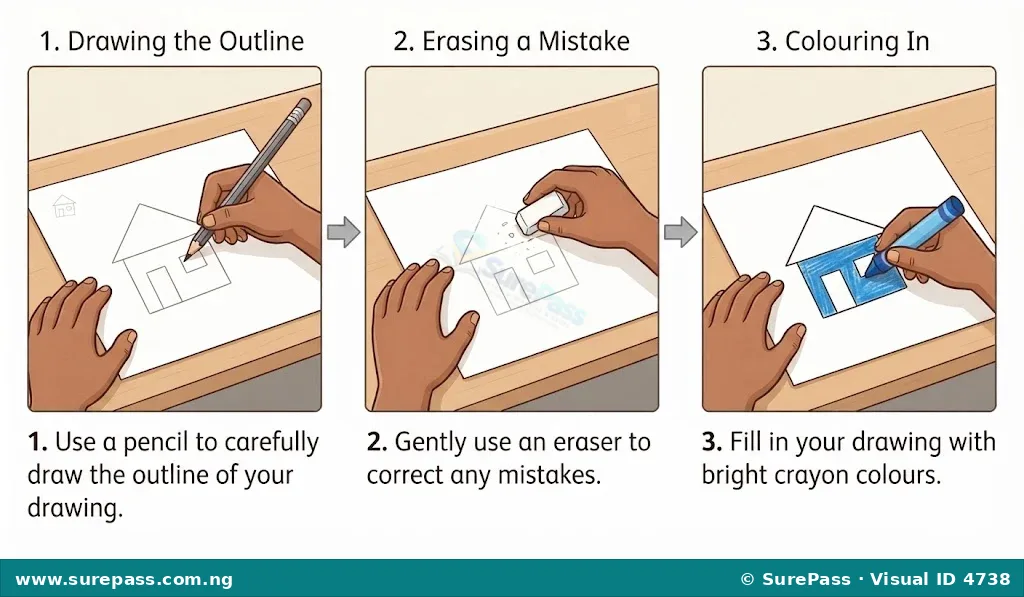
- Hold your pencil correctly: Hold the pencil gently but firmly between your thumb and first two fingers, about an inch from the tip. This gives you good control for drawing.
- Draw a simple object: Use your pencil to draw a simple object like a house, a tree, or a flower on your drawing paper. Start with light lines. If you need straight lines, use your ruler.
- Correct mistakes with an eraser: If you make a mistake, use your eraser to gently rub out the pencil mark. Make sure to clean away any eraser crumbs.
- Choose your colours: Select the crayons or colour pencils you want to use for your artwork.
- Hold colouring tools correctly: Hold crayons or colour pencils in the same way you hold a pencil. For larger areas, you can hold the crayon on its side for broader strokes.
- Colour your drawing: Carefully fill in the shapes of your drawing with colours. Try to colour neatly within the lines. You can press harder for darker colours or lighter for softer colours.
- Finish your artwork: Once you have finished colouring, look at your artwork. Ensure all parts are coloured as desired.



0 comments
Open the discussion when you need it. Comments stay collapsed until requested so the initial article remains light.