



ARTICLE CONTENTSOn this page 6 sections
Principles of Design
Performance Objectives
By the end of the lesson, students should be able to:
- explain the meaning of design;
- list the principles of design;
- identify the uses of principles of design in artwork by observing different forms of art (painting, sculpture, textiles, etc.);
- use techniques of principles of design to create, design an art works.
What is Design?
Design is the plan or arrangement of lines, shapes, colours, and textures to create an artwork or object.
It is how an artist puts different parts together to make something look good and interesting. When you draw a picture, arrange flowers, or even set a table, you are using design.
Principles of Design
The principles of design are like rules or guidelines that artists follow to make their artwork look balanced, interesting, and complete. They help to organise the elements of art (like line, shape, colour, and texture) in a pleasing way.
The main principles of design are:
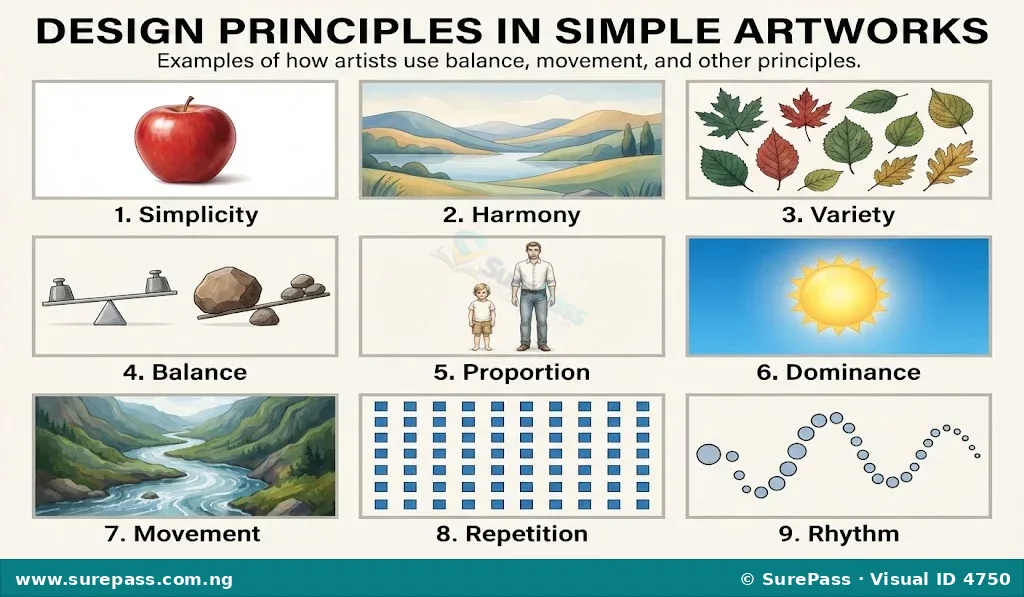
- Simplicity
- Harmony or Unity
- Variety
- Balance
- Proportion
- Dominance, Point of Attraction, or Emphasis
- Movement
- Repetition
- Rhythm
Simplicity
Simplicity means keeping an artwork clear and not too crowded. It focuses on a few important things without too many extra details. An artwork with simplicity is easy to understand and appreciate.
For example, a drawing of a single fruit on a plain background shows simplicity.
Harmony or Unity
Harmony or unity means that all the parts of an artwork work well together and look like they belong. Everything in the artwork feels connected and complete, creating a sense of oneness.
Imagine a painting where all the colours and shapes blend nicely, making the whole picture feel calm and organised.
Variety
Variety is about using different elements in an artwork to make it interesting and avoid boredom. It can involve using different shapes, sizes, colours, or textures.
For instance, a drawing of different types of leaves, some big, some small, some dark, some light, shows variety.
Balance
Balance in art refers to how the visual weight of elements is distributed in an artwork. It makes the artwork feel stable and not lopsided. Balance can be symmetrical (same on both sides) or asymmetrical (different on both sides but still feeling balanced).
A drawing of a tree with equal branches on both sides is an example of symmetrical balance. A drawing with a large object on one side and several smaller objects on the other side can show asymmetrical balance.
Proportion
Proportion is about the size relationship between different parts of an artwork or between the parts and the whole. It helps to make things look realistic or intentionally exaggerated.
For example, when drawing a person, the head should be in good proportion to the body. If the head is too big or too small, the proportion is off.
Dominance, Point of Attraction, or Emphasis
Dominance, point of attraction, or emphasis means making one part of an artwork stand out more than others. This part becomes the focal point, drawing the viewer’s eye first.
An artist might use a brighter colour, a larger shape, or a more detailed area to create emphasis. For example, a painting of a market scene might have one person wearing a very bright dress to make them the main focus.
Movement
Movement is the way an artist guides the viewer’s eye through an artwork, often to a focal point. It can be created by using lines, shapes, or colours that lead the eye from one area to another.
Imagine a drawing of a winding road that leads your eye from the foreground into the distance.
Repetition
Repetition is the act of using the same element, such as a shape, line, or colour, more than once in an artwork. It helps to create unity and a sense of pattern.
A textile design with the same small flower pattern repeated all over the fabric uses repetition.
Rhythm
Rhythm is created by repeating elements in a planned or varied way to create a sense of organised movement. It is like the beat in music, guiding the eye smoothly through the artwork.
For example, a series of lines that get longer and shorter in a regular pattern can create rhythm.
Uses of Principles of Design in Artwork
The principles of design are very important because they help artists create artworks that are:
-
Pleasing to the Eye: They help to arrange elements in a way that looks good and attractive.
-
Clear and Understandable: Principles like simplicity and emphasis help to make the main message or subject of the artwork clear.
-
Interesting: Variety and movement keep the viewer engaged and prevent the artwork from being boring.
-
Balanced and Stable: Balance ensures that the artwork does not feel heavy on one side or about to fall over.
-
Unified: Harmony and repetition make all the parts of the artwork feel connected and complete.
By observing different forms of art like paintings, sculptures, and textile designs, you can see how artists use these principles to make their work effective and beautiful.
Creating Artwork Using Principles of Design
You can use the principles of design to make your own artwork look better. This involves planning how you will arrange your lines, shapes, and colours.
How to Create an Artwork Using Design Principles
This activity will guide you to create a simple drawing that shows some of the design principles.
The required materials are:
- Drawing book or paper
- Pencils
- Colours (crayons, coloured pencils, or watercolours)
- Ruler (optional)
The procedure involves the following steps:
-
Choose a Theme: Decide what you want to draw. For example, you can draw a garden, a market scene, or a pattern.
-
Plan for Simplicity: Start by thinking about the main things you want to show. Do not try to put too many things in your drawing. For a garden, maybe focus on a few flowers and a tree.
-
Consider Balance: Think about how you will place your objects on the paper. Will you have a big object on one side and smaller ones on the other (asymmetrical balance), or will you try to make both sides look similar (symmetrical balance)?
-
Add Variety: Use different types of shapes, sizes, or colours for your objects. If you are drawing flowers, make some big and some small, or use different colours for different flowers.
-
Create Emphasis: Decide which part of your drawing you want people to notice first. You can make it bigger, brighter, or more detailed than other parts. For example, make one flower much larger and brighter than the rest.
-
Use Repetition or Rhythm: If you are drawing a pattern, repeat a shape or line. For a garden, you might draw a row of similar flowers to create repetition and rhythm.
-
Draw with Pencil: Lightly sketch your design using a pencil, keeping the chosen principles in mind.
-
Add Colours: Use your colours to fill in your drawing. Think about how the colours work together to create harmony and make your emphasized part stand out.
-
Review Your Work: Look at your finished artwork. Does it show simplicity? Is it balanced? Does it have variety? Does one part stand out? Do all the parts work together?


0 comments
Open the discussion when you need it. Comments stay collapsed until requested so the initial article remains light.