


ARTICLE CONTENTSOn this page 8 sections
Sunayen Dabbobi
Performance Objectives
By the end of the lesson, students should be able to:
- bayyana ma’anar dabbobi;
- kawo sunayen dabbobin gida da na daji;
- tantance sunayen dabbobi daga hotuna;
- kallon fim na namun daji a wayar salula;
- rubuta jumla mai ɗauke da sunayen dabbobin gida da na daji;
- karanta jum loli masu ɗauke da sunayen dabbobin gida da na daji.
Menene Dabbobi? (What are Animals?)
Dabbobi halittu ne masu rai waɗanda suke motsi, suna ci, kuma suna girma.
Animals are living things that move, eat, and grow. They are found all around us, in our homes, on farms, and in the bush.
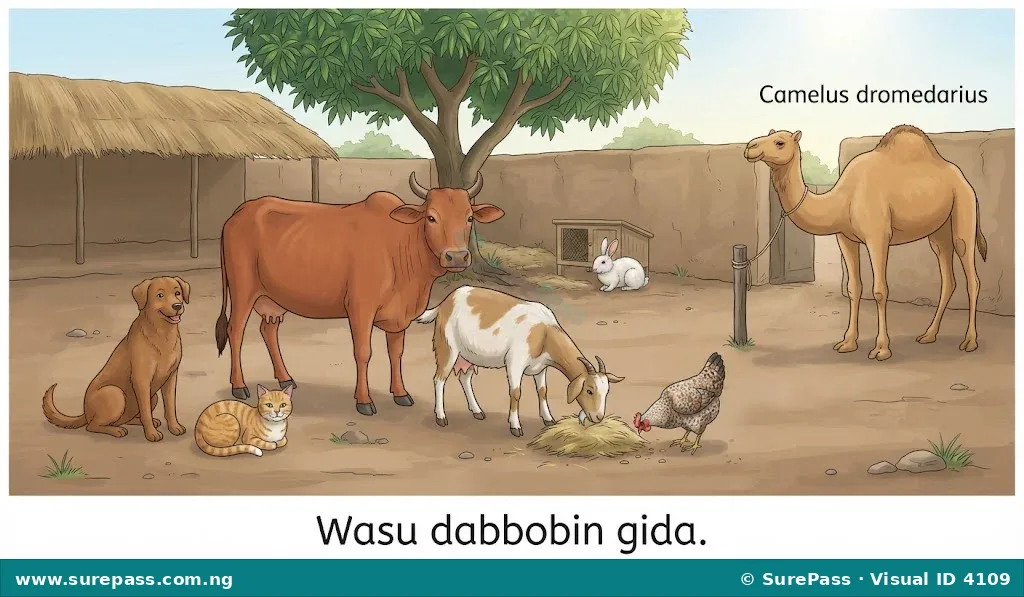
Dabbobin Gida (Domestic Animals)
Dabbobin gida dabbobi ne da mutane ke kiwo a gida ko a gona. Suna taimaka wa mutane ta hanyoyi daban-daban.
Domestic animals are animals that people keep at home or on a farm. They help people in many ways, such as providing food, helping with work, or being companions.
Ga wasu sunayen dabbobin gida:
- Kare (Dog)
- Kyanwa (Cat)
- Akuya (Goat)
- Sa (Cow)
- Kaza (Chicken)
- Rakumi (Camel)
- Zomo (Rabbit)
Dabbobin Daji (Wild Animals)
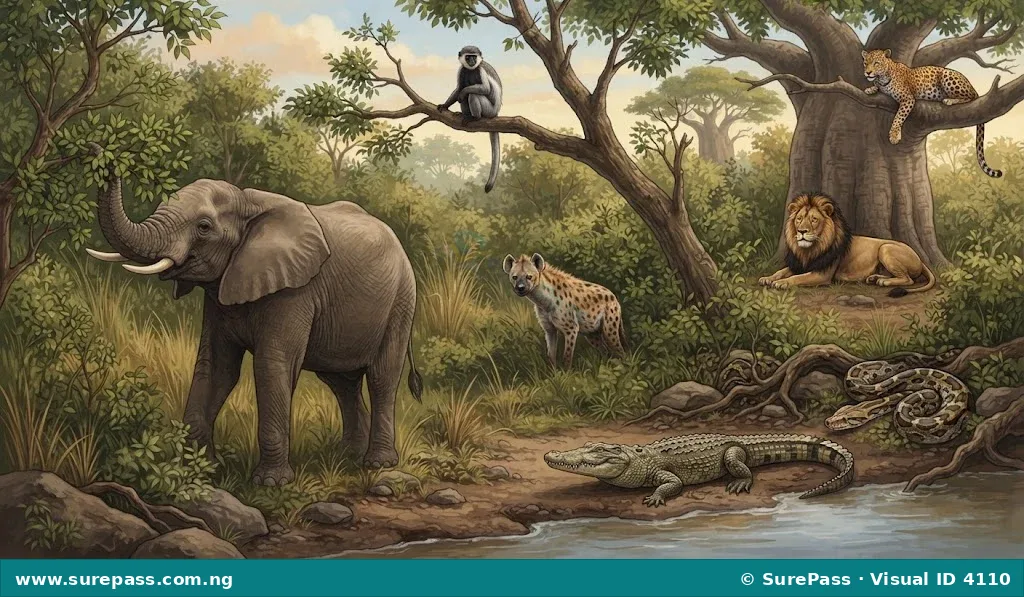
Dabbobin daji dabbobi ne da suke rayuwa a cikin daji ko jeji. Ba sa zama tare da mutane a gida.
Wild animals are animals that live in the bush or forest. They do not live with people at home. They find their own food and shelter in nature.
Ga wasu sunayen dabbobin daji:
- Zaki (Lion)
- Giwa (Elephant)
- Damisa (Leopard)
- Kura (Hyena)
- Biri (Monkey)
- Kada (Crocodile)
- Maciji (Snake)
Karatu: Karanta Sunayen Dabbobi (Reading: Read Animal Names)
Za a iya karanta sunayen dabbobi a cikin jumloli. Wannan yana taimakawa wajen fahimtar yadda ake amfani da kalmomin dabbobi.
You can read animal names in sentences. This helps in understanding how animal words are used.
Karanta waɗannan jumlolin:
- Kare yana gadi. (The dog is guarding.)
- Kyanwa tana kama bera. (The cat catches mice.)
- Akuya tana cin ciyawa. (The goat eats grass.)
- Sa yana ba da madara. (The cow gives milk.)
- Kaza tana kwai. (The chicken lays eggs.)
- Zaki yana zaune a daji. (The lion lives in the bush.)
- Giwa babbar dabba ce. (The elephant is a big animal.)
- Biri yana hawan bishiya. (The monkey climbs trees.)
Rubutu: Rubuta Sunayen Dabbobi (Writing: Write Animal Names)
Yana da muhimmanci a iya rubuta sunayen dabbobi da kuma amfani da su a cikin jumloli. Wannan yana taimakawa wajen inganta rubutu.
It is important to be able to write animal names and use them in sentences. This helps to improve writing skills.
Rubuta waɗannan jumlolin a cikin littafin rubutunka:
- Na ga kare a gida. (I saw a dog at home.)
- Kyanwa tana wasa. (The cat is playing.)
- Akuya tana da yara. (The goat has young ones.)
- Sa yana cikin gona. (The cow is in the farm.)
- Kaza tana cin abinci. (The chicken is eating food.)
- Zaki yana da ƙarfi. (The lion is strong.)
- Giwa tana da dogon hanci. (The elephant has a long trunk.)
- Biri yana cin ayaba. (The monkey eats banana.)
Sanin Ma’anar Kalmomi (Understanding Word Meanings)
Fahimtar ma’anar kalmomin dabbobi yana taimakawa wajen sadarwa da kuma koyon Hausa.
Understanding the meaning of animal words helps with communication and learning Hausa.
Ga wasu kalmomi da ma’anoninsu:
- Dabbobi: Animals
- Dabbobin gida: Domestic animals
- Dabbobin daji: Wild animals
- Kare: Dog
- Kyanwa: Cat
- Akuya: Goat
- Sa: Cow
- Kaza: Chicken
- Rakumi: Camel
- Zomo: Rabbit
- Zaki: Lion
- Giwa: Elephant
- Damisa: Leopard
- Kura: Hyena
- Biri: Monkey
- Kada: Crocodile
- Maciji: Snake


0 comments
Open the discussion when you need it. Comments stay collapsed until requested so the initial article remains light.