



ARTICLE CONTENTSOn this page 9 sections
Political Parties
Performance Objectives
By the end of the lesson, students should be able to:
- explain the meaning of political parties;
- evaluate how political parties are organized;
- discuss the functions of political parties;
- explain the types of political parties;
- discuss the modes of operation of political parties.
Meaning of Political Parties
A political party is an organized group of individuals who share similar political opinions, principles and interests, and who seek to acquire and exercise political power by contesting elections to control the machinery of government.
Political parties are essential institutions in a representative democracy. They serve as the primary vehicle through which citizens participate in elections and influence government policy. Unlike pressure groups, which seek to influence government decisions from the outside, political parties aim to win elections and form the government directly.
Organisation of Political Parties
Political parties are structured hierarchically to ensure effective administration, mobilization of voters, and coordination of activities from the grassroots to the national level. This structure allows the party to maintain discipline and execute its strategies efficiently.
The organizational structure of a political party generally includes the following levels:
- The Ward Level: This is the smallest and most basic unit of a political party, located at the grassroots level. It is where individual members register and hold regular local meetings.
- The Local Government Area Level: This level coordinates the activities of all the wards within a specific local government area. It serves as a bridge between the grassroots and the state level.
- The State Level: This level manages party affairs within a state. It is led by a state executive committee, which oversees campaigns and party administration across all local government areas in the state.
- The National Level: This is the highest decision-making body of the political party. It is led by the National Chairman and the National Executive Committee (NEC), which formulate national policies and oversee the party’s nationwide operations.
In addition to these levels, political parties are governed by specific internal organs, which include:
- The National Convention: This is the supreme organ of the party. It consists of delegates from all over the country who meet to elect national officers, ratify the party constitution, and nominate the party’s presidential candidate.
- The National Executive Committee (NEC): This body is responsible for the day-to-day administration of the party and the implementation of decisions made at the National Convention.
- The Board of Trustees (BoT): This is an advisory body made up of elders, founding members, and highly respected individuals within the party who help resolve internal conflicts and provide guidance.
- The National Secretariat: This is the administrative headquarters of the party, headed by the National Secretary, where administrative records, correspondence, and daily operations are managed.
Functions of Political Parties
Political parties perform several vital roles that sustain democratic governance and ensure the smooth running of the political system. These functions help to connect the government with the citizens.
The main functions of political parties include:
- Political Recruitment: Political parties identify, select, and train qualified individuals to contest elections and hold public office, ensuring a steady supply of leadership for the nation.
- Interest Aggregation: Parties combine the diverse demands, opinions, and interests of different groups in society into a single, coherent policy platform or manifesto.
- Political Education: Parties educate the electorate on government policies, national issues, and civic responsibilities through rallies, debates, and publications, thereby increasing political awareness.
- Contesting Elections: Parties present candidates for public office and organize campaigns to win votes, providing citizens with choices during elections.
- Formation of Government: The political party that wins the majority of seats in an election forms the executive and legislative arms of government to implement its proposed policies.
- Providing Constructive Opposition: Parties that lose elections act as watchdogs over the ruling party. They criticize unpopular government policies and offer alternative solutions, which helps prevent dictatorship.
- National Integration: By recruiting members and supporters from different ethnic, religious, and regional backgrounds, political parties help to promote national unity and reduce sectionalism.
Types of Political Parties
Political parties can be classified into different categories based on their membership, ideology, structure, and goals. Understanding these types helps to analyze how different parties behave in a political system.
The primary types of political parties are:
- Mass Parties: These are parties with open membership that seek to recruit members from all segments of society, including workers, farmers, and professionals. They rely on membership dues for funding and emphasize large-scale mobilization of the masses.
- Caucus or Elite Parties: These are exclusive parties with restricted membership, usually made up of wealthy, influential, or highly educated individuals. They rely on the financial contributions and personal influence of a few prominent members rather than a large membership base.
- Ideological Parties: These parties are formed around a specific, strong political ideology or philosophy, such as socialism, communism, or capitalism. Members are deeply committed to implementing these specific doctrines and rarely compromise on their core beliefs.
- Broker Parties: These are pragmatic parties that do not strictly adhere to a single ideology. Instead, they seek to reconcile conflicting interests in society by appealing to a wide range of voters from different social classes, regions, and backgrounds.
- Charismatic or Personality Parties: These parties are formed around the personal appeal, popularity, and leadership of a single charismatic individual. The survival and success of the party often depend heavily on the presence and influence of that leader.
Modes of Operation of Political Parties
Modes of operation refer to the methods, strategies, and procedures that political parties employ to achieve their objectives, mobilize support, and run their internal affairs. These operations are guided by electoral laws and the party’s constitution.
The primary modes of operation of political parties include:
- Formulating a Party Manifesto: A manifesto is a written document that outlines the party’s beliefs, policies, programmes, and promises to the electorate. It serves as the contract between the party and the voters, detailing what the party intends to achieve if voted into power.
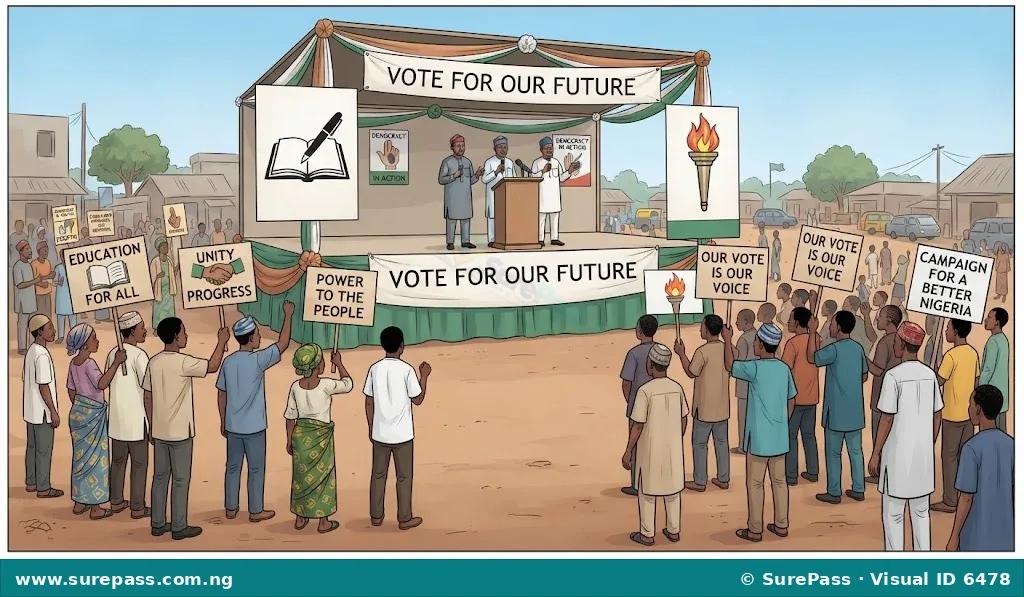
- Political Campaigns and Rallies: Parties organize public gatherings, roadshows, and media broadcasts to present their candidates, explain their manifestos, and persuade voters to support them. This involves the use of posters, banners, and handbills.
- Conducting Primary Elections: Before the general elections, political parties hold internal elections, known as primaries, to select the candidates who will represent the party for various public offices.
- Party Financing: Parties raise funds to sponsor their activities, campaigns, and administrative costs. This is done through membership registration fees, monthly dues, donations from wealthy supporters, and fundraising events.
- Lobbying and Alliance Building: Parties often engage with interest groups, traditional rulers, and community leaders to secure endorsements. They may also form coalitions or alliances with other political parties to increase their chances of winning elections.
- Use of Party Symbols and Logos: Parties adopt distinct symbols, colours, and slogans (such as an umbrella, a broom, or a book) to help voters, especially those who cannot read, easily identify the party on the ballot paper during voting.
Observe the illustration below showing a political campaign scene.
Summary of Key Concepts
The table below provides a comparison of the different types of political parties based on their membership and funding sources:
| Type of Party | Membership Criteria | Primary Source of Funding | Core Focus |
|---|---|---|---|
| Mass Party | Open to all citizens | Membership dues and small donations | Large-scale mobilization of the public |
| Caucus/Elite Party | Restricted to wealthy and influential individuals | Large donations from wealthy patrons | Influence and status of key members |
| Ideological Party | Open to those who share the party’s specific philosophy | Committed members and ideological organizations | Strict adherence to a political doctrine |
| Broker Party | Open to diverse groups | Various donors and interest groups | Compromise and broad appeal to win elections |
| Charismatic Party | Centred around a specific leader | The leader and close associates | The popularity and vision of the leader |
Study Questions
Answer the following questions to test your understanding of the topic:
- Define a political party and explain how it differs from a pressure group.
- Describe the hierarchical organization of a political party from the grassroots to the national level.
- Discuss four major functions of political parties in a democratic state.
- Identify and explain three types of political parties.
- Explain four modes of operation employed by political parties to win elections.



0 comments
Open the discussion when you need it. Comments stay collapsed until requested so the initial article remains light.