



ARTICLE CONTENTSOn this page 7 sections
Political Participation
Performance Objectives
By the end of the lesson, students should be able to:
- explain the meaning of political participation;
- discuss the forms of political participation;
- examine the purpose of political participation;
- demonstrate the voting process.
Meaning of Political Participation
Political participation is the active involvement of citizens in the political affairs, decision-making processes, and governance of their country.
In any democratic society, the power of the government is derived from the people. Political participation is the mechanism through which citizens exercise this power. It is not limited to the government or politicians; rather, it involves ordinary members of the public taking actions to influence political outcomes, choose leaders, and shape public policies. When citizens participate in politics, they help to ensure that the government remains responsive to the needs and aspirations of the society.
Political participation can be active or passive. Active participation involves direct, physical, or intellectual engagement in political activities, such as running for office, voting, or organizing campaigns. Passive participation, on the other hand, involves less direct engagement, such as listening to political news, discussing political events with friends, or simply obeying laws and paying taxes without actively seeking to influence the political system.
Forms of Political Participation
Citizens can engage in the political process through various methods. These methods range from formal institutional activities to informal community-based actions.
The primary forms of political participation include:
- Voting in Elections: This is the most common and fundamental form of political participation. It involves citizens casting their ballots to elect representatives into various public offices, such as the presidency, governorship, and legislative seats.
- Contesting Elections: Citizens who meet the constitutional requirements can present themselves as candidates for political offices. This form of participation allows individuals to seek the mandate of the electorate to lead and govern.
- Membership of Political Parties: Individuals can join registered political parties of their choice. As party members, they participate in party primaries, help formulate party manifestos, and contribute to the selection of party leaders and candidates.
- Campaigning and Canvassing: This involves actively supporting a political party or candidate during electioneering periods. Citizens participate by distributing campaign materials, pasting posters, organizing rallies, and convincing others to vote for their preferred candidates.
- Attending Political Rallies and Meetings: Citizens attend public gatherings, town hall meetings, and political rallies to listen to candidates, understand party platforms, and express their opinions on community issues.
- Public Debates and Discussions: Engaging in political discussions on radio, television, social media, and community forums is a vital form of participation. It helps to shape public opinion and keep citizens informed about government activities.
- Petitioning and Protesting: When citizens are dissatisfied with government policies or decisions, they can write petitions to authorities or organize peaceful protests and demonstrations to demand change.
- Holding Public Office: Serving as appointed or elected public officials, such as ministers, commissioners, or advisers, is a direct form of political participation that involves running the day-to-day affairs of the state.
Purpose of Political Participation
Political participation is essential for the survival and growth of any democratic system. It serves several vital functions that benefit both the individual citizen and the state as a whole.
The main purposes of political participation in a democratic society are:
- Selection of Leaders: It provides a peaceful and orderly method for citizens to choose their leaders. Through voting, the electorate decides who will represent them and make decisions on their behalf.
- Influencing Government Policies: By participating in debates, writing petitions, and voting, citizens communicate their needs and preferences to the government. This influences the formulation and implementation of public policies that address societal challenges.
- Ensuring Accountability and Transparency: Active political participation keeps public officials on their toes. When citizens monitor government activities, ask questions, and demand explanations, leaders are more likely to act responsibly and avoid corrupt practices.
- Promoting Democratic Values: Participation strengthens democratic institutions and culture. It fosters a sense of ownership among citizens, making them more willing to support and defend the democratic system.
- Protection of Fundamental Human Rights: Through political action, such as protests, legal challenges, and advocacy, citizens can resist oppressive policies and protect their basic rights and freedoms from government encroachment.
- Fostering Civic Responsibility: Engaging in political activities educates citizens about their rights and duties. It builds a highly informed and responsible citizenry capable of contributing meaningfully to national development.
- Legitimizing the Government: High levels of political participation, especially during elections, give the government the moral and legal authority to rule. A government elected by a large majority of the population enjoys greater public support and stability.
The Voting Process
Voting is the cornerstone of representative democracy. In Nigeria, the Independent National Electoral Commission (INEC) is the body constitutionally empowered to organize, undertake, and supervise all elections to political offices. Understanding the voting process is a crucial civic skill for every citizen.
The step-by-step procedure for voting in an election involves:
- Voter Registration: Before an election, eligible citizens (who must be 18 years or older and of sound mind) must register with the electoral commission to have their names placed on the voters’ register. Upon successful registration, they are issued a Permanent Voter’s Card (PVC).
- Locating the Polling Unit: On election day, the registered voter must proceed to the specific polling unit where their name is registered. Voting activities generally take place within designated hours.
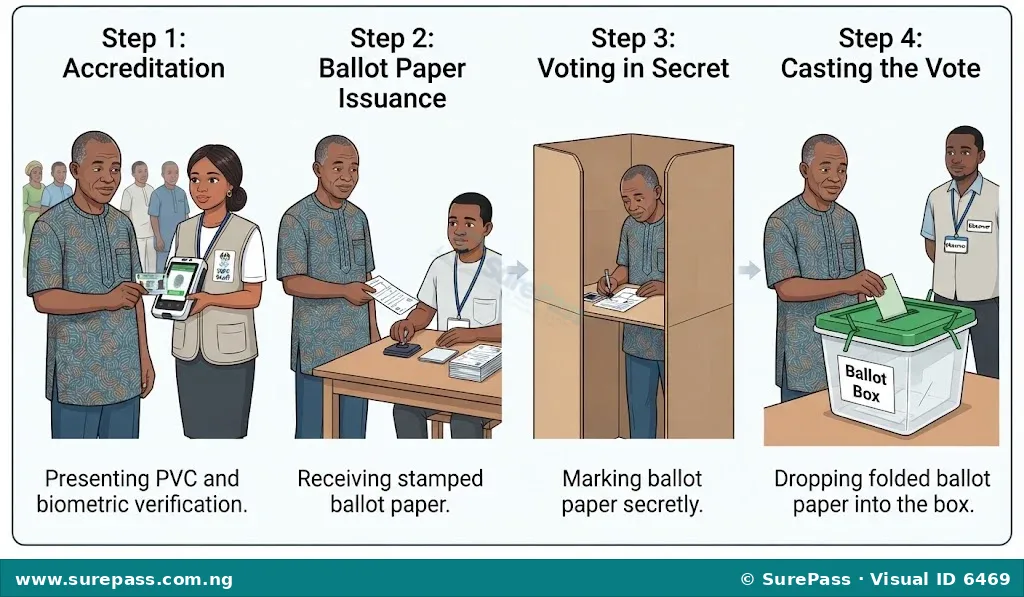
- Accreditation: The voter joins the queue at the polling unit. The electoral officers use a biometric verification device, such as the Bimodal Voter Accreditation System (BVAS), to verify the voter’s identity using their PVC, fingerprints, or facial recognition. This step ensures that only registered voters can cast a ballot and prevents multiple voting.
- Receipt of the Ballot Paper: Once accredited, the voter is issued an official ballot paper. The electoral officer stamps and signs the back of the ballot paper to confirm its authenticity.
- Marking the Ballot Paper: The voter proceeds to a private voting cubicle. In secret, the voter applies ink to their thumb and presses it firmly in the space provided next to the logo of their preferred political party on the ballot paper. This ensures the vote remains confidential.
- Casting the Ballot: The voter folds the marked ballot paper carefully to avoid smearing the ink, steps out of the cubicle, and drops the ballot paper into the designated transparent ballot box in full view of the electoral officers and party agents.
- Monitoring and Counting: After voting ends, the electoral officers count the votes cast at the polling unit openly. The results are recorded on official result sheets, signed by party agents, and pasted at the polling unit before being transmitted to the collation center.
Summary
Political participation is the lifeblood of democracy. It encompasses all the ways in which citizens engage with the political system to influence decisions, select leaders, and hold public officials accountable. Whether through voting, joining political parties, or engaging in public debates, every form of participation contributes to a stable, transparent, and responsive government. Mastering the practical steps of the voting process is an essential skill that empowers citizens to perform their civic duties effectively and contribute to the democratic progress of Nigeria.




0 comments
Open the discussion when you need it. Comments stay collapsed until requested so the initial article remains light.