



ARTICLE CONTENTSOn this page 8 sections
Types/forms/ systems of government (Unitary)
Performance Objectives
By the end of the lesson, students should be able to:
- explain the unitary system of government;
- discuss the characteristics of unitary system of government;
- examine the factors responsible for successful unitary government;
- discuss the merits and demerits of unitary system of government;
- discuss how resources are controlled in a unitary system.
Meaning of Unitary System of Government
A unitary system of government is a system of government in which all constitutional powers are concentrated in a single central authority, which may delegate specific powers to sub-national or local administrative units.
In a unitary state, the central government is the supreme political and legal authority. Any local, municipal, or regional governments that exist are created by the central government. These lower levels of government do not possess constitutionally guaranteed autonomy. The central government retains the constitutional right to expand, reduce, or completely abolish the powers delegated to these local units at any time.
This concentration of authority distinguishes the unitary system from a federal system, where power is constitutionally divided between the central government and semi-autonomous federating units. Well-known examples of countries operating unitary systems of government include the United Kingdom, France, Italy, Japan, Ghana, and Sierra Leone.
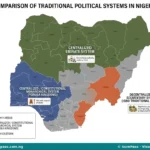
The diagram below illustrates the flow of authority in this system.
Characteristics of Unitary System of Government
The main characteristics of a unitary system of government include:
- Concentration of Power: All sovereign political and constitutional powers reside in the single central government. There is no constitutional division of power between the center and the component units.
- Supremacy of the Central Legislature: The central parliament or assembly has the final authority to make, amend, or repeal laws for the entire country. No local or regional assembly can pass laws that contradict or override central legislation.
- Single Source of Authority: Sub-national or local administrative units derive their existence, boundaries, and administrative powers directly from the central government rather than from a supreme constitution.
- Flexible or Unwritten Constitution: Unitary states often operate with flexible constitutions that can be easily amended by ordinary legislative processes in the central parliament, allowing the government to adapt quickly to changing national circumstances.
- Single Citizenship: Citizens in a unitary state owe allegiance to only one central authority. There is no concept of state or regional citizenship, as is often found in federal systems.
- Uniform Administration: Laws, judicial systems, civil service structures, and public policies are applied uniformly across the entire territory of the nation.
Factors Responsible for the Adoption and Success of a Unitary System
Several factors account for the adoption and successful operation of a unitary system of government in various countries:
- Small Geographical Size: Countries with relatively small landmasses find it easier and more efficient to administer the entire territory from a single central capital.
- Homogeneous Population: A high degree of cultural, linguistic, religious, or ethnic unity makes a unitary system highly successful, as there are fewer deep-seated regional rivalries requiring political autonomy.
- Absence of Strong Regional Differences: When there are no sharp economic, social, or historical divisions between different regions, a centralized administration is easily accepted by the population.
- Need for Rapid Decision-Making: In nations where quick policy execution and centralized planning are necessary for rapid economic development, a unitary system succeeds by eliminating inter-governmental delays.
- Limited Economic Resources: Developing nations or smaller countries often adopt a unitary system to avoid the heavy financial costs of running multiple regional governments, legislatures, and judiciaries.
- Historical and Colonial Legacy: Many nations retain unitary structures inherited from colonial administrations that relied on highly centralized command systems to maintain order and control.
Merits and Demerits of Unitary System of Government
Merits of a Unitary System
The merits of a unitary system of government include:
- Strong and Stable Government: Power is concentrated in one central authority, which minimizes political friction, jurisdictional conflicts, and power struggles between different levels of government.
- Cost-Effectiveness: It is cheaper to run because it eliminates the expensive duplication of administrative offices, multiple legislatures, governors, and separate civil services found in federal systems.
- Quick Decision-Making: The central government can make decisions, pass laws, and respond to national emergencies rapidly without the need to consult or seek approval from regional authorities.
- Promotion of National Unity: Centralized policies and uniform laws help to suppress tribalism, sectionalism, and regional divisions, fostering a stronger sense of national identity among citizens.
- Uniform Development: The central government can plan and execute development projects evenly across the entire country, ensuring that poorer regions are supported by national resources.
- Simplicity of Administration: The structure of government is simple and easy for citizens to understand, as there is no confusion over which level of government is responsible for specific public services.
Demerits of a Unitary System
The demerits of a unitary system of government include:
- Tendency Towards Dictatorship: The concentration of absolute power in the central government can lead to authoritarianism, as there are fewer constitutional checks and balances to limit central authority.
- Neglect of Local Needs: A distant central government may not fully understand, appreciate, or prioritize the unique problems, cultures, and developmental needs of remote local communities.
- Overburdened Central Government: The central administration can become highly congested and inefficient because it has to handle both major national issues (such as defense and foreign policy) and minor local matters (such as local road repairs).
- Suppression of Local Initiative: Because local authorities depend entirely on the center for power and funding, local leaders and citizens may lose the initiative to solve local problems creatively.
- Unsuitable for Large and Diverse Nations: In countries with vast territories and highly diverse ethnic, religious, or linguistic groups, a unitary system can lead to feelings of marginalization, political tension, and civil conflict.
Resource Allocation and Control in a Unitary System
Resource allocation refers to the method by which a country’s wealth, natural resources, and tax revenues are collected, managed, and distributed among the various levels of administration.
The key features of resource control and allocation in a unitary system are:
- Centralized Revenue Collection: The central government retains the constitutional authority to collect all major sources of national revenue, including income taxes, customs duties, corporate taxes, and royalties from natural resources.
- Top-Down Distribution: Financial resources are distributed from the central treasury downward to the local administrative units. The central government determines the criteria, timing, and amount of funds allocated to each local unit.
- Financial Dependence of Local Units: Local or municipal authorities do not have independent constitutional powers to levy major taxes or retain local revenues. They rely heavily on financial grants, subventions, and budgetary allocations from the central government.
- Uniform Fiscal Policy: The central government maintains a single, uniform economic and fiscal policy for the entire nation, ensuring that public spending aligns strictly with central development plans.
- Conditional Grants: The central government often attaches strict conditions to the funds allocated to local units, dictating exactly how the money must be spent on services such as primary education, healthcare, and local infrastructure.
Summary and Review Questions
Summary
The unitary system of government concentrates all constitutional powers in a single central authority, which may delegate powers to local administrative units. While it promotes national unity, quick decision-making, and administrative simplicity, it can lead to the neglect of local needs and a tendency toward dictatorship. Resources in a unitary system are centrally controlled and allocated in a top-down manner, making local units financially dependent on the central government.
Review Questions
The following questions are designed to test the understanding of the concepts covered in this unit:
- Define a unitary system of government and provide three examples of countries that operate this system.
- Identify and explain four major characteristics of a unitary system of government.
- Examine four factors that are responsible for the successful adoption and operation of a unitary system.
- Discuss three merits and three demerits of a unitary system of government.
- Explain how resources are controlled and allocated among the levels of administration in a unitary state.


0 comments
Open the discussion when you need it. Comments stay collapsed until requested so the initial article remains light.