




ARTICLE CONTENTSOn this page 7 sections
Types/forms/ systems of government (Monarchy)
Performance Objectives
By the end of the lesson, students should be able to:
- explain the meaning of monarchy as a system of government;
- discuss the characteristics of monarchy;
- discuss the forms of monarchy;
- examine how resources are controlled in a monarchy system of government;
- explain its merits and demerits.
Meaning of Monarchy
Monarchy is a system of government in which supreme political authority is vested in a single individual, known as a monarch, who acts as the head of state and usually holds office for life, typically succeeding to the position through hereditary right.
The term originates from the Greek words monos (meaning “single”) and arkhein (meaning “to rule”). The individual ruler may carry different traditional titles depending on the culture, history, and region of the state. Common titles for a monarch include King, Queen, Emperor, Empress, Tsar, Sultan, Emir, Oba, or Obi. Historically, monarchy was the most prevalent form of governance across the globe, including in many pre-colonial African societies, where traditional rulers held sovereign authority over their kingdoms and empires.
Characteristics of Monarchy
The primary characteristics of a monarchy include:
- Hereditary Succession: Political power is passed down within a single ruling family from one generation to the next. Succession typically follows a defined line of descent, often from parent to the eldest child.
- Lifetime Tenure: A monarch generally rules for life. The ruler remains in power until death, voluntary abdication (stepping down from the throne), or forced removal through political upheaval.
- Centralised Authority: In its traditional form, supreme executive, legislative, and judicial powers are concentrated in the person of the monarch, although modern constitutional systems limit this concentration.
- Traditional and Historical Legitimacy: The authority of the monarch is justified by long-standing customs, history, and cultural traditions. In some historical contexts, this authority was supported by religious doctrines, such as the “divine right of kings,” which claimed that the monarch’s power came directly from God.
- Symbolic National Unity: The monarch serves as a non-partisan symbol of national identity, continuity, and state sovereignty, remaining above daily political disputes and party rivalries.
Forms of Monarchy
Monarchy exists in different forms depending on the extent of political power wielded by the ruler. The two main forms are:
- Absolute Monarchy: A form of government where the monarch exercises unrestricted, supreme political authority over the state and its citizens. The ruler is not bound by a written constitution, and there are no independent democratic institutions to limit or check their power. The monarch’s decrees carry the force of law. Modern examples of absolute monarchies include Saudi Arabia, Brunei, Oman, and Eswatini.
- Constitutional Monarchy: A form of government where the powers of the monarch are limited by a constitution. The monarch acts as a ceremonial head of state, performing symbolic and representative duties, while actual political power and decision-making are exercised by an elected parliament, a prime minister, and an independent judiciary. Modern examples of constitutional monarchies include the United Kingdom, Japan, Spain, Sweden, and the Netherlands.
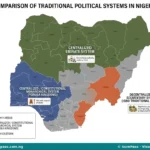
Observe the diagram below to understand the structural differences between these two forms of monarchy.
Resource Control in a Monarchy System of Government
The control, management, and distribution of national resources in a monarchy depend heavily on the specific form of the monarchical system:
- Resource Control in Absolute Monarchies: In an absolute monarchy, the monarch and the royal family exercise direct, centralized control over the natural resources, public land, and revenues of the state. The national treasury is often closely linked with the personal wealth of the ruling dynasty. Decisions regarding the extraction of minerals, oil, or agricultural output, as well as the allocation of tax revenues, are made at the sole discretion of the monarch. These resources are often distributed to maintain the royal household, fund national defense, and secure political loyalty through patronage networks.
- Resource Control in Constitutional Monarchies: In a constitutional monarchy, the control of national resources is completely separated from the personal wealth of the monarch. Resources are managed by the democratic government through ministries of finance, public institutions, and parliamentary legislation. The national budget is debated and approved by elected representatives. The monarch is funded through a specific, legally defined allocation of public funds, often referred to as a “civil list” or “sovereign grant,” which is strictly monitored by the government to cover official state duties and the maintenance of historic royal properties.
- Resource Control in Pre-Colonial African Monarchies: In traditional African monarchies, such as the Oyo Empire, the Benin Kingdom, or the Sokoto Caliphate, the monarch (such as the Oba, Oba, or Emir) held land in trust for the entire community. While the ruler controlled access to land, forests, and trade routes, resources were shared through a system of mutual obligation. Subjects paid tributes, taxes, or agricultural produce to the palace, and the monarch redistributed these resources during festivals, periods of famine, or to fund community defense and public infrastructure.
Merits and Demerits of Monarchy
Merits of Monarchy
The advantages of a monarchy system of government include:
- Political Stability and Continuity: Because the succession of power is clearly defined by hereditary rules, monarchies avoid the political instability, social tension, and administrative disruptions that can accompany democratic election cycles.
- Neutrality and National Unity: A constitutional monarch acts as a non-partisan figurehead who is free from party politics. This neutrality allows the monarch to serve as a unifying symbol for citizens of diverse ethnic, religious, and political backgrounds.
- Rapid Decision-Making: In absolute monarchies, the centralization of authority allows the ruler to make and implement critical policy decisions quickly, without the delays associated with parliamentary debates or legislative negotiations.
- Preservation of Culture and Tradition: Monarchies play a vital role in preserving a nation’s historical heritage, customs, and traditional values, providing a sense of cultural identity and historical continuity.
- Long-Term Planning: Unlike elected politicians who may focus on short-term policies to win the next election, a monarch can support long-term national development strategies that span decades.
Demerits of Monarchy
The disadvantages of a monarchy system of government include:
- Lack of Democratic Representation: Monarchy is fundamentally undemocratic because the head of state is not chosen by the citizens through popular elections, denying the public the right to self-determination.
- Risk of Incompetent Leadership: Hereditary succession does not guarantee that the successor to the throne will possess the intelligence, capability, training, or moral character required to govern a nation effectively.
- Potential for Tyranny and Dictatorship: In absolute monarchies, the concentration of unchecked power in a single individual can lead to authoritarianism, the abuse of human rights, and the suppression of political opposition.
- High Cost of Maintenance: Maintaining the lifestyle, palaces, security, and extended families of a royal dynasty can impose a heavy financial burden on taxpayers and divert resources from essential public services.
- Promotion of Social Inequality: The system reinforces class distinctions and social inequality by permanently placing one family in a position of privilege and authority over all other citizens based solely on birthright.



0 comments
Open the discussion when you need it. Comments stay collapsed until requested so the initial article remains light.