


ARTICLE CONTENTSOn this page 7 sections
Political system: Fascism
Performance Objectives
By the end of the lesson, students should be able to:
- explain the meaning of fascism;
- discuss the characteristics of fascism;
- describe the types of fascism;
- examine the merits and demerits of fascism.
Meaning of Fascism
Fascism is a form of radical, authoritarian ultranationalism characterized by dictatorial power, forcible suppression of opposition, and strong regimentation of society and the economy.
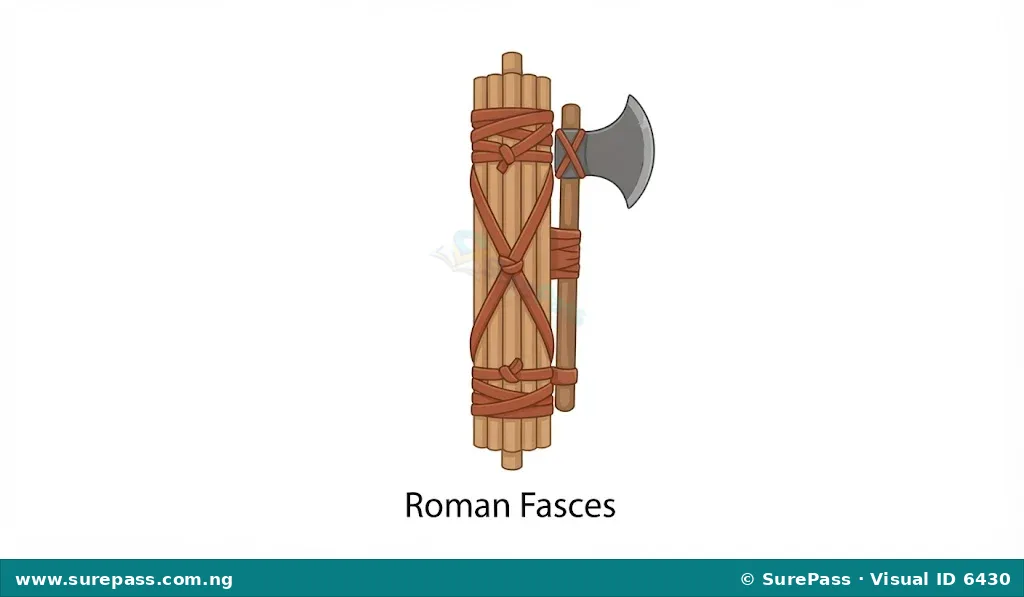
The term originates from the Italian word fascio, which means a bundle of rods or sticks. In ancient Rome, this bundle of rods bound around an axe (known as the fasces) was a symbol of civic authority, power, and unity. The concept implies that while a single stick can be easily broken, a bundle bound together is strong and unbreakable. Politically, fascism emphasizes that the strength of the state lies in absolute unity and collective obedience to a single leader.
Fascism emerged as a major political force in Europe during the early twentieth century, particularly after the devastation of the First World War. It was founded by Benito Mussolini in Italy, who established the first fascist dictatorship in 1922. Shortly after, Adolf Hitler adopted a highly racialized version of fascism in Germany under the National Socialist (Nazi) German Workers’ Party. The ideology arose as a rejection of liberal democracy, individual freedom, and communism, presenting the state as an organic entity that individuals must serve without question.
Characteristics of Fascism
Fascist regimes share distinct political, social, and economic features that separate them from democratic and other authoritarian systems. The main characteristics of fascism include:
- Totalitarianism: The state exercises total control over all aspects of public and private life, including education, religion, the press, and family life. No independent organizations or private institutions are allowed to exist outside state control.
- Dictatorship and One-Party System: Power is concentrated in the hands of a single, charismatic dictator who rules with absolute authority. All other political parties are banned, and political opposition is treated as treason.
- Extreme Nationalism (Ultranationalism): Fascism promotes an intense, aggressive form of patriotism. The nation is viewed as superior to all others, and citizens are expected to subordinate their personal interests to the glory and survival of the state.
- Militarism and Imperialism: Fascist regimes glorify military power and violence. War is viewed as a means of national rejuvenation and proof of strength. This leads to aggressive foreign policies, rapid military expansion, and territorial conquest.
- Anti-Communism and Anti-Liberalism: Fascism strongly rejects democratic principles such as individual liberty, equality, and freedom of speech. It also opposes communism and socialism, viewing class struggle as a threat to national unity.
- State Control of the Economy (Corporatism): While private property and businesses are permitted to exist, they are heavily regulated and directed by the state. The economy is organized into state-controlled corporations to ensure that production aligns with national and military goals.
- Use of Terror and Propaganda: Fascist governments rely on secret police forces, arbitrary arrests, violence, and concentration camps to eliminate political opponents. Mass media, schools, and cultural institutions are used to spread state propaganda and brainwash the population.
- Cult of Personality: The dictator is projected as an infallible, god-like figure who embodies the will of the nation. Slogans, portraits, and mass rallies are used to demand absolute loyalty and adoration from the citizens.
Types of Fascism
Although all fascist regimes share core authoritarian principles, they have manifested differently based on historical, cultural, and geographical contexts. The primary types of fascism include:
- Italian Fascism (Classical Fascism): Developed by Benito Mussolini in Italy between 1922 and 1943, this is the original form of fascism. It focused heavily on state worship, national unity, and corporatism. Mussolini asserted that the state was supreme, famously declaring, “Everything in the State, nothing outside the State, nothing against the State.” Unlike German fascism, classical Italian fascism did not initially place racial purity at the center of its ideology.
- German National Socialism (Nazism): Developed by Adolf Hitler in Germany between 1933 and 1945, Nazism was a highly radicalized and biologically focused form of fascism. It combined extreme nationalism and totalitarianism with pseudo-scientific racial theories. Nazism asserted the supremacy of the “Aryan” race, promoted virulent anti-Semitism, and sought the systematic elimination of Jews, Romani people, and other groups deemed “sub-human” or undesirable.
- Spanish Falangism (Francoism): Led by General Francisco Franco in Spain from 1939 to 1975, this form of fascism was deeply intertwined with conservative Roman Catholicism and traditionalism. While it shared the authoritarianism, anti-communism, and nationalism of Italian fascism, it placed a much stronger emphasis on preserving traditional social structures, religious institutions, and the power of the Catholic Church.
- Austrofascism: This was an authoritarian regime established in Austria in the 1930s under Engelbert Dollfuss. It was heavily influenced by Italian fascism and Catholic social teachings, aiming to maintain Austrian independence from Nazi Germany while suppressing democratic institutions and socialist movements.
- Neo-Fascism: This refers to post-World War II political movements that seek to revive the core tenets of fascism. Modern neo-fascist groups typically focus on extreme xenophobia, anti-immigration sentiment, ultra-nationalism, and the rejection of liberal democratic institutions, though they often operate within democratic frameworks to gain political influence.
Merits and Demerits of Fascism
Fascism is widely condemned due to its destructive nature and disregard for human life. However, political scientists analyze both the perceived advantages that attracted followers historically and the severe negative consequences of the system.
Merits of Fascism
The perceived merits of fascism, which are often short-term and achieved through coercion, include:
- Rapid Decision-Making: Because power is concentrated in a single leader, the government can make and implement decisions quickly without the delays associated with democratic debates, parliamentary approvals, or judicial reviews.
- Political Stability and Order: By banning opposition parties, trade unions, and public protests, fascist regimes can establish a high degree of public order and political stability, reducing civil unrest and political strikes.
- Economic Mobilization: Fascist governments can rapidly mobilize national resources and labor for massive public works, industrialization, and infrastructural development, which can temporarily reduce unemployment.
- Strong National Unity: The intense promotion of nationalism and collective identity can foster a strong sense of patriotism, discipline, and shared purpose among the dominant group in society.
- Effective Security: The heavy presence of law enforcement and state security apparatuses often leads to a reduction in ordinary street crime, though this is replaced by state-sponsored violence.
Demerits of Fascism
The demerits of fascism are severe, systemic, and destructive. They include:
- Suppression of Human Rights and Civil Liberties: Citizens are stripped of fundamental rights, including freedom of speech, freedom of the press, freedom of association, and the right to a fair trial.
- Dictatorship and Tyranny: The absence of constitutional checks and balances leads to absolute power, which inevitably results in corruption, abuse of power, and the brutal oppression of citizens.
- Aggressive Foreign Policy and War: The glorification of military power and territorial expansion makes international conflict inevitable. Historically, fascist regimes led the world into the devastation of the Second World War.
- Persecution of Minorities: Fascist ideologies often rely on scapegoating minority groups, leading to systematic discrimination, state-sponsored violence, and mass atrocities, such as the Holocaust in Nazi Germany.
- Lack of Peaceful Succession: Because power is tied to the personal authority of a single dictator, the death or removal of the leader often triggers violent power struggles, political instability, and the collapse of the state.
- Economic Inefficiency in the Long Run: Heavy state interference, corruption among party elites, and an over-emphasis on military spending eventually drain national resources and lead to economic ruin.
Evaluation Guide
Answer the following questions to review the lesson:
- Explain fascism as a political concept, highlighting the origin of the term.
- Examine five major characteristics of a fascist political system.
- Discuss three different forms of fascism that emerged in Europe during the twentieth century.
- Evaluate three merits and four demerits of fascism as a system of government.




0 comments
Open the discussion when you need it. Comments stay collapsed until requested so the initial article remains light.