


ARTICLE CONTENTSOn this page 7 sections
Business Start-up in GSM Repairs
Performance Objectives
By the end of the lesson, students should be able to:
- state the meaning of business start-up;
- discuss various industry entry requirements for GSM repairs; start-up;
- explain the benefits of starting an enterprise;
- identify GSM repairs products and services;
- identify resources / tools for GSM repairs start-up.
Meaning of Business Start-up
A business start-up is the process of creating a new company or enterprise from the beginning.
It involves identifying a business idea, planning how to make it happen, and then putting those plans into action to offer goods or services to customers. Starting a business requires effort, resources, and a clear understanding of what customers need.
Industry Entry Requirements for GSM Repairs Start-up
Starting a GSM repair business requires certain things to be in place to ensure it runs smoothly and legally. These are called industry entry requirements.
The various industry entry requirements for a GSM repairs start-up include:
- Skills and Training: To repair GSM phones, a person needs to have the right knowledge and practical skills. This can be gained through formal training, apprenticeships, or self-study. Understanding how phones work and how to fix common problems is essential.
- Tools and Equipment: Specific tools are needed for opening, diagnosing, and repairing mobile phones. Without the right tools, it is impossible to perform repairs effectively.
- Capital (Money): Money is needed to buy tools, rent a shop, pay for training, and cover other initial expenses. This money helps to set up the business and keep it running in the early stages.
- Location: A suitable place to operate the business is important. This could be a small shop, a stall in a market, or even a dedicated space at home. The location should be accessible to customers.
- Business Registration: For a formal business, it is important to register the business with the appropriate government agencies. This makes the business legal and allows it to operate officially.
- Spare Parts Suppliers: A reliable source for genuine spare parts like screens, batteries, and charging ports is crucial. Without spare parts, repairs cannot be completed.
Benefits of Starting an Enterprise in GSM Repairs
Starting a business, especially in a field like GSM repairs, can offer many advantages to the owner and the community.
The benefits of starting an enterprise in GSM repairs include:
- Self-Employment: The business owner becomes their own boss, making decisions and controlling their work schedule. This provides independence and freedom.
- Income Generation: A successful GSM repair business can provide a steady source of income for the owner, helping them to meet their financial needs and improve their living standard.
- Job Creation: As the business grows, the owner may need to hire other people to help with repairs or customer service, thereby creating jobs for others in the community.
- Solving Community Problems: Many people rely on their mobile phones for communication, work, and education. A GSM repair business helps people fix their phones quickly, allowing them to stay connected and productive.
- Skill Development: Running a business helps the owner develop new skills, such as customer service, financial management, and problem-solving.
- Contribution to the Economy: Every successful business contributes to the local and national economy through taxes, trade, and employment.
GSM Repairs Products and Services
A GSM repair business offers various items for sale (products) and tasks performed for customers (services).
Products in GSM Repairs
Products are physical items that customers can buy from a GSM repair business.
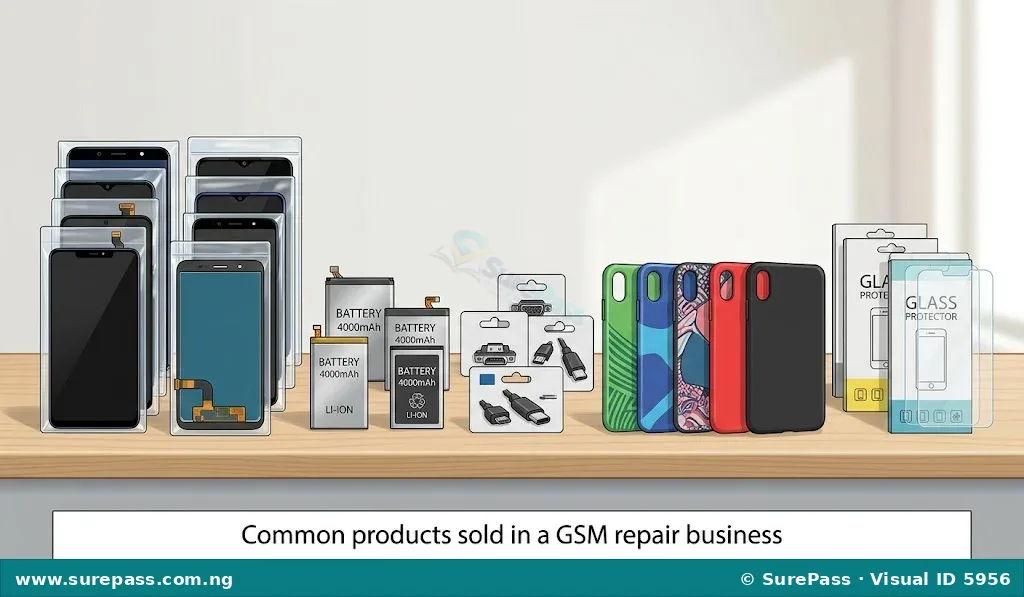
Common products in GSM repairs include:
- Spare Parts: These are replacement components for mobile phones, such as new screens, batteries, charging ports, camera lenses, and phone casings.
- Accessories: Items that enhance phone use or protect phones, such as phone cases, screen protectors, chargers, earphones, and power banks.
- Refurbished Phones: These are used phones that have been repaired and restored to good working condition, then sold to customers at a lower price than new phones.
Services in GSM Repairs
Services are tasks performed by the repairer to fix or improve a customer’s phone.
Common services in GSM repairs include:
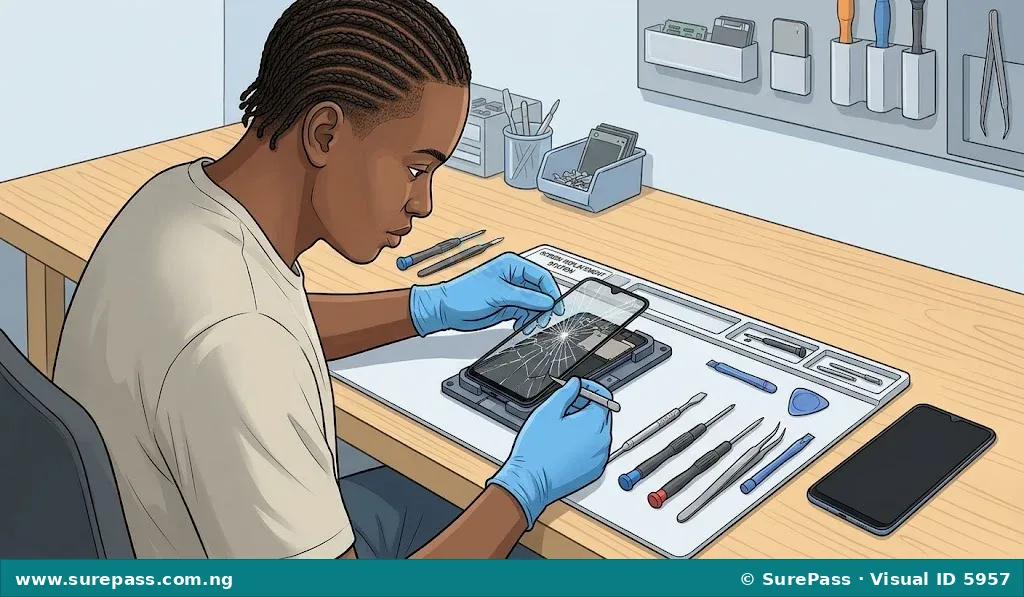
- Screen Replacement: Fixing or replacing a broken or cracked phone screen.
- Battery Replacement: Changing an old or faulty battery with a new one to improve phone life.
- Charging Port Repair: Fixing issues with the phone’s charging port so it can charge properly.
- Software Troubleshooting: Solving problems related to the phone’s operating system, such as freezing, slow performance, or app crashes. This may include flashing new software or removing viruses.
- Water Damage Repair: Attempting to repair phones that have been exposed to water or other liquids.
- Speaker/Microphone Repair: Fixing issues with the phone’s sound components.
- Unlocking Phones: Helping customers unlock phones that are locked to a specific network or have forgotten passwords.
Resources and Tools for GSM Repairs Start-up
To successfully start and operate a GSM repair business, specific resources and tools are essential. Resources are the things needed to run the business, while tools are the instruments used to perform the repairs.
Resources for GSM Repairs Start-up
The necessary resources include:
- Knowledge and Skills: Understanding phone electronics, repair techniques, and software issues.
- Capital: Money for initial investments like tools, rent, and spare parts.
- Work Space: A clean, well-lit, and organised area where repairs can be performed safely and efficiently.
- Electricity: Required to power soldering irons, hot air guns, and charge phones.
- Internet Access: Useful for downloading software, researching repair solutions, and communicating with suppliers.
- Customer Base: People who need their phones repaired.
Tools for GSM Repairs Start-up
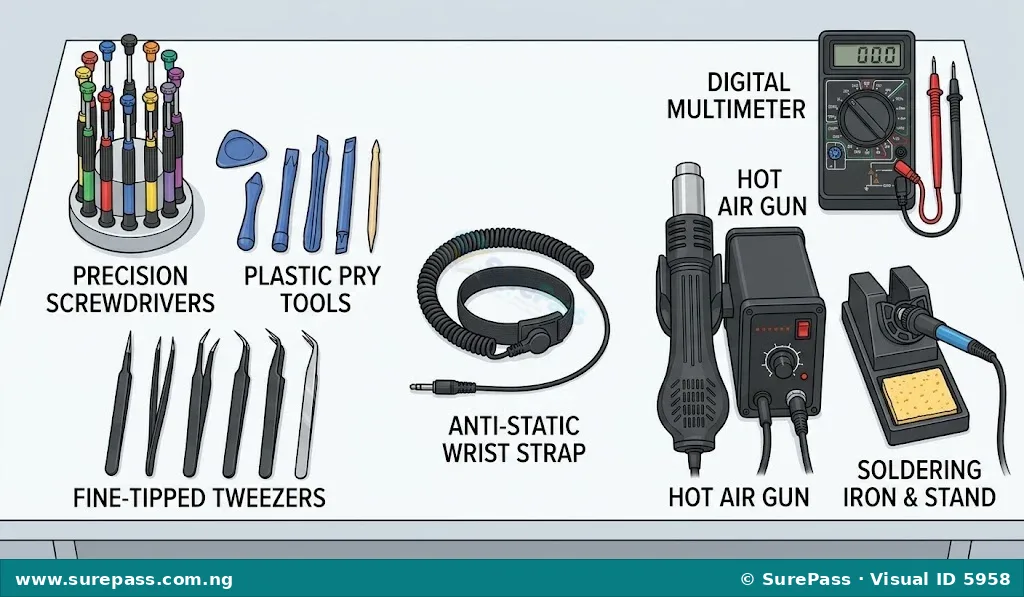
The specific tools used for GSM repairs include:
- Screwdriver Set: A collection of small screwdrivers with different tips (Phillips, Torx, Pentalobe) to open various phone models.
- Pry Tools (Plastic Spudgers): Non-conductive plastic tools used to safely open phone casings and disconnect components without causing damage.
- Tweezers: Fine-tipped tools for handling small screws, cables, and components.
- Hot Air Gun/Rework Station: Used to heat and remove soldered components like integrated circuits (ICs) from the phone’s motherboard.
- Soldering Iron: Used to solder (join) small electronic components onto the circuit board.
- Multimeter: An electronic measuring instrument used to test voltage, current, and resistance, helping to diagnose electrical faults.
- Magnifying Lamp/Microscope: Provides magnification to see tiny components and solder joints clearly.
- Anti-static Wrist Strap: Worn by the repairer to prevent static electricity from damaging sensitive phone components.
- Cleaning Brushes and Solutions: Used to clean dust, corrosion, or liquid damage from phone components.
- Battery Tester: Used to check the health and capacity of phone batteries.


0 comments
Open the discussion when you need it. Comments stay collapsed until requested so the initial article remains light.