


ARTICLE CONTENTSOn this page 9 sections
The Birth of Jesus
Performance Objectives
By the end of the lesson, students should be able to:
- discuss the instances the birth of Jesus was announced;
- narrate the story of the birth of Jesus;
- describe the visit of the shepherds and the wise men to Jesus;
- state the value of virginity before marriage.
Memory Verse
For unto us a child is born, unto us a son is given: and the government shall be upon his shoulder: and his name shall be called Wonderful, Counsellor, The mighty God, The everlasting Father, The Prince of Peace. (Isaiah 9:6 KJV)
Bible Reading
The principal Bible passages supporting this lesson are:
- Isaiah 9:6-7
- Matthew 1:18-25
- Matthew 2:1-12
- Luke 1:30-33
- Luke 2:1-20
The Annunciation of Jesus’ Birth
The birth of Jesus was announced in different ways before it happened. These announcements prepared people for the coming of the Saviour.
Announcement to Mary
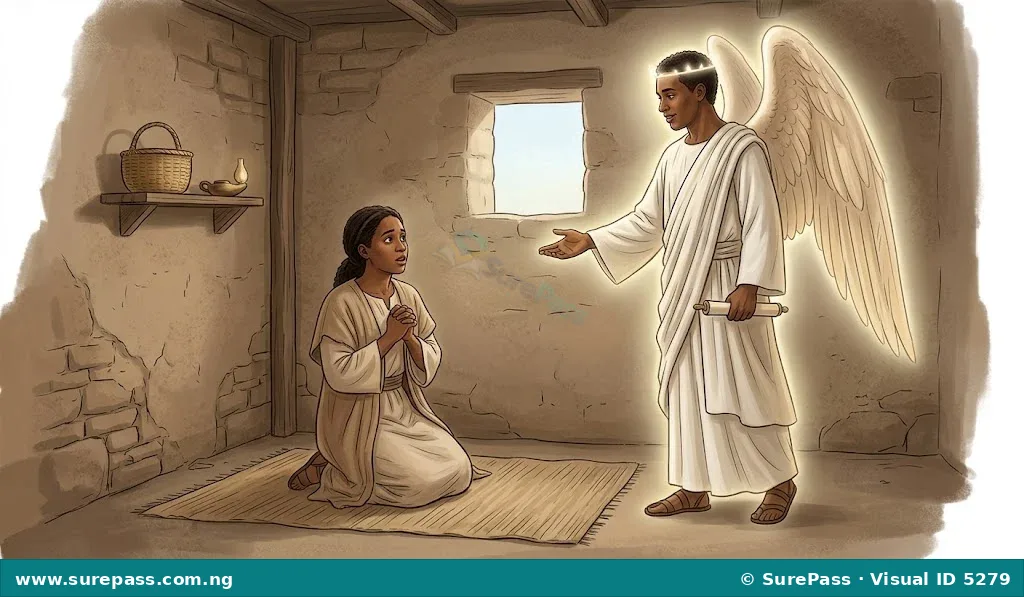
The first major announcement was made to a young virgin woman named Mary, who lived in Nazareth, a town in Galilee. God sent the angel Gabriel to Mary. The angel told her that she had found favour with God and would conceive a child by the power of the Holy Spirit. This child would be called Jesus, and He would be the Son of God. The angel also said that Jesus would be great and would reign over the house of Jacob forever, and of His kingdom there would be no end (Luke 1:30-33).
Announcement to Joseph
Mary was engaged to a man named Joseph. When Joseph learned that Mary was pregnant, he was troubled because he knew the child was not his. He decided to quietly end their engagement to avoid shaming Mary. However, an angel of the Lord appeared to Joseph in a dream. The angel told him that the child Mary was carrying was conceived by the Holy Spirit. The angel instructed Joseph to take Mary as his wife and to name the child Jesus, because He would save His people from their sins. This event fulfilled the prophecy from Isaiah that a virgin would conceive and give birth to a son, and they would call His name Immanuel, which means “God with us” (Matthew 1:22-23).
Prophecy from Isaiah
Long before Mary and Joseph, the prophet Isaiah had foretold the coming of Jesus. He prophesied that a child would be born, a son given, and that He would be called Wonderful, Counsellor, The mighty God, The everlasting Father, The Prince of Peace. Isaiah also stated that His government and peace would have no end, and He would rule with justice and righteousness forever (Isaiah 9:6-7). These prophecies showed that Jesus’ birth was part of God’s long-standing plan.
The Birth of Jesus in Bethlehem
The birth of Jesus took place in Bethlehem, fulfilling another ancient prophecy that the Messiah would be born there.
At that time, the Roman Emperor Caesar Augustus issued a decree that everyone in the Roman world should be registered for a census. This meant that everyone had to go to their own ancestral town to be counted. Joseph, being from the lineage of King David, had to travel from Nazareth in Galilee to Bethlehem in Judea, the town of David.
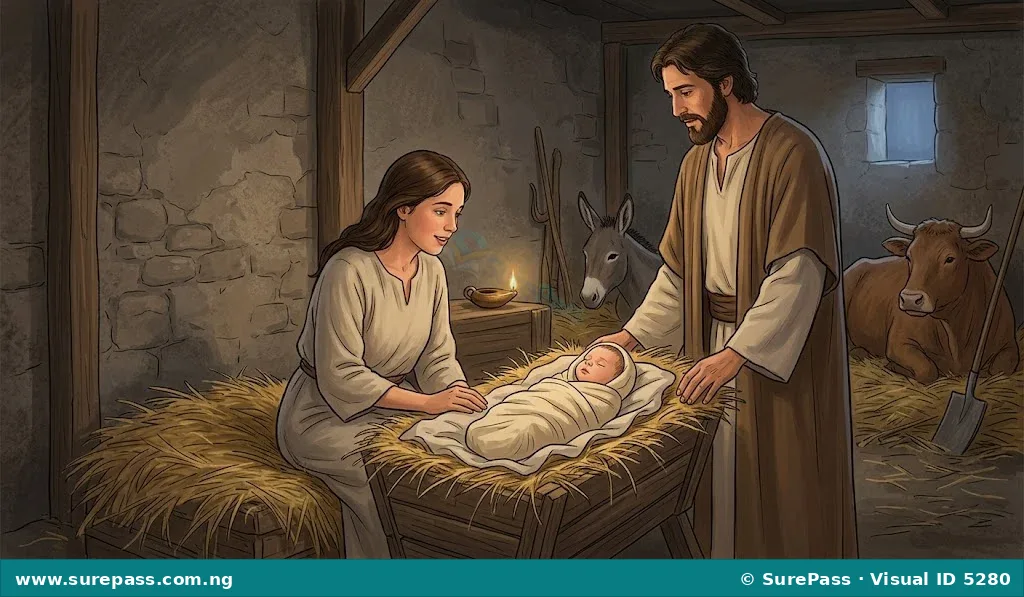
Mary, who was heavily pregnant, travelled with Joseph. When they arrived in Bethlehem, there was no room for them in the inn because so many people had come for the census. They had to find shelter in a stable, a place where animals were kept. While they were there, the time came for Mary to give birth.
Mary gave birth to her firstborn son, Jesus. She wrapped Him in cloths and laid Him in a manger, which was a feeding trough for animals. This humble birth showed that Jesus, though the Son of God, came into the world without worldly riches or grand display (Matthew 1:18-25; Luke 2:1-7).
The Shepherds’ Visit
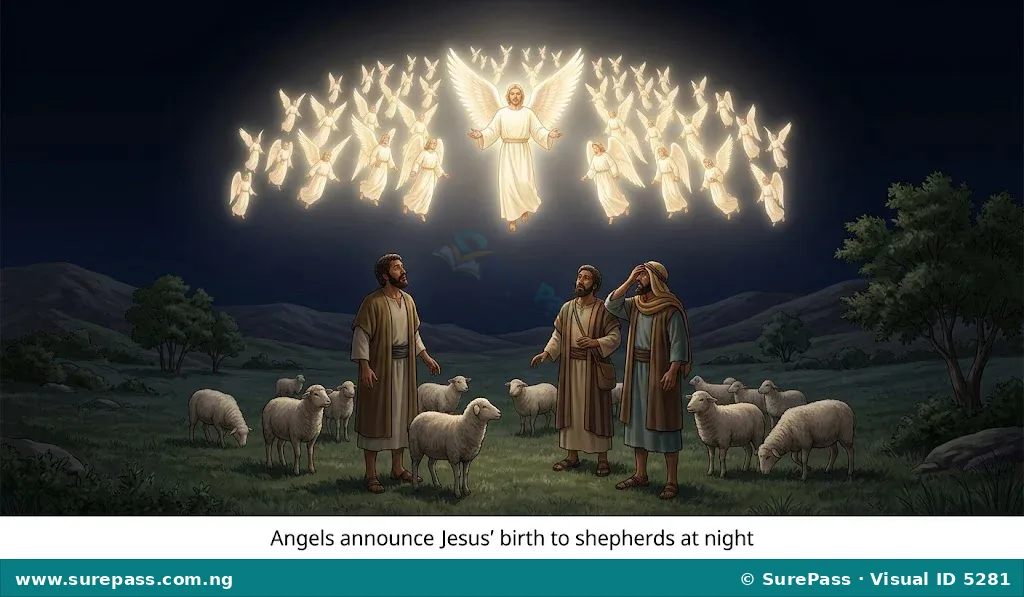
On the night Jesus was born, there were shepherds in the fields nearby Bethlehem, watching over their flocks. Suddenly, an angel of the Lord appeared to them, and the glory of the Lord shone around them. The shepherds were terrified.
The angel told them not to be afraid, for he brought good news of great joy for all people. He announced that in the town of David, a Saviour had been born, who is Christ the Lord. The angel gave them a sign: they would find the baby wrapped in cloths and lying in a manger.
Immediately, a great company of heavenly hosts, an army of angels, appeared with the first angel, praising God and saying, “Glory to God in the highest, and on earth peace, good will toward men.”
After the angels left, the shepherds said to one another, “Let us go to Bethlehem and see this thing that has happened, which the Lord has told us about.” They hurried to Bethlehem and found Mary and Joseph, and the baby Jesus lying in the manger, just as the angel had described. After seeing Jesus, the shepherds returned, glorifying and praising God for all the things they had heard and seen (Luke 2:8-20).
The Visit of the Wise Men (Magi)
Some time after Jesus’ birth, wise men, also known as Magi, came from the East to Jerusalem. They were scholars who studied the stars. They had seen a special star in the East and understood it to be a sign that the King of the Jews had been born. They came to worship Him.
When they arrived in Jerusalem, they asked, “Where is He who has been born King of the Jews? For we saw His star in the East and have come to worship Him.” When King Herod heard this, he was troubled, and all Jerusalem with him. Herod secretly called the wise men and asked them exactly when the star had appeared. He then sent them to Bethlehem, telling them to search carefully for the child and report back to him, pretending he also wanted to worship the child.
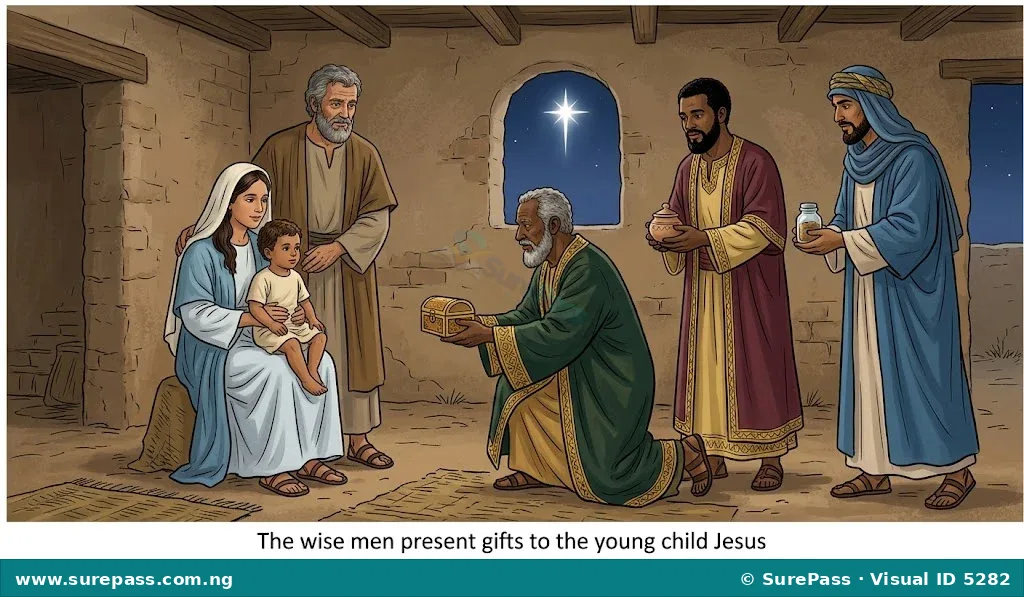
The wise men followed the star, which guided them until it stopped over the place where the young child was. When they saw the star, they rejoiced with exceeding great joy. They entered the house and found the young child with His mother Mary. They bowed down and worshipped Him. Then, they opened their treasures and presented Him with gifts: gold, frankincense, and myrrh.
After their visit, God warned the wise men in a dream not to return to Herod. So, they went back to their own country by another route (Matthew 2:1-12).
The Value of Virginity Before Marriage
The story of Mary, a virgin chosen by God to be the mother of Jesus, highlights the importance and value of virginity. Virginity is the state of never having had sexual intercourse. Choosing to remain a virgin before marriage has many important values:
- Freedom from Sexually Transmitted Infections (STIs) and HIV/AIDS: Remaining a virgin before marriage protects a person from contracting sexually transmitted infections, including HIV/AIDS, which can have severe and life-threatening health consequences.
- Freedom from Guilt and Regret: Engaging in sexual activity outside of marriage can lead to feelings of guilt, regret, shame, and emotional distress. Virginity before marriage helps maintain a clear conscience and emotional peace.
- Prevention of Unwanted Pregnancy: Sexual intercourse outside of marriage carries the risk of unwanted pregnancy. This can lead to difficult decisions, disruption of education or career plans, and significant emotional and financial challenges.
- Avoidance of Abortion: Unwanted pregnancies often lead to the consideration of abortion, which is a serious moral and ethical issue with potential physical and psychological harm to the individual.
- Protection from Death: In some cases, complications from unsafe abortions or severe STIs can lead to death. Maintaining virginity helps avoid these life-threatening risks.
- Respect for God’s Plan: Christian teachings emphasize that sexual intimacy is a sacred gift from God meant to be shared exclusively within the covenant of marriage. Upholding virginity before marriage shows obedience and respect for God’s design for relationships.
- Stronger Marital Foundation: Entering marriage as a virgin can contribute to a stronger foundation of trust, commitment, and spiritual intimacy within the marital relationship.

0 comments
Open the discussion when you need it. Comments stay collapsed until requested so the initial article remains light.