



ARTICLE CONTENTSOn this page 8 sections
Relationships in the Family
Performance Objectives
By the end of the lesson, students should be able to:
- explain the meaning and types of family;
- draw a family tree and identify the members;
- identify the roles of family members;
- state the attributes of a good family.
Memory Verse
Children, obey your parents in the Lord: for this is right. Ephesians 6:1 (KJV)
Bible Reading
The following Bible passages support the lesson:
- Ephesians 6:1-9
- Ephesians 5:21-33
- Colossians 3:18-21
- 1 Peter 3:1-7
- Proverbs 22:1
- Ecclesiastes 7:1
Meaning and Types of Family
A family is a group of people who are related to each other by blood, marriage, or adoption. They often live together and share strong bonds of love, care, and support.
Families are the first and most important group a person belongs to. They provide a safe and loving environment for growth and learning.
There are different types of families:
-
Nuclear Family: This type of family consists of a father, a mother, and their children. It is also known as a conjugal family or elementary family. This is the most common type of family unit in many societies.
-
Extended Family: This type of family includes the nuclear family plus other relatives. These relatives can be grandparents, uncles, aunts, cousins, nephews, and nieces. Members of an extended family may live together in the same house or compound, or they may live separately but remain closely connected and supportive of each other.
Recognition of Family Members
Every family has different members, each with a unique relationship to others. Recognising these members helps to understand the structure of a family.
In a nuclear family, the members include:
- Father
- Mother
- Son
- Daughter
- Brother
- Sister
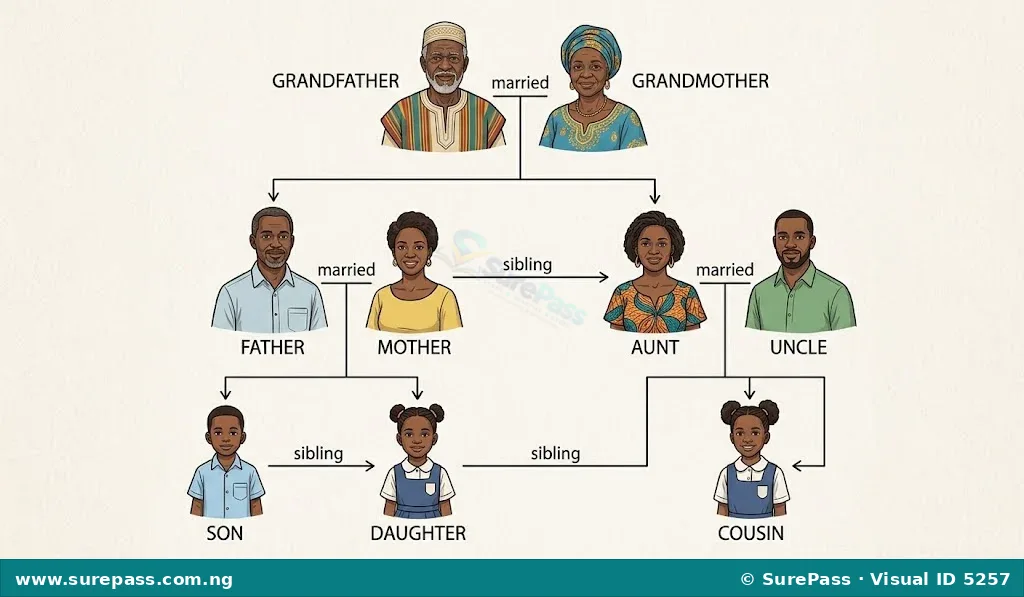
In an extended family, additional members include:
- Grandfather (father’s or mother’s father)
- Grandmother (father’s or mother’s mother)
- Uncle (father’s or mother’s brother)
- Aunt (father’s or mother’s sister)
- Cousin (child of an uncle or aunt)
- Nephew (son of a brother or sister)
- Niece (daughter of a brother or sister)
Drawing a Family Tree
A family tree is a diagram that shows the relationships between different members of a family across generations. It helps to visualise how everyone is connected.
To draw a family tree, a person starts with themselves, then adds their parents, grandparents, and other relatives. Lines are used to show who is related to whom.
Roles of Family Members
Each member of a family has specific roles and responsibilities that help the family function well. These roles are important for maintaining order, love, and support within the family. The Bible provides guidance on how family members should relate to each other.
-
Father’s Role:
The father is often seen as the head of the family. His roles include:
- Provider: He works to provide for the family’s needs, such as food, shelter, and clothing.
- Protector: He protects his family from harm and ensures their safety.
- Leader: He leads the family spiritually and morally, guiding them in the ways of God. Ephesians 5:25 says, “Husbands, love your wives, even as Christ also loved the church.” Colossians 3:19 adds, “Husbands, love your wives, and be not bitter against them.”
- Disciplinarian: He helps to discipline the children and teach them right from wrong.
-
Mother’s Role:
The mother plays a vital role in nurturing and managing the home. Her roles include:
- Nurturer: She cares for the children, providing love, comfort, and emotional support.
- Homemaker: She manages the home, ensuring it is clean, organised, and comfortable for the family.
- Helper: She supports her husband and works with him to raise the children. Ephesians 5:22 states, “Wives, submit yourselves unto your own husbands, as unto the Lord.” 1 Peter 3:1-6 encourages wives to have a gentle and quiet spirit.
- Teacher: She teaches the children good manners and values.
-
Children’s Role:
Children also have important responsibilities within the family. Their roles include:
- Obedience: They are expected to obey their parents. Ephesians 6:1 commands, “Children, obey your parents in the Lord: for this is right.” Colossians 3:20 also says, “Children, obey your parents in all things: for this is well pleasing unto the Lord.”
- Respect: They should show respect to their parents and all elders.
- Helpfulness: They should help with household chores and contribute to the family’s well-being.
- Learning: They should focus on their studies and learn good values from their parents.
-
Extended Family Members’ Roles:
Grandparents, uncles, aunts, and cousins also have roles in supporting the family. These include:
- Support: Providing emotional, financial, or practical support when needed.
- Advice: Offering wisdom and guidance based on their experience.
- Care: Helping to care for younger children or elderly relatives.
- Unity: Promoting unity and strong bonds within the wider family network.
Concept of a Good Family Name
A good family name refers to the reputation, honour, and respect that a family earns within its community. It is about the character and values that the family is known for.
Proverbs 22:1 says, “A good name is rather to be chosen than great riches, and loving favour rather than silver and gold.” Ecclesiastes 7:1 also states, “A good name is better than precious ointment.” These verses highlight that a good reputation is more valuable than wealth.
A good family name is built over time through the actions, behaviour, and integrity of each family member. It reflects the positive impact the family has on others and the community.
Attributes of a Good Family
A good family is known for certain positive qualities and behaviours. These attributes help to create a strong, loving, and respected family unit:
- Love: Family members show deep affection and care for one another.
- Unity: They stick together, support each other, and work as a team.
- Respect: Members treat each other with honour, valuing each person’s feelings and opinions.
- Obedience: Children obey their parents, and all members respect family rules and God’s commands.
- Honesty: Family members are truthful with each other and in their dealings with others.
- Prayer: The family prays together and seeks God’s guidance in their lives.
- Forgiveness: Members are willing to forgive each other when mistakes are made.
- Support: They provide emotional, physical, and spiritual support to each other, especially during difficult times.
- Hospitality: They welcome others into their home and share what they have.
- Good Morals: The family upholds strong moral values and sets a good example in the community.



0 comments
Open the discussion when you need it. Comments stay collapsed until requested so the initial article remains light.