



ARTICLE CONTENTSOn this page 10 sections
Marriage, Family and Human Participation in God’s Creative Work
Performance Objectives
By the end of the lesson, students should be able to:
- explain the meaning of marriage;
- state the purpose of marriage;
- identify things made by humans;
- mould an object using clay or mashed paper with starch.
Memory Verse
“Therefore a man shall leave his father and his mother and hold fast to his wife, and they shall become one flesh.” (Genesis 2:24 KJV)
Bible Reading
The principal Bible passages supporting this lesson include:
- Genesis 1:28
- Genesis 2:22–25
- John 2:1
- Ephesians 5:21–31
Introduction to Human Creativity
God is the ultimate Creator of the universe and everything in it. He created human beings in His own image, giving them intelligence, skills, and the ability to create. This means that humans can also participate in creative activities, reflecting a part of God’s nature. This lesson explores how human beings share in God’s creative work, especially through marriage and the invention of new things.
Meaning of Marriage
Marriage is a sacred union established by God between a man and a woman. It is a covenant relationship where two individuals become one in body, soul, and spirit.
The Bible teaches that God Himself instituted marriage in the Garden of Eden when He created Eve from Adam’s rib and brought her to him. The book of Genesis describes this foundational event, stating that a man shall leave his parents and be united to his wife, and they shall become one flesh (Genesis 2:22-25). This union signifies deep intimacy, commitment, and partnership.
The New Testament further explains marriage as a reflection of the relationship between Christ and the Church, emphasising mutual love, respect, and submission (Ephesians 5:21-31). The first miracle performed by Jesus was at a wedding in Cana of Galilee (John 2:1-11), which shows the importance and honour that God places on the institution of marriage.
Purpose of Marriage
God established marriage for several important reasons. These purposes help individuals and society to thrive:
- Companionship: God saw that it was not good for man to be alone, so He created a helper suitable for him (Genesis 2:18). Marriage provides a lifelong companion, a partner with whom to share life’s joys and challenges, offering emotional support and friendship.
- Procreation: One of God’s first commands to humanity was to “be fruitful and multiply” (Genesis 1:28). Marriage provides the proper and blessed context for having children, raising them in a loving home, and continuing the human race.
- Responsibility: Marriage involves taking on significant responsibilities towards one’s spouse, children, and the wider community. It teaches individuals to be selfless, committed, and accountable for their actions and decisions within the family unit.
- Preventing Immorality: Marriage provides a legitimate and holy outlet for sexual intimacy, thereby helping to prevent immorality, promiscuity, and the spread of sexually transmitted infections (STIs), including HIV/AIDS. It encourages faithfulness and purity within a committed relationship.
Things Invented by Humans
Human beings, created in God’s image, possess the ability to think, imagine, and create. This creative capacity allows people to invent and build many things that improve life and solve problems. These inventions are a way in which humans share in God’s ongoing creative work, using the resources God has provided and the intelligence He has given.
Examples of things invented by humans include:
- Cars: Vehicles designed for transportation on land, making travel faster and easier.
- Chairs: Furniture designed for sitting, providing comfort and support.
- Airplanes: Machines that allow humans to fly through the air, connecting distant places.
- Buildings: Structures like houses, schools, and offices that provide shelter and spaces for various activities.
- Telephones: Devices that allow people to communicate over long distances.
- Computers: Electronic machines that process information and perform complex tasks.
- Roads and Bridges: Infrastructure built to facilitate movement and connect communities.
These inventions show how human creativity transforms the world and serves human needs, reflecting the creative power of God.

Creating Artwork of Human Inventions
One way to appreciate human creativity is by creating artwork. This skill allows individuals to express their understanding and imagination by drawing or painting things that humans have invented.
The procedure for creating artwork of human inventions involves the following steps:
- Choose an Invention: Select one or more human inventions that are interesting, such as a car, a house, or an airplane.
- Gather Materials: Prepare drawing paper, pencils, erasers, and colouring materials like crayons, coloured pencils, or paints.
- Sketch the Outline: Lightly draw the basic shape and outline of the chosen invention on the paper. Focus on its main features.
- Add Details: Once the outline is satisfactory, add smaller details like windows, doors, wheels, or wings.
- Colour the Artwork: Use colouring materials to fill in the different parts of the invention. Pay attention to colours that make the artwork realistic or expressive.
- Review and Refine: Look at the finished artwork. Make any necessary corrections or additions to improve its appearance.
Moulding Objects from Clay or Mashed Paper
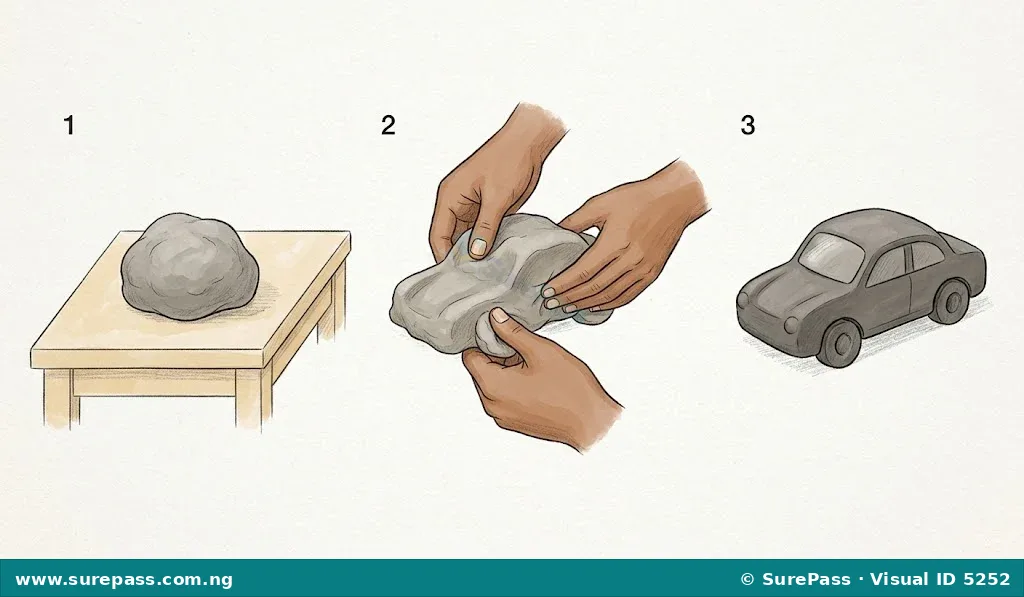
Moulding is a practical skill that allows for the creation of three-dimensional objects using pliable materials. This activity helps to develop fine motor skills and spatial reasoning, further demonstrating human ability to shape and form materials, just as God shaped creation.
The procedure for moulding an object using clay or mashed paper with starch involves the following steps:
- Prepare Materials:
- For clay: Obtain a block of modelling clay.
- For mashed paper: Tear old newspapers or waste paper into small pieces. Soak the paper in water for several hours or overnight until it is soft. Squeeze out excess water and mash the paper into a pulp. Mix the paper pulp with a small amount of starch (like cornstarch or cassava starch paste) to bind it together, forming a workable dough.
- Choose an Object: Decide what object to mould, such as a car or a chair.
- Start with a Base Shape: Take a portion of the chosen material (clay or paper-starch mixture) and begin to form the basic shape of the object. For a car, a rectangular block might be a starting point. For a chair, a base for the seat can be formed first.
- Add and Shape Details: Gradually add more material or remove excess to refine the shape. Use fingers to mould the details. For a car, create the body, then add smaller pieces for wheels, windows, and lights. For a chair, form the backrest, legs, and armrests.
- Smooth the Surface: Use fingers or a smooth tool to gently smooth out any rough edges or surfaces on the moulded object.
- Allow to Dry (for mashed paper): If using mashed paper with starch, place the moulded object in a well-ventilated area to dry completely. This may take several days, depending on the size and thickness of the object. Clay objects can also be air-dried or baked if they are oven-bake clay.
- Decorate (Optional): Once dry, the moulded object can be painted to add colour and further details.



0 comments
Open the discussion when you need it. Comments stay collapsed until requested so the initial article remains light.