



ARTICLE CONTENTSOn this page 10 sections
Meaning, Types and Consequences of Disobedience
Performance Objectives
By the end of the lesson, students should be able to:
- define obedience;
- list the types of disobedience;
- give a Biblical account of the first human disobedience;
- identify the consequences of disobedience against the national laws;
- enumerate acts of disobedience and their consequences.
Memory Verse
And unto Adam he said, Because thou hast hearkened unto the voice of thy wife, and hast eaten of the tree, of which I commanded thee, saying, Thou shalt not eat of it: cursed is the ground for thy sake; in sorrow shalt thou eat of it all the days of thy life; (Genesis 3:17 KJV)
Bible Reading
The following Bible passages support this lesson:
- Genesis 3:1-19
Meaning of Obedience
Obedience means to listen to and follow instructions, rules, or commands given by someone in authority. It involves doing what is expected or required.
When a person is obedient, they show respect for the authority of others and follow the guidelines set for them. This can be seen in various aspects of life, such as at home, in school, or in the community.
Meaning of Disobedience
Disobedience is the opposite of obedience. It means to refuse to follow instructions, rules, or commands. It is the act of going against what has been asked or forbidden.
When a person disobeys, they choose to do their own will instead of the will of someone in authority, such as God, parents, teachers, or government leaders. Disobedience can lead to negative outcomes for the individual and for others around them.
Types of Disobedience
Disobedience can be seen in different areas of life, depending on who is being disobeyed. The main types of disobedience include:
- Disobedience to God: This happens when people refuse to follow God’s commandments and teachings as found in the Bible. God is the ultimate authority, and His rules are for the good of humanity. Examples include lying, stealing, or worshipping idols.
- Disobedience to Parents: This occurs when children or young people refuse to listen to and obey the instructions or rules set by their parents or guardians. Parents have the responsibility to guide and protect their children. Examples include refusing to do chores, staying out late without permission, or talking back.
- Disobedience to Teachers and School Authorities: This involves students refusing to follow school rules, classroom instructions, or the directives of their teachers and other school staff. School rules help maintain order and a good learning environment. Examples include not doing homework, disrupting classes, or cheating in exams.
- Disobedience to National Laws and Community Rules: This is when citizens refuse to obey the laws of the land or the rules established in their communities. These laws and rules are put in place for the safety, peace, and order of everyone. Examples include breaking traffic rules, littering, or stealing.
The First Human Disobedience: Adam and Eve
The Bible tells the story of the first act of human disobedience in the Garden of Eden. God created the first man, Adam, and the first woman, Eve, and placed them in a beautiful garden. God gave them everything they needed and allowed them to eat from any tree in the garden, except for one.
God specifically commanded Adam and Eve not to eat from the tree of the knowledge of good and evil. He warned them that if they ate from it, they would surely die.
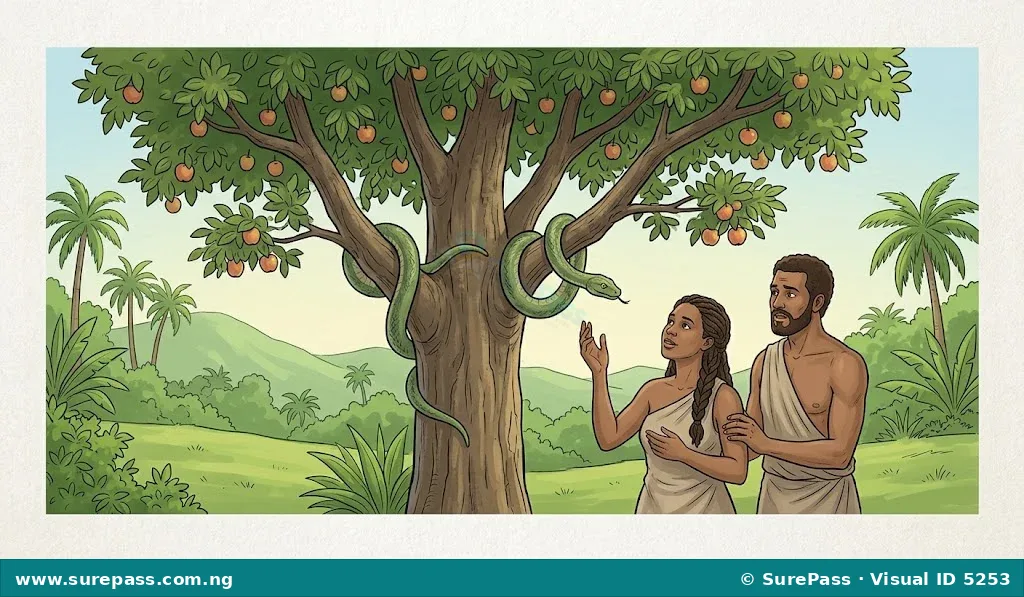
One day, a serpent, which was more cunning than any other wild animal God had made, approached Eve. The serpent questioned God’s command, asking Eve if God had truly forbidden them from eating from any tree in the garden. Eve explained that they could eat from all trees except the tree in the middle of the garden, from which God had said they must not eat or even touch, or they would die.
The serpent then told Eve that she would not die, but that God knew that if they ate from the tree, their eyes would be opened, and they would become like God, knowing good and evil. Eve looked at the tree and saw that its fruit looked good for food, was pleasing to the eye, and desirable for gaining wisdom. She took some of the fruit and ate it. She also gave some to Adam, who was with her, and he ate it too.
Immediately after they ate the fruit, their eyes were opened, and they realised they were naked. They felt ashamed and tried to cover themselves with fig leaves. When they heard God walking in the garden in the cool of the day, they hid from Him among the trees.
God called out to Adam, asking where he was. Adam replied that he heard God’s voice, was afraid because he was naked, and so he hid. God asked him if he had eaten from the tree He had commanded him not to eat from. Adam blamed Eve, saying, “The woman whom You gave to be with me, she gave me of the tree, and I ate.” Then God asked Eve what she had done, and Eve blamed the serpent, saying, “The serpent deceived me, and I ate.”
Consequences of Adam and Eve’s Disobedience
God pronounced consequences for the disobedience of the serpent, Eve, and Adam. These consequences affected not only them but also all of humanity and the natural world:
- Consequence for the Serpent: God cursed the serpent, saying it would crawl on its belly and eat dust all the days of its life. He also put enmity between the serpent and the woman, and between the serpent’s offspring and her offspring.
- Consequence for Eve (and Women): God told Eve that she would experience increased pain in childbirth. He also said that her desire would be for her husband, and he would rule over her.
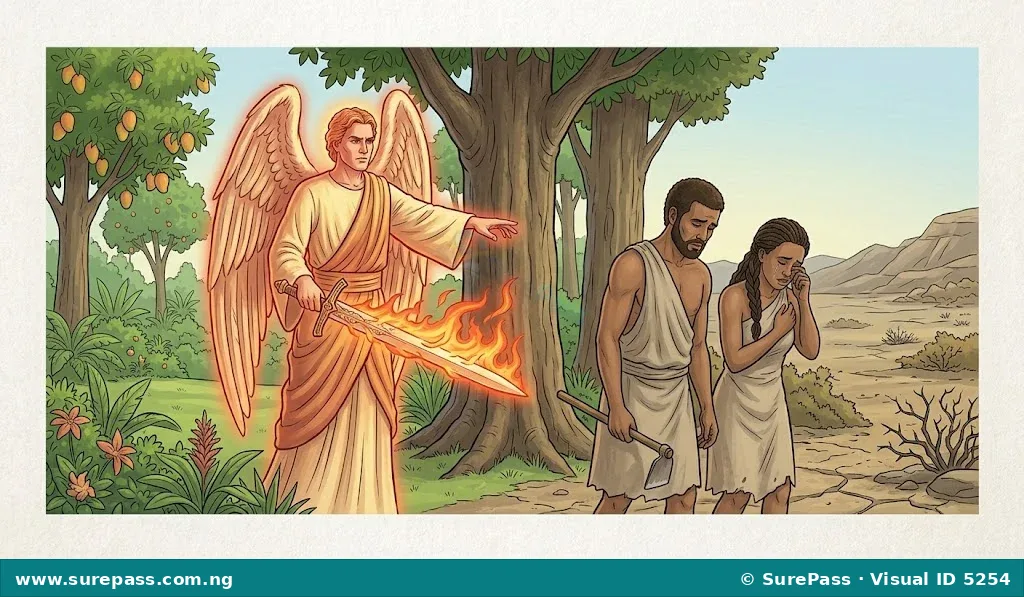
- Consequence for Adam (and Men): God cursed the ground because of Adam’s disobedience. He said that Adam would have to work hard, toiling with sweat on his brow, to get food from the ground, which would produce thorns and thistles. He would eat bread by the sweat of his face until he returned to the dust from which he was taken, for he was dust and to dust he would return.
- Expulsion from the Garden: God drove Adam and Eve out of the Garden of Eden to prevent them from eating from the tree of life and living forever in their sinful state. Cherubim and a flaming sword were placed to guard the way to the tree of life.
- Separation from God: Their disobedience caused a spiritual separation between humanity and God, leading to sin and death entering the world.
Acts of Disobedience and Their Consequences Today
Disobedience continues to have serious consequences in lives today, just as it did for Adam and Eve. Understanding these consequences helps people to make better choices and live in harmony with God, family, school, and society.
Consequences of Disobedience to Parents
Disobeying parents can lead to several negative outcomes. Examples of such acts include refusing to do chores, staying out late without permission, talking back, not following house rules, or neglecting studies. The consequences often include:
- Loss of trust from parents.
- Punishment, such as grounding or loss of privileges.
- Strained family relationships.
- Poor academic performance if studies are neglected.
- Lack of discipline in personal life.
- Exposure to danger if disobedience leads to risky situations outside parental guidance.
Consequences of Disobedience to Teachers and School Authorities
Disobeying teachers and school authorities disrupts the learning environment and can harm a student’s future. Acts of disobedience include not doing homework, disrupting classes, cheating in exams, bullying other students, or breaking school rules (e.g., wearing the wrong uniform, fighting). The consequences often include:
- Poor grades and academic failure.
- Suspension or expulsion from school.
- Missing out on important learning opportunities.
- Disrespect from peers and teachers.
- Difficulty in future education or career prospects.
- Legal trouble for serious offences like bullying or fighting.
Consequences of Disobedience to National Laws and Community Rules
Disobeying national laws and community rules affects not only the individual but also the peace and order of society. Examples of such acts include stealing, fighting, driving without a license, breaking traffic rules, littering, engaging in cult activities, or drug abuse. The consequences often include:
- Arrest and imprisonment by law enforcement agencies.
- Payment of fines or other penalties.
- Acquisition of a criminal record, which can affect future opportunities.
- Injury or death, especially from traffic violations or involvement in dangerous groups like cults.
- Loss of reputation and respect within the community.
- Harm to the community through disorder, insecurity, and damage to public property.
Consequences of Disobedience to God
Disobeying God’s commandments has spiritual and moral consequences. Acts of disobedience to God include lying, stealing, cheating, disrespecting elders, engaging in immoral acts, not worshipping God, or harming others. The consequences often include:
- Feelings of guilt and remorse.
- Spiritual emptiness and a lack of peace.
- Broken relationships with God and other people.
- Loss of divine favour and blessings.
- Eternal separation from God after death.




0 comments
Open the discussion when you need it. Comments stay collapsed until requested so the initial article remains light.