


ARTICLE CONTENTSOn this page 11 sections
Relationship in School
Performance Objectives
By the end of the lesson, students should be able to:
- Identify members of the school community.
- List common factors to consider in choosing friends.
- Explain the biblical example of good friendship between David and Jonathan.
- Identify the consequences of bad friendship.
Memory Verse
“My son, if sinners entice thee, consent thou not.”
— Proverbs 1:10 (KJV)
Bible Reading
The principal Bible passages supporting this lesson are:
- 1 Samuel 18:1-5
- Proverbs 1:10
- 2 Thessalonians 3:6-13
Meaning of Relationship
A relationship is the connection or association between two or more people.
Human beings are created to interact with one another. No individual can live completely alone. In every environment, such as the home, the church, the mosque and the school, people must interact and build relationships. In a school, these interactions help to create a peaceful and productive environment for learning.
Members of the School Community
A school community is a group of people who work together within a school environment to achieve educational goals.
The school community is made up of various individuals, each playing a specific role to ensure the smooth running of the institution. The main members of the school community include:
- The School Principal: This is the administrative head of the school who oversees all activities, teachers and students.
- The Vice-Principals: These are the assistants to the principal who manage specific areas such as administration or academics.
- Teachers: These are the professional educators who instruct, guide and mentor students in various subjects.
- Non-Teaching Staff: These include administrative officers, librarians, laboratory attendants, security personnel, cleaners and gardeners who maintain the school infrastructure.
- Prefects: These are student leaders appointed or elected to assist the school authorities in maintaining discipline and order among students.
- Students: These are the learners who attend the school to acquire knowledge, skills and moral training.
- Friends: These are close companions chosen by students from among their peers for mutual support and socialization.
Choosing Friends at School
Friendship is a close relationship between people who share mutual affection, trust and common interests.
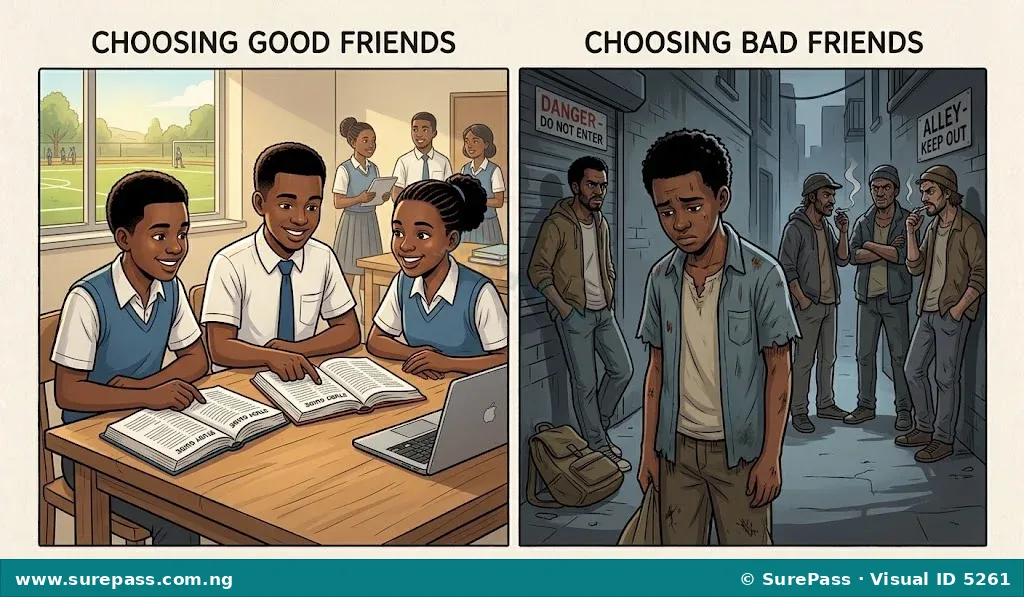
While at school, students meet many peers. However, not every classmate or schoolmate can be a close friend. Choosing the right friends is critical because companions have a strong influence on a person’s character, academic performance and future.
The main factors to consider when choosing friends at school include:
- Common Interests: Friends should share positive interests, such as a love for academic studies, sports, healthy debates or Christian fellowship.
- Age and Maturity: It is generally helpful to choose friends within a similar age group or maturity level to ensure mutual understanding and shared experiences.
- Moral Values and Character: Good friends should possess positive virtues such as honesty, respect, humility, obedience and the fear of God.
- Academic Diligence: Associating with classmates who are serious about their studies encourages a student to work harder and perform well academically.
- Good Upbringing: Friends should come from backgrounds that respect societal laws, parental authority and school regulations.

An Example of Good Friendship: David and Jonathan
The Holy Bible provides an excellent model of true, godly friendship in the relationship between David and Jonathan, as recorded in 1 Samuel 18:1-5.
Jonathan was the prince of Israel, the son of King Saul. David was a young shepherd boy who had just defeated the giant Goliath and entered the service of the king. Despite the vast difference in their social status, a deep bond of friendship developed between them immediately after David finished speaking with King Saul.
The Bible states that the soul of Jonathan was knit with the soul of David, and Jonathan loved him as his own soul. To seal this beautiful friendship, Jonathan made a covenant with David. As a sign of his commitment, loyalty and love, Jonathan took off his royal robe, his garments, his sword, his bow and his belt, and gave them to David.
The key lessons from the friendship of David and Jonathan include:
- Selflessness: Jonathan was willing to give up his royal possessions and even his claim to the throne to support David.
- Loyalty: True friends remain loyal to each other even in difficult times. Jonathan later protected David from the anger of King Saul.
- Love and Respect: Their friendship was built on genuine love and mutual respect, free from jealousy or competition.
- Covenant and Trust: They kept their promises to each other, showing that trust is the foundation of any good relationship.

Consequences of Bad Friendship
A bad friendship is an association with individuals who engage in immoral, illegal or undisciplined behaviours.
The Bible warns against keeping bad company. Proverbs 1:10 admonishes students not to yield when sinners entice them. Similarly, 2 Thessalonians 3:6-13 instructs believers to withdraw from companions who walk in an undisciplined and lazy manner.
Associating with bad friends leads to severe consequences, which include:
- Cultism: Bad companions can initiate unsuspecting students into secret cults, which lead to violence, fear and destruction.
- Stealing and Robbery: Peer pressure from bad friends can force a student to start stealing school items, money and eventually engaging in armed robbery.
- Drug Addiction and Substance Abuse: Bad friends often introduce peers to illegal drugs, misuse of medication and harmful substances, which damage physical and mental health.
- Examination Malpractice: Lazy friends who do not study often encourage cheating, copying and smuggling unauthorized materials into examination halls.
- Prostitution, Lesbianism and Homosexuality: Immoral companions can influence students into sexually deviant lifestyles that contradict biblical teachings and societal values.
- Smoking and Drinking: Bad friends often pressure others into smoking cigarettes or Indian hemp, and drinking alcohol, leading to addiction and health complications.
- Laziness and Truancy: Companions who dislike schoolwork encourage others to skip classes (truancy), ignore assignments and eventually fail their examinations.
- Destruction of Future and Reputation: The ultimate end of bad company is disgrace, expulsion from school, arrest by law enforcement agencies and a ruined future.
Summary of Moral Lessons
Students must understand that the school is a place for both academic and moral development. Building positive relationships with teachers, prefects and fellow students creates a peaceful learning environment. Following the example of David and Jonathan, students should strive to be loyal, selfless and loving friends. By heeding the warnings in Proverbs and Thessalonians, students must actively avoid bad companions to protect their character, faith and academic success.
Evaluation Guide
To assess understanding of this unit, students should answer the following questions:
- List five members of the school community and state their roles.
- State three factors that should be considered when selecting friends at school.
- Discuss two reasons why it is important to choose good friends.
- Explain the covenant made between David and Jonathan in 1 Samuel 18:1-5.
- List six negative consequences of keeping bad friends.


0 comments
Open the discussion when you need it. Comments stay collapsed until requested so the initial article remains light.