



ARTICLE CONTENTSOn this page 6 sections
Rootstock Preparation
Performance Objectives
By the end of the lesson, students should be able to:
- define rootstock;
- state the importance of rootstock;
- prepare the rootstock.
Meaning of Rootstock
A rootstock is the lower part of a plant, consisting of the root system and sometimes a short stem, onto which another plant part (called the scion) is grafted.
In horticulture, the rootstock provides the roots for the new combined plant. It is chosen for its strong root system and ability to grow well in the soil.
Importance of Rootstock
Rootstocks play a very important role in the success of grafted plants. They provide several benefits to the plant that grows from them.
The importance of rootstock includes:
- Disease Resistance: Some rootstocks are naturally resistant to certain diseases found in the soil. When a scion is grafted onto such a rootstock, the entire plant becomes more resistant to those diseases.
- Pest Resistance: Similar to diseases, some rootstocks can resist pests that attack plant roots. This protects the grafted plant from damage by these pests.
- Adaptation to Soil Conditions: Rootstocks can help plants grow well in different types of soil. For example, a rootstock might be chosen because it can tolerate poor soil, very wet soil, or soil with high salt content.
- Controlling Plant Size: Rootstocks can influence how large or small the grafted plant will grow. Some rootstocks are known as ‘dwarfing rootstocks’ because they make the grafted plant grow smaller, which is useful for growing many plants in a small area or for easier harvesting.
- Early Fruiting: Certain rootstocks can make the grafted plant start producing fruits earlier than it would on its own roots. This means farmers can harvest crops sooner.
- Increased Yield: A strong and healthy rootstock can help the grafted plant absorb water and nutrients more efficiently, leading to more fruits or a higher yield of crops.
- Improved Quality of Fruits: In some cases, the rootstock can influence the quality of the fruits produced by the scion, such as their size, taste, or colour.
Preparation of Rootstock
Preparing a proper rootstock is a crucial step for successful grafting. The process usually begins with selecting healthy seeds from suitable fruits. These seeds are then prepared and planted to grow into young, strong seedlings that will serve as the rootstock.
Steps in Rootstock Preparation
The preparation of rootstock involves several key steps:
- Extraction of Seeds: The first step is to obtain seeds from healthy, mature fruits. The fruits are cut open carefully, and the seeds are removed. It is important to choose fruits that are free from diseases or damage to ensure the seeds are viable.
- Washing of Seeds: After extraction, the seeds often have fruit pulp or sugary residue attached to them. These residues can cause fungal growth or attract pests. The seeds are washed thoroughly with clean water to remove all traces of pulp and other materials.
- Drying of Seeds: Once washed, the seeds need to be dried properly. Spreading the seeds out on a clean surface, such as a tray or a piece of cloth, in a shaded and well-ventilated area allows them to dry naturally. Direct sunlight should be avoided as it can harm the seeds. Proper drying prevents mould and helps in storing the seeds if they are not planted immediately.
- Planting of Seeds: After drying, the seeds are ready for planting. They are sown in a suitable substrate, which is the material used for growing plants, such as soil mixed with compost or sand. The seeds are planted at the correct depth and spacing to allow each seedling enough room to grow. Regular watering and care are essential to help the seeds germinate and grow into strong seedlings suitable for grafting.
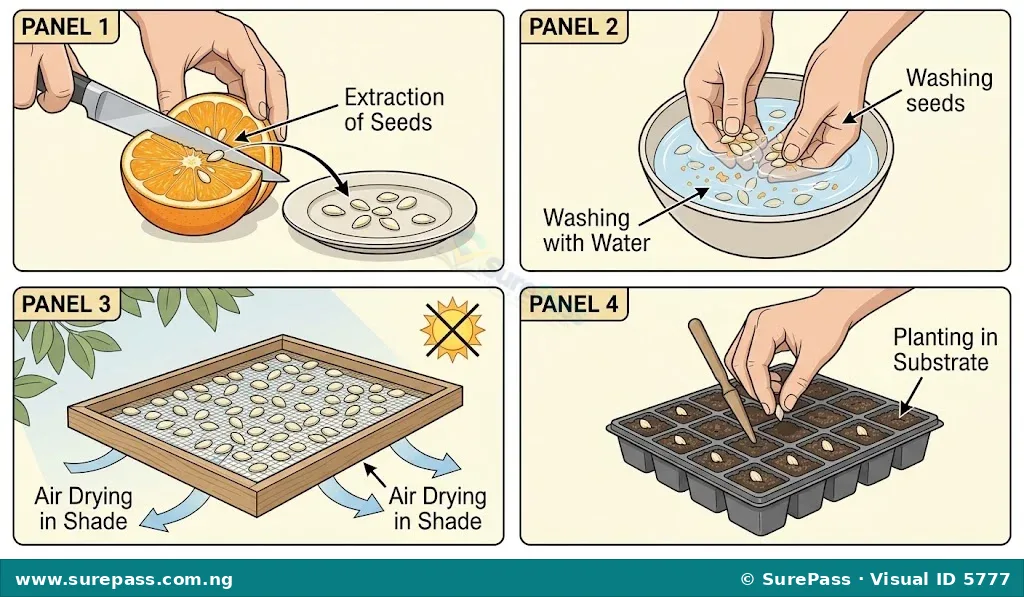
Skill: Preparing a Proper Rootstock
To prepare a proper rootstock, it is important to follow the steps carefully to ensure the seedlings are healthy and strong enough for grafting.
Materials Required:
The required materials are:
- Ripe fruits (e.g., oranges, mangoes, or other suitable local fruits)
- Pen knife or small knife
- Bowl of clean water
- Clean cloth or tray for drying
- Substrate (e.g., garden soil mixed with compost or sand)
- Planting bags or seed trays
- Watering can
Procedure for Preparing Rootstock:
The procedure involves the following steps:
- Select Healthy Fruits: Choose ripe, healthy fruits that are free from any signs of disease or damage. These fruits will provide the best quality seeds.
- Extract the Seeds: Carefully cut open the chosen fruits using a pen knife. Gently remove the seeds from the fruit pulp. Be careful not to damage the seeds during extraction.
- Wash the Seeds: Place the extracted seeds in a bowl of clean water. Rub them gently to remove any remaining fruit pulp or sugary coating. Change the water if it becomes cloudy, and continue washing until the seeds are completely clean.
- Dry the Seeds: Spread the clean seeds evenly on a clean cloth or tray. Place the cloth or tray in a shaded, well-ventilated area to allow the seeds to air dry. Ensure they are completely dry before proceeding to the next step, as wet seeds can rot.
- Prepare the Substrate: Fill planting bags or seed trays with a suitable substrate. A good substrate allows water to drain easily and provides nutrients for the growing seedlings.
- Plant the Seeds: Make small holes in the substrate with your finger or a stick. Place one or two seeds in each hole, covering them lightly with substrate. The depth of planting depends on the size of the seed; generally, plant them about twice their size deep.
- Water the Planted Seeds: Gently water the planted seeds using a watering can with a fine rose. Ensure the substrate is moist but not waterlogged.
- Provide Care: Place the planting bags or trays in a location where they can receive adequate sunlight (but not harsh direct sun initially) and protection from strong winds. Continue to water regularly to keep the substrate moist until the seeds germinate and grow into strong seedlings.
- Select Strong Seedlings: Once the seeds have germinated and grown into young plants, select the healthiest and most vigorous seedlings to be used as rootstocks for grafting. These strong seedlings will have a better chance of supporting the grafted scion.




0 comments
Open the discussion when you need it. Comments stay collapsed until requested so the initial article remains light.