



ARTICLE CONTENTSOn this page 7 sections
Vegetable Production from Nursery to Harvest
Performance Objectives
By the end of the lesson, students should be able to:
- define vegetable;
- state the classes of vegetables;
- explain activities involved in vegetable production;
- Plant and nurture vegetables
- harvest vegetables.
What is a Vegetable?
A vegetable is any part of a plant that is eaten by humans as food, usually as part of a meal.
Vegetables are important for a healthy diet because they provide vitamins, minerals, and fibre. They can be eaten raw or cooked.
Classes of Vegetables
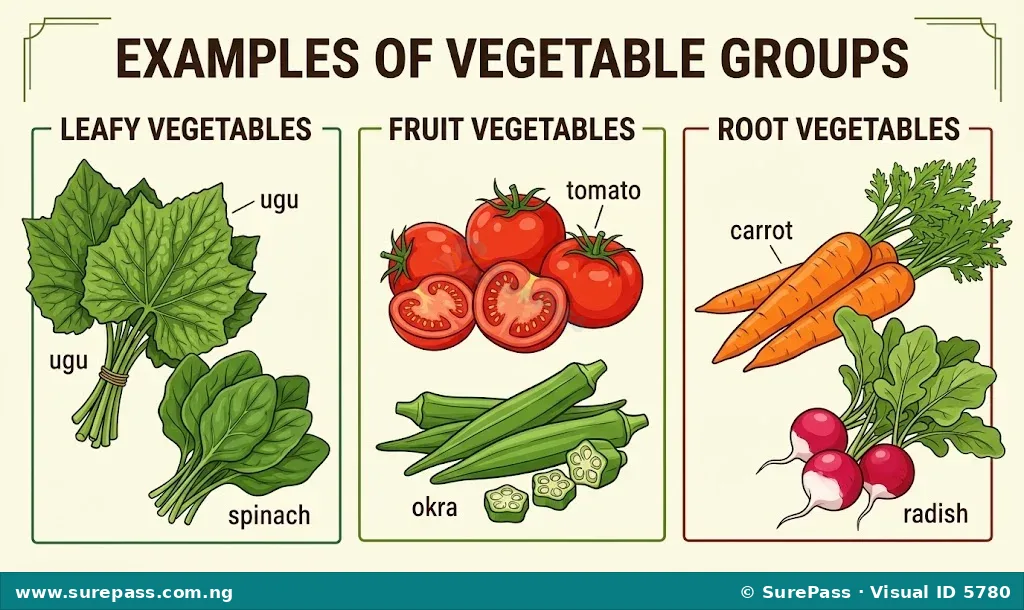
Vegetables are grouped into different classes based on the part of the plant that is eaten. Understanding these classes helps in knowing how to grow and harvest them.
The main classes of vegetables include:
- Leafy Vegetables
- Fruit Vegetables
- Root Vegetables
Leafy Vegetables
Leafy vegetables are plants whose leaves are eaten. These vegetables are often rich in iron and other nutrients.
Examples of leafy vegetables common in Nigeria include:
- Ugu (Fluted Pumpkin leaves)
- Waterleaf
- Spinach (Tete)
- Bitter leaf
- Scent leaf
Fruit Vegetables
Fruit vegetables are plants whose fruits are eaten. In botany, a fruit is the part of a plant that contains seeds. Even though we call them vegetables in cooking, they are botanically fruits.
Examples of fruit vegetables include:
- Tomato
- Pepper
- Okra
- Garden egg
- Cucumber
Root Vegetables
Root vegetables are plants whose roots are eaten. These roots store food for the plant and are often rich in carbohydrates and other nutrients.
Examples of root vegetables include:
- Carrot
- Radish
- Beetroot
Activities in Vegetable Production
Growing vegetables from start to finish involves several important activities. Each activity helps the plants grow well and produce a good harvest.
The key activities involved in vegetable production include:
- Varietal Selection
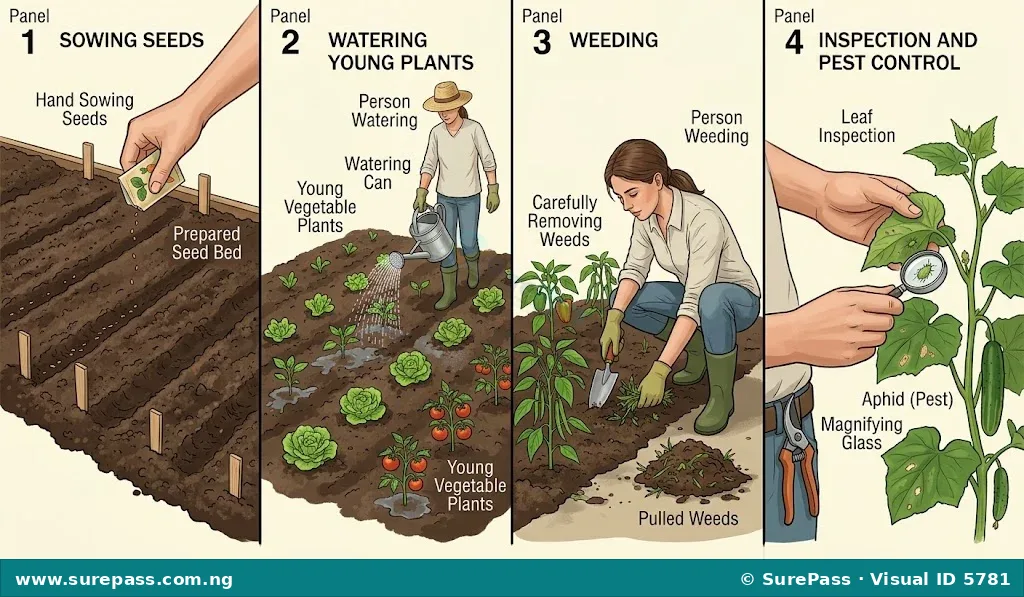
- Sowing
- Watering
- Weeding
- Fertilizer Application
- Pest Control
Varietal Selection
Varietal selection means choosing the right type of vegetable seed or seedling to plant. It is important to select varieties that are suitable for the local climate, resistant to common diseases, and produce good yields.
For example, choosing a tomato variety that grows well in hot weather will give better results than one meant for cooler climates.
Sowing
Sowing is the process of planting seeds in the soil. Seeds can be sown directly into the garden bed or first in a nursery bed before transplanting.
Proper sowing involves planting seeds at the correct depth and spacing to allow them enough room to grow.
Watering
Watering is supplying water to the plants. Water is essential for plant growth, helping them absorb nutrients from the soil and carry out photosynthesis.
Vegetables need regular watering, especially during dry seasons, to ensure they do not wilt or die.
Weeding
Weeding is the removal of unwanted plants, called weeds, from the vegetable garden. Weeds compete with vegetable plants for sunlight, water, and nutrients, which can reduce the yield of the vegetables.
Regular weeding helps the vegetable plants grow strong and healthy.
Fertilizer Application
Fertilizer application is adding nutrients to the soil to help plants grow better. Soil may not always have enough nutrients for healthy plant growth.
Fertilizers, such as compost, animal manure, or chemical fertilizers, provide the necessary food for the plants.
Pest Control
Pest control involves managing insects and other organisms that harm vegetable plants. Pests can eat leaves, stems, or fruits, causing damage and reducing the harvest.
Methods of pest control include hand-picking pests, using natural repellents, or applying pesticides when necessary.
Planting and Nurturing Vegetables
Planting and nurturing vegetables involves preparing the ground, sowing the seeds, and taking care of the young plants until they are ready for harvest.
How to Plant Vegetables
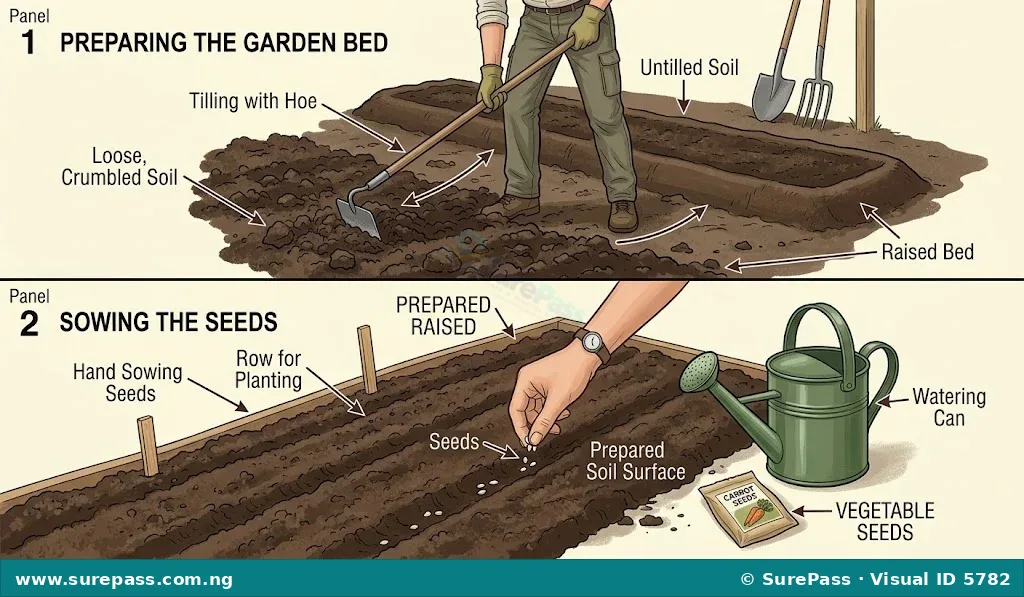
The procedure for planting vegetables involves the following steps:
- Site Selection: Choose a sunny spot in the garden that receives at least 6-8 hours of sunlight daily. The soil should be well-drained.
- Land Preparation: Clear the chosen area of any weeds, stones, or debris. Dig the soil to loosen it, about 15-20 cm deep. This is called tilling.
- Make Beds: Create raised beds or flat beds, depending on the type of vegetable and soil conditions. Raised beds are good for areas with heavy rainfall or poor drainage.
- Prepare Seedbed: If starting seeds in a nursery, prepare a small, fine seedbed with rich soil.
- Sow Seeds:
- For direct sowing, plant seeds directly into the prepared garden beds at the recommended depth and spacing.
- For transplanting, sow seeds in a nursery bed. Once the seedlings have grown 2-3 true leaves (about 2-4 weeks), carefully dig them up and plant them in the main garden bed, ensuring proper spacing.
- Water Immediately: Gently water the newly sown seeds or transplanted seedlings to help them settle in.
How to Nurture Young Vegetable Plants
Nurturing ensures that your vegetable plants grow strong and healthy. The procedure involves the following steps:
- Regular Watering: Water the plants consistently, especially in the morning or late afternoon. Check the soil moisture daily. Young plants need more frequent watering.
- Weeding: Remove weeds regularly by hand or using a small hoe. Be careful not to damage the roots of your vegetable plants. Weeding should be done when the soil is slightly moist.
- Fertilizer Application: About 2-3 weeks after planting or transplanting, apply organic manure (like compost or well-rotted animal dung) around the base of the plants. For chemical fertilizers, follow instructions carefully and apply sparingly.
- Pest and Disease Control: Regularly inspect your plants for signs of pests (like insects eating leaves) or diseases (like spots on leaves).
- Hand-pick larger pests like caterpillars.
- For smaller pests, you can use simple organic sprays made from neem leaves or pepper.
- If a plant is heavily diseased, remove it to prevent the spread to other plants.
- Staking (for some plants): For climbing vegetables like tomatoes or garden eggs, provide stakes or supports as they grow taller to prevent them from falling over.
Harvesting Vegetables
Harvesting is the process of gathering mature vegetables from the plants. Knowing when and how to harvest properly helps to get the best quality and quantity of produce.
When to Harvest Vegetables
The right time to harvest depends on the type of vegetable:
- Leafy Vegetables: Harvest leafy vegetables like Ugu, waterleaf, and spinach when the leaves are tender and fully grown, but before they become tough or start to flower. You can often pick outer leaves, allowing the plant to continue producing.
- Fruit Vegetables: Harvest fruit vegetables like tomatoes, peppers, and okra when they reach their full size and desired colour. Tomatoes should be firm and red, peppers should be brightly coloured, and okra pods should be tender and snap easily.
- Root Vegetables: Harvest root vegetables like carrots and radishes when their roots have reached a good size. You can sometimes see the top of the root peeking out of the soil.
How to Harvest Vegetables Properly
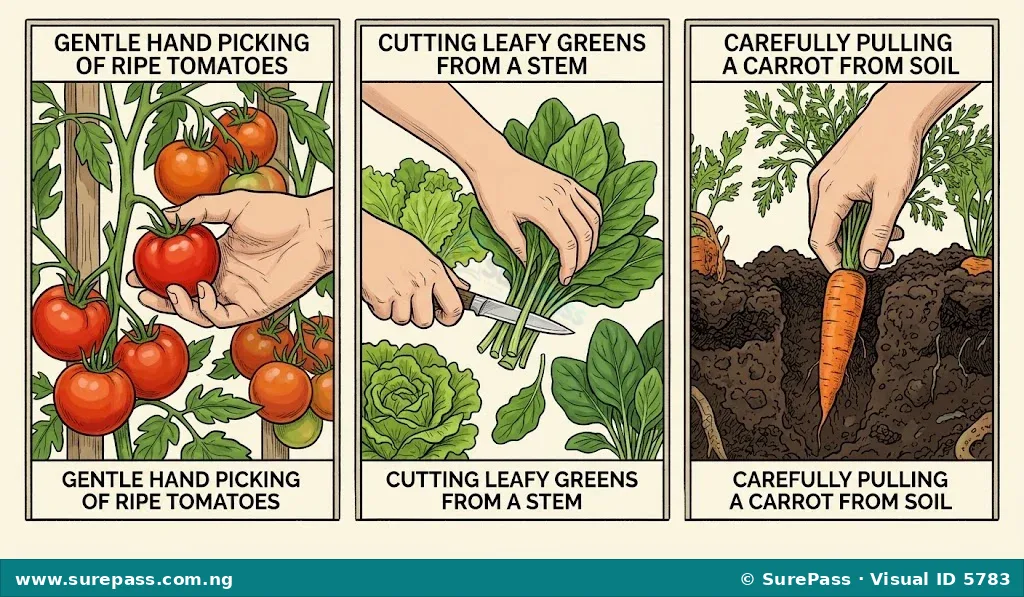
The procedure for harvesting vegetables involves the following steps:
- Use Clean Tools: Use a clean knife, cutlass (with adult supervision), or your hands for harvesting. Clean tools prevent the spread of diseases.
- Handle Gently: Handle vegetables carefully to avoid bruising or damaging them. Damaged vegetables spoil faster.
- Harvest Leafy Vegetables:
- For Ugu and waterleaf, use a sharp knife or cutlass to cut the stems, leaving some nodes for regrowth.
- For spinach and bitter leaf, pick the individual leaves or cut the whole plant at the base.
- Harvest Fruit Vegetables:
- For tomatoes and garden eggs, gently twist or cut the fruit from the stem, leaving a small part of the stem attached.
- For okra and peppers, cut the stem just above the fruit using a sharp knife or scissors.
- Harvest Root Vegetables:
- Loosen the soil around the root gently with a small hand trowel.
- Carefully pull the root vegetable from the soil by holding its leafy top.
- Harvest in the Morning: It is often best to harvest in the cool morning hours. Vegetables harvested in the cool part of the day tend to stay fresh longer.




0 comments
Open the discussion when you need it. Comments stay collapsed until requested so the initial article remains light.