


ARTICLE CONTENTSOn this page 6 sections
Fertilizer Application
Performance Objectives
By the end of the lesson, students should be able to:
- identify types of fertilizers;
- apply fertilizer using different methods.
Meaning of Fertilizer
A fertilizer is any material, organic or inorganic, that is added to the soil to supply essential nutrients for plant growth.
Plants need various nutrients to grow strong and healthy, just like humans need a balanced diet. When the soil lacks these nutrients, fertilizers are used to enrich it, helping crops to yield better harvests.
Types of Fertilizers
Fertilizers are broadly categorised into two main types based on their origin and composition: organic fertilizers and inorganic fertilizers.
Organic Fertilizers
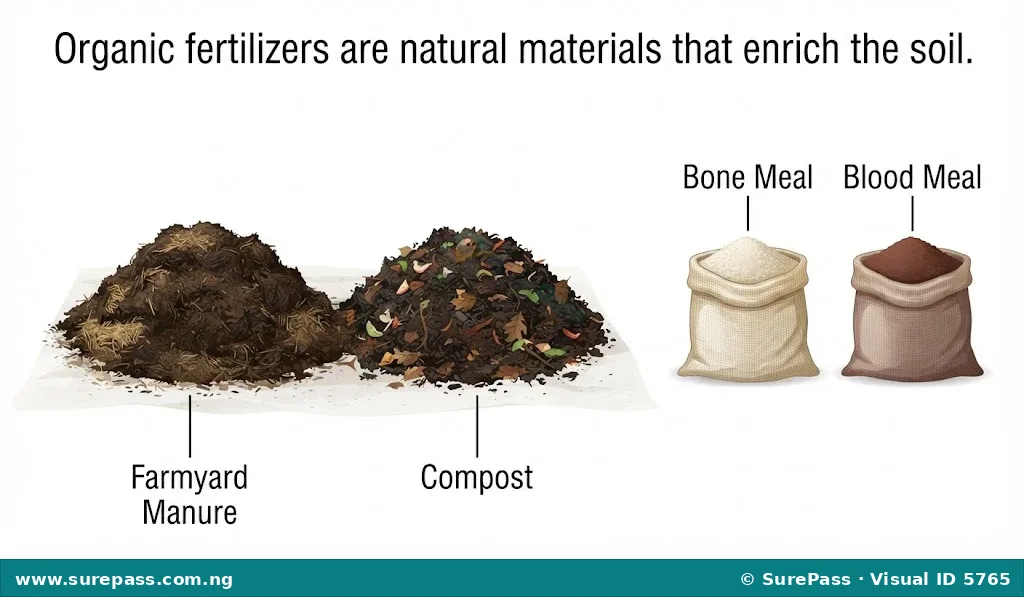
Organic fertilizers are derived from natural sources, such as plant and animal matter.
These fertilizers improve soil structure, increase water retention, and release nutrients slowly over time. They are generally safe for the environment and promote healthy soil life.
Examples of organic fertilizers include:
- Farmyard manure (animal waste)
- Compost (decomposed plant and animal matter)
- Green manure (crops grown and then ploughed back into the soil)
- Bone meal
- Blood meal
Inorganic Fertilizers
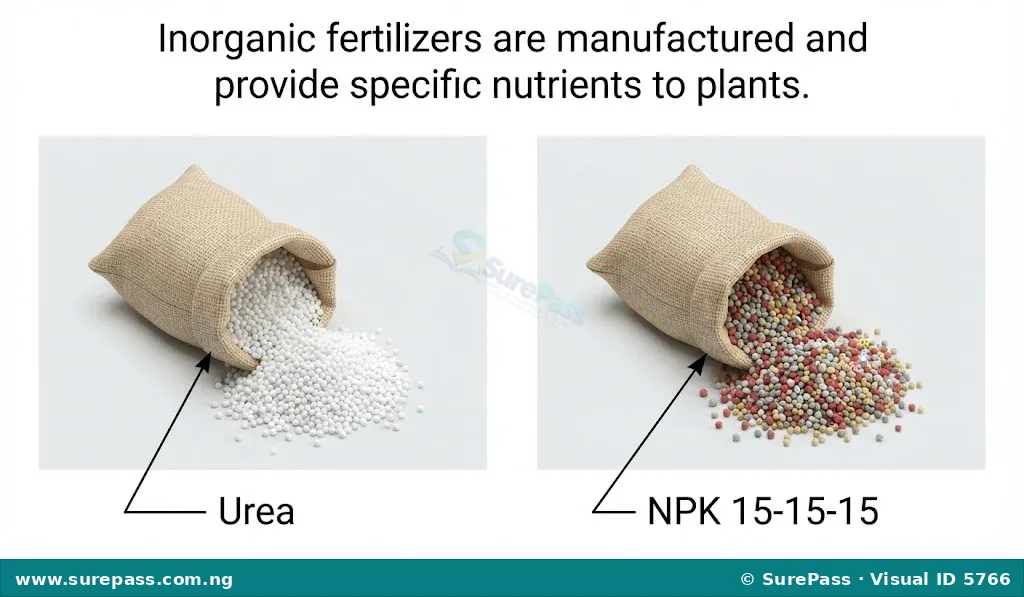
Inorganic fertilizers, also known as chemical or synthetic fertilizers, are manufactured from mineral salts.
These fertilizers contain specific nutrients in concentrated forms and are designed to provide a quick boost to plant growth. They are usually available in granular, powdered, or liquid forms.
Examples of inorganic fertilizers include:
- Urea (supplies nitrogen)
- NPK fertilizers (contain Nitrogen, Phosphorus, and Potassium in different ratios, e.g., NPK 15-15-15)
- Superphosphate (supplies phosphorus)
- Muriate of Potash (supplies potassium)
Methods of Fertilizer Application
The way fertilizer is applied to plants is important for its effectiveness and to prevent damage to the plants. Different methods are used depending on the type of crop, the fertilizer, and the stage of plant growth.
1. Ring Application
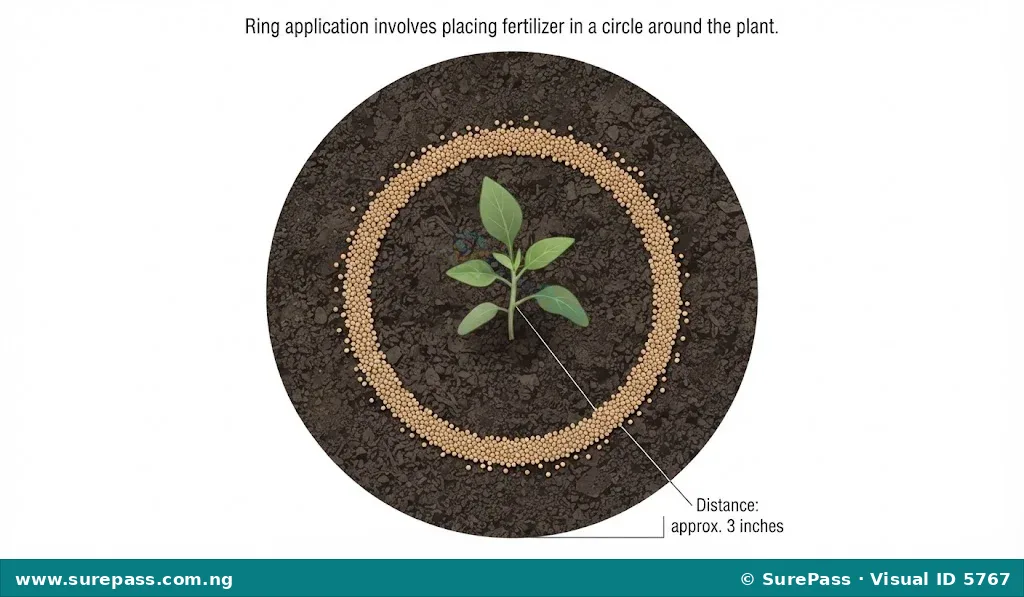
Ring application involves placing fertilizer in a circular band around the base of a plant, a short distance away from the stem.
This method is commonly used for individual plants like fruit trees, shrubs, or widely spaced crops. The fertilizer is placed where the plant roots can easily absorb it, but not too close to the stem to avoid burning the plant.
2. Spot Application
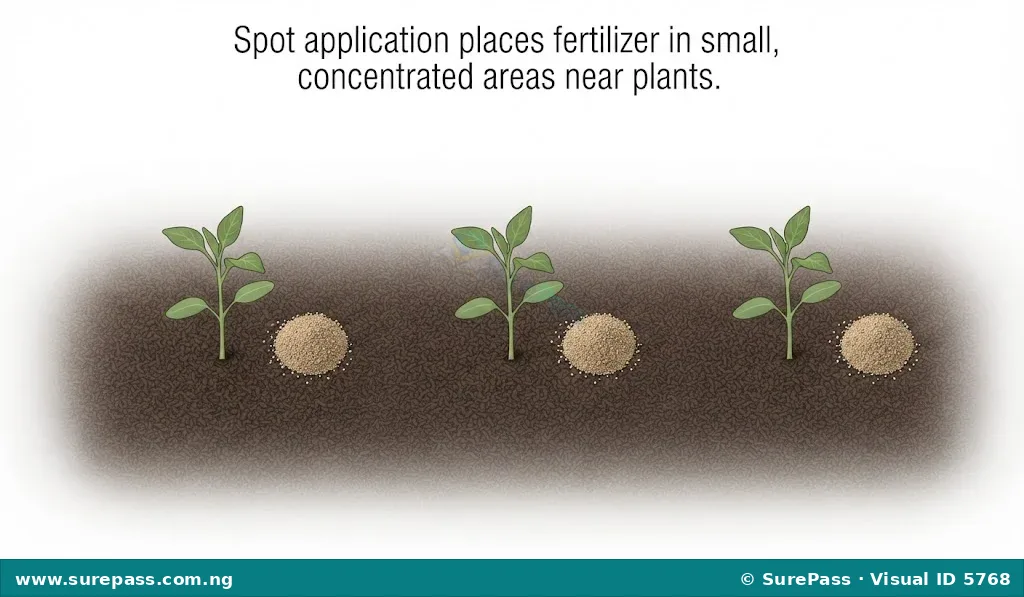
Spot application involves placing a small amount of fertilizer in specific spots near individual plants or planting holes.
This method is efficient for crops planted in rows or at specific intervals. It ensures that each plant receives the required nutrients directly, reducing waste. It is often used when planting seedlings or for side dressing established plants.
3. Broadcasting
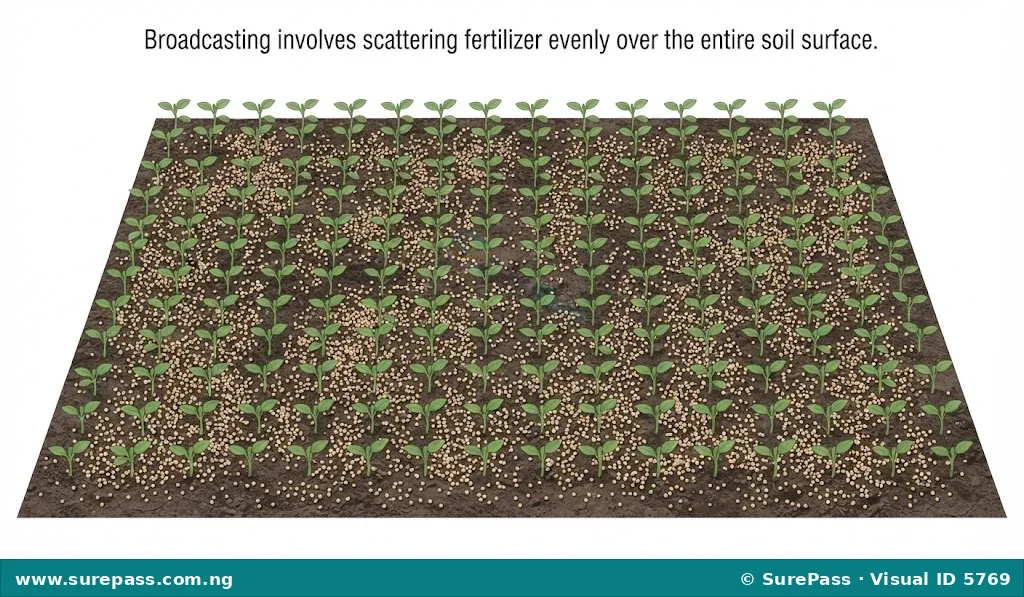
Broadcasting is the method of scattering fertilizer evenly over the entire soil surface of a field or garden bed.
This method is suitable for crops planted closely together, such as grains, vegetables in beds, or lawns. The fertilizer can be spread by hand or using a mechanical spreader. After broadcasting, the fertilizer is often lightly incorporated into the soil by hoeing or raking, or watered in.
4. Side Band Placement
Side band placement involves placing fertilizer in bands on one or both sides of a row of plants, slightly below and to the side of the seeds or plant roots.
This method ensures that the fertilizer is close enough for the roots to access but far enough away to prevent direct contact with young roots, which can cause burning. It is commonly used for row crops like maize, beans, or vegetables.
How to Apply Fertilizer Using Different Methods
Applying fertilizer correctly helps plants absorb nutrients efficiently and prevents damage. Always follow safety precautions when handling fertilizers.
Materials Required:
- Organic fertilizer (e.g., compost or well-rotted manure) or inorganic fertilizer (e.g., NPK granules)
- Small garden hoe or hand trowel
- Gloves (optional, but recommended for inorganic fertilizers)
- Watering can with water
- Seedlings or established plants in a garden bed
General Safety Precautions:
- Always read and follow the instructions on fertilizer packaging.
- Wear gloves, especially when handling inorganic fertilizers, to protect the skin.
- Avoid direct contact of inorganic fertilizers with plant leaves or stems, as this can cause burning.
- Wash hands thoroughly with soap and water after handling fertilizers.
- Store fertilizers in a cool, dry place, away from children and pets.
Procedure for Applying Fertilizer:
1. Ring Application (for individual plants)
The procedure for ring application involves the following steps:
- Select an individual plant, such as a young tree or a widely spaced vegetable plant.
- Using a hand trowel or hoe, create a shallow furrow (a small ditch) in a circle around the plant. The circle should be about 15-30 cm (6-12 inches) away from the stem, depending on the plant’s size.
- Carefully sprinkle the recommended amount of fertilizer into the furrow.
- Gently cover the fertilizer with soil using the trowel or hoe.
- Water the plant thoroughly to help the fertilizer dissolve and move into the soil for root absorption.
2. Spot Application (for plants in rows or planting holes)
The procedure for spot application involves the following steps:
- Identify the plants or planting spots where fertilizer is needed.
- For existing plants, make a small hole or shallow depression about 5-10 cm (2-4 inches) away from the base of each plant.
- Place a small, measured amount of fertilizer into each hole or depression.
- Cover the fertilizer with soil.
- For new plantings, place the fertilizer in the planting hole before placing the seedling, ensuring it does not directly touch the roots.
- Water the area well after application.
3. Broadcasting (for wide areas or closely spaced crops)
The procedure for broadcasting involves the following steps:
- Prepare the garden bed or field by clearing weeds.
- Measure the recommended amount of fertilizer for the entire area.
- Take a handful of fertilizer and scatter it evenly across the soil surface, walking slowly to ensure uniform distribution.
- Repeat until the entire area is covered.
- Lightly rake or hoe the soil to mix the fertilizer into the top few centimetres of soil.
- Water the entire area thoroughly to help the fertilizer penetrate the soil.
4. Side Band Placement (for row crops)
The procedure for side band placement involves the following steps:
- Identify the rows of plants or where rows will be planted.
- Using a hoe or trowel, create a shallow furrow or trench along one or both sides of the plant row. The furrow should be about 5-10 cm (2-4 inches) away from the plants and slightly deeper than the plant roots.
- Sprinkle the recommended amount of fertilizer evenly along the furrow.
- Cover the fertilizer with soil, ensuring it is buried.
- Water the rows thoroughly to help the nutrients reach the plant roots.




0 comments
Open the discussion when you need it. Comments stay collapsed until requested so the initial article remains light.