


ARTICLE CONTENTSOn this page 9 sections
Meaning, Uses and Saving of Money for Horticulture Business for JSS 1
Performance Objectives
By the end of the lesson, students should be able to:
- explain the meaning and origin of money;
- discuss the uses of money;
- state the importance and methods of saving money.
- describe the sources of funding for in horticulture and crop production.
Meaning of Money
Money is anything generally accepted as a medium of exchange for goods and services.
It is used to buy things people need and want, such as food, clothes, and tools for farming. Before money was invented, people exchanged goods and services directly through a system called trade by barter.
Evolution of Money
In the past, people did not use money as it is known today. They practised trade by barter, which involved exchanging goods for other goods.
For example, a farmer with yams might exchange them for fish from a fisherman. However, this system had problems. It was often hard to find someone who had exactly what you wanted and also wanted what you had to offer. This made trade difficult and slow.
Over time, people started using certain items that everyone accepted as valuable. These items served as early forms of money. Examples include cowries, salt, beads, and even metals like gold and silver. These items were easier to carry and divide than large quantities of goods.
Eventually, governments began to produce standardised coins and banknotes, which are the forms of money commonly used today. These modern forms of money are easy to recognise, carry, and use for all kinds of transactions.
Uses of Money
Money serves many important purposes in daily life and in businesses like horticulture. Its main uses include:
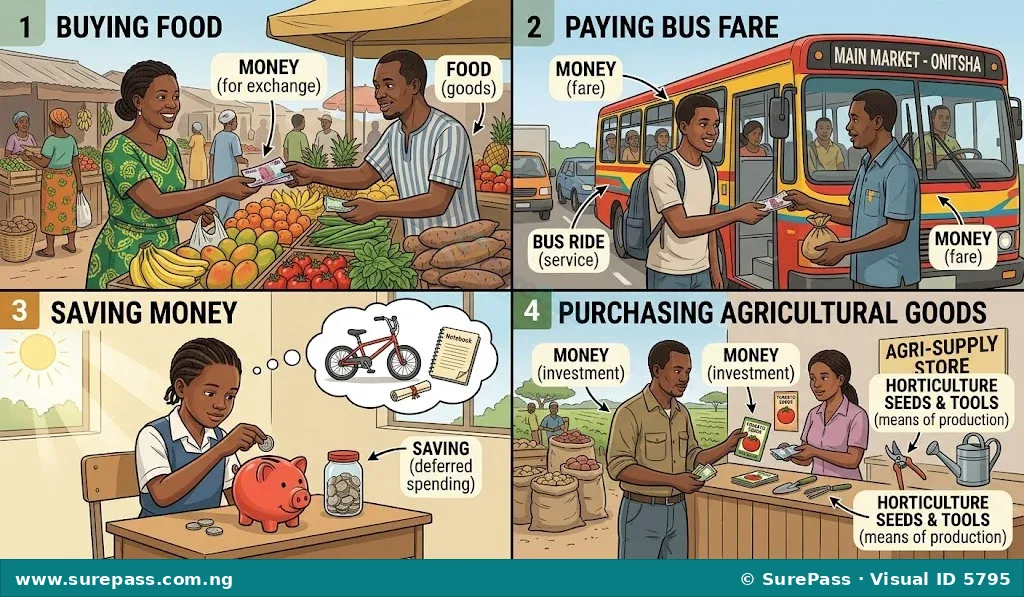
- Medium of Exchange: Money makes it easy to buy and sell goods and services. Instead of exchanging yams for fish, a farmer can sell yams for money and then use that money to buy fish, tools, or seeds.
- Store of Value: Money can be saved and used later. If a farmer earns money today, it can be kept and used next week, next month, or even next year to buy new equipment or expand the farm.
- Unit of Account: Money helps to measure the value of goods and services. For example, a hoe might cost N2,000, and a bag of fertiliser might cost N10,000. This allows people to compare prices and understand how much things are worth.
- Standard of Deferred Payment: Money can be used to pay for things in the future. For instance, a farmer might buy seeds on credit and promise to pay the seller with money after the harvest.
Meaning of Saving Money
Saving money means keeping a portion of the money earned or received instead of spending it all immediately.
It involves setting aside funds for future use or for specific goals.
Importance of Saving Money
Saving money is very important for individuals and for businesses, including horticulture. The reasons for saving money include:
- For Future Needs: Saving helps people prepare for things they will need to buy later, such as school fees, new clothes, or a bicycle.
- For Emergencies: Unexpected events can happen, like falling sick or needing to repair something. Saved money can be used to cover these unplanned expenses.
- To Start or Expand a Business: For a horticulture business, saving money can help buy new land, more seeds, better tools, or hire workers. This helps the business grow.
- To Achieve Goals: Saving helps people reach their goals, whether it is buying a specific item, going on a trip, or investing in a project.
- To Be Independent: Having savings gives a person a sense of security and reduces the need to borrow money from others.
Methods of Saving Money
There are several simple ways to save money, especially for young people and small businesses:
- Using a Piggy Bank: A piggy bank is a container, often shaped like a pig, used to store coins and small banknotes. It is a simple and effective way to save money at home.
- Using a Savings Box: Similar to a piggy bank, a savings box is any secure container, like a wooden box or a metal tin, used to keep money safe at home.
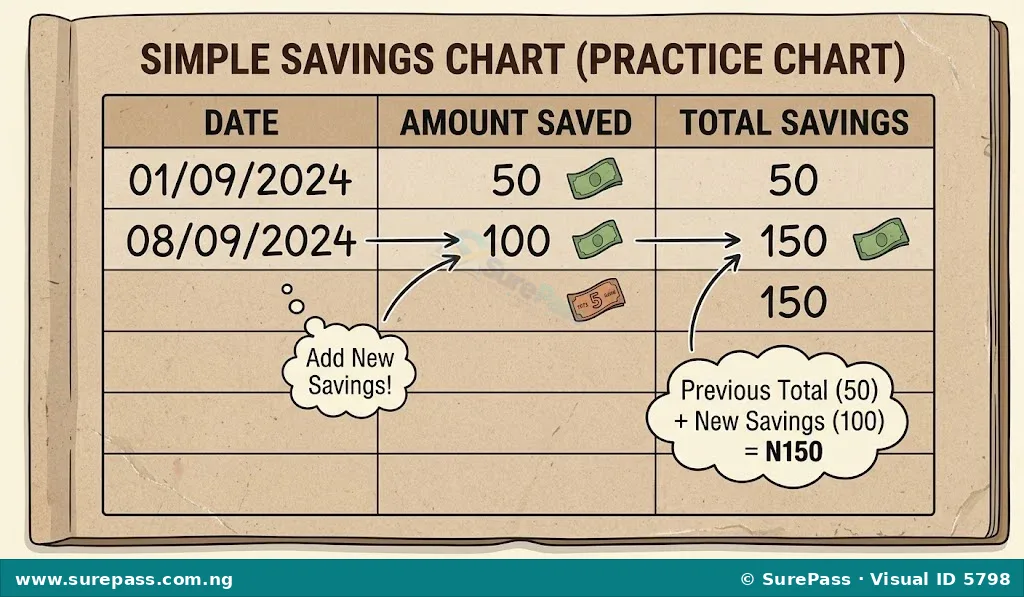
- Using a Savings Chart or Card: A savings chart or card helps to track how much money has been saved. Learners can design a simple card to record the date and amount of money saved each time. This helps to see progress and stay motivated.
- Saving with a Bank (Simple Account): Some banks offer simple savings accounts for young people. This allows money to be kept safely in a bank and can sometimes earn a little extra money called interest.
Sources of Funding for Horticulture and Crop Production
Starting or running a horticulture and crop production business requires money, also known as funding. For young people or small-scale projects, the main sources of funding are usually:
- Personal Sources: This refers to money that comes directly from the individual running the business. This could be money saved from pocket money, gifts, or earnings from small tasks. Using personal savings is a good way to start a small horticulture project, like buying a few seeds or a small watering can.
- Family Sources: Family members, such as parents, guardians, or older siblings, can provide financial support for a horticulture business. They might give money as a gift, a loan (which needs to be paid back), or invest in the business because they believe in the project. This is a common way for young farmers to get the initial funds needed for their projects.



0 comments
Open the discussion when you need it. Comments stay collapsed until requested so the initial article remains light.