


ARTICLE CONTENTSOn this page 7 sections
Scion collection
Performance Objectives
By the end of the lesson, students should be able to:
- define scion;
- highlight the importance of scion;
- identify desirable scion;
- cut the scion.
Horticulture involves different ways of growing plants. One important method is called grafting. Grafting is a technique where parts of two plants are joined together so they grow as one plant. For grafting to work, two main parts are needed: the rootstock and the scion. This unit focuses on the scion, which is the upper part of the plant used in grafting.
Meaning of Scion
A scion is a young shoot or twig of a plant that is chosen for grafting onto another plant.
The scion is the part that will grow into the upper stem, branches, leaves, flowers, and fruits of the new plant. It carries the genetic information for the desired fruit quality, flower colour, or disease resistance from the parent plant it was taken from.
Importance of Scion
The scion is very important in grafting because it determines the characteristics of the new plant’s upper part. By carefully selecting a scion, farmers and gardeners can ensure that the new plant will have desirable qualities. For example, a scion from a mango tree that produces large, sweet fruits will ensure the grafted plant also produces large, sweet mangoes.
The importance of scion includes:
- Maintaining desired plant qualities: Scions help to grow new plants that are exactly like the parent plant, especially for fruits, flowers, or other features that are difficult to reproduce from seeds.
- Producing fruits faster: Grafted plants often start producing fruits or flowers much earlier than plants grown from seeds.
- Improving plant health: A scion from a healthy, disease-resistant plant can be grafted onto a strong rootstock to create a plant that is more resistant to diseases and pests.
- Adapting plants to different soils: A scion from a plant with good fruit can be grafted onto a rootstock that grows well in a particular soil type, even if the scion’s original plant did not.
Identifying Desirable Scion
Choosing the right scion is crucial for successful grafting. A desirable scion has specific qualities that ensure the new plant will be healthy and productive. When selecting a scion, it is important to look for the following characteristics:
- Health and vigour: The scion should come from a healthy, strong, and actively growing parent plant. Avoid scions from weak, diseased, or pest-infested plants.
- Maturity: The scion should be taken from a mature part of the parent plant that has already produced fruits or flowers of the desired quality. However, the scion itself should be young and flexible, usually from the current or previous season’s growth.
- Disease-free: Inspect the scion carefully for any signs of disease, such as spots, discolouration, or unusual growths. It must be completely free from pests and diseases.
- Buds: The scion must have healthy, well-developed buds, which are small bumps on the stem that will grow into new shoots and leaves.
- Straightness: A straight scion is generally easier to work with during the grafting process.
Cutting the Scion
Once a desirable scion has been identified, the next step is to carefully cut it from the parent plant. This process requires precision and the use of appropriate tools to ensure a clean cut that will heal well and increase the chances of successful grafting.
Tools for Cutting Scions
The following tools are commonly used for cutting scions:
- Pen knives: These are small, sharp knives used for making precise cuts, especially for smaller scions or detailed work.
- Secateurs: Also known as pruning shears, these are hand-held tools with sharp blades used for cutting thicker stems and branches cleanly.
It is important that all tools used are very sharp and clean to prevent damage to the plant and to avoid spreading diseases.
Procedure for Cutting a Scion
The procedure for cutting a scion involves the following steps:
- Select the branch: Choose a healthy, mature branch from the parent plant that shows the desired characteristics.
- Identify the scion section: Look for a section of the branch that is about the thickness of a pencil, has healthy buds, and is from the current or previous season’s growth. It should be about 15-30 cm long.
- Make the cut: Using a sharp, clean pen knife or secateur, make a clean, smooth cut at the base of the selected scion section. The cut should be made at an angle to create a larger surface area for healing and to make it easier to insert into the rootstock later.
- Remove leaves: Carefully remove all leaves from the scion to reduce water loss. This helps the scion conserve energy and moisture until it can form a union with the rootstock.
- Handle with care: Once cut, handle the scion gently to avoid damaging the buds or the cut surfaces.
Safety Tip: Always use sharp tools with extreme care. Young learners should always seek adult supervision when using pen knives or secateurs to prevent injuries.
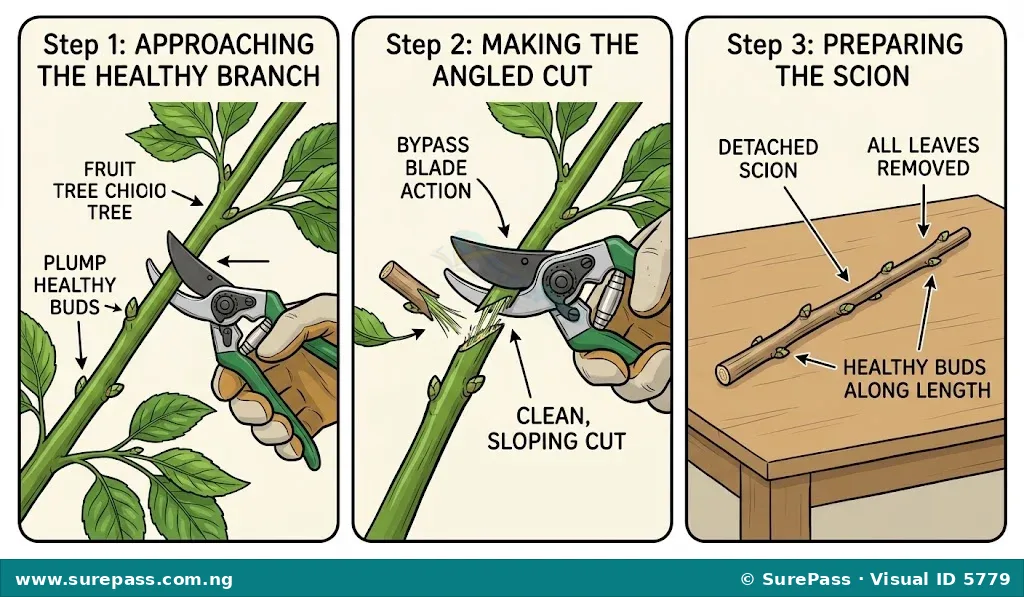
Preparing Scions for Grafting
After cutting the scion, it needs to be prepared properly before it can be grafted. Proper preparation ensures the scion remains viable and increases the success rate of the graft.
Materials and Tools for Scion Preparation:
- Cut scions
- Sharp pen knife or secateur
- Moist cloth or newspaper
- Plastic bag or cling film
- Wax or grafting tape (optional, for sealing ends)
Procedure for Preparing Scions:
The procedure involves the following steps:
- Inspect the scion: Examine the cut scion again to ensure it is healthy, free from damage, and has at least 2-4 healthy buds.
- Trim the ends: If the initial cut was not clean, make a fresh, smooth, angled cut at the bottom end of the scion using a very sharp knife or secateur. This fresh cut helps the scion absorb water and nutrients when grafted.
- Remove excess leaves: Ensure all leaves have been removed. Sometimes, a small part of the leaf stalk (petiole) may be left to protect the bud, but the leaf blade itself must be removed.
- Maintain moisture: Scions can dry out quickly. To prevent this, wrap the scions immediately in a moist cloth or newspaper.
- Store properly: Place the wrapped scions inside a plastic bag or wrap them with cling film to keep them moist. If not used immediately, they can be stored in a cool, dark place, or even in a refrigerator for a short period.
- Seal ends (optional): Some grafters seal the cut ends of the scion with grafting wax or tape to further prevent moisture loss.
Proper preparation and storage are key to keeping the scion alive and ready for grafting.


0 comments
Open the discussion when you need it. Comments stay collapsed until requested so the initial article remains light.