


ARTICLE CONTENTSOn this page 7 sections
Farm tools and safety measures
Performance Objectives
By the end of the lesson, students should be able to:
- identify farm tools;
- explain the uses of farm tools;
- draw farm tools;
- observe safety measures on tools usage.
Meaning of Farm Tools
Farm tools are simple, hand-held instruments used by farmers to carry out various agricultural operations on the farm.
These tools are usually simple in design, light in weight, and operated using human muscle power. They are designed to make farm work easier, faster, and more efficient. Unlike heavy farm machinery, simple farm tools do not require engines or electricity to function.
Types and Uses of Farm Tools
Farm tools are classified based on the specific agricultural operations they perform. Understanding these classifications helps in selecting the correct tool for each farm task.
Land Clearing Tools
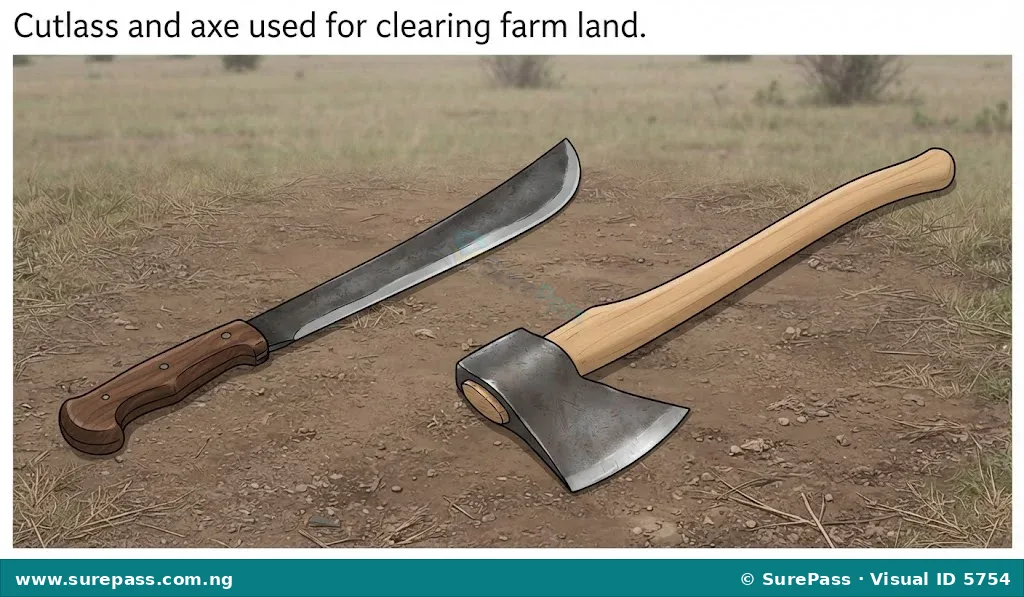
Land clearing tools are used to remove vegetation, trees, shrubs, and debris from a piece of land before cultivation begins. The main land clearing tools include:
- Cutlass: This tool consists of a long, flat metal blade attached to a wooden or plastic handle. It is used for cutting grass, clearing thick bush, felling small trees, and cutting up tree branches.
- Axe: This tool has a heavy, sharp metal head attached to a strong wooden handle. It is used for felling large trees, cutting thick roots, and splitting firewood.
Tilling Tools
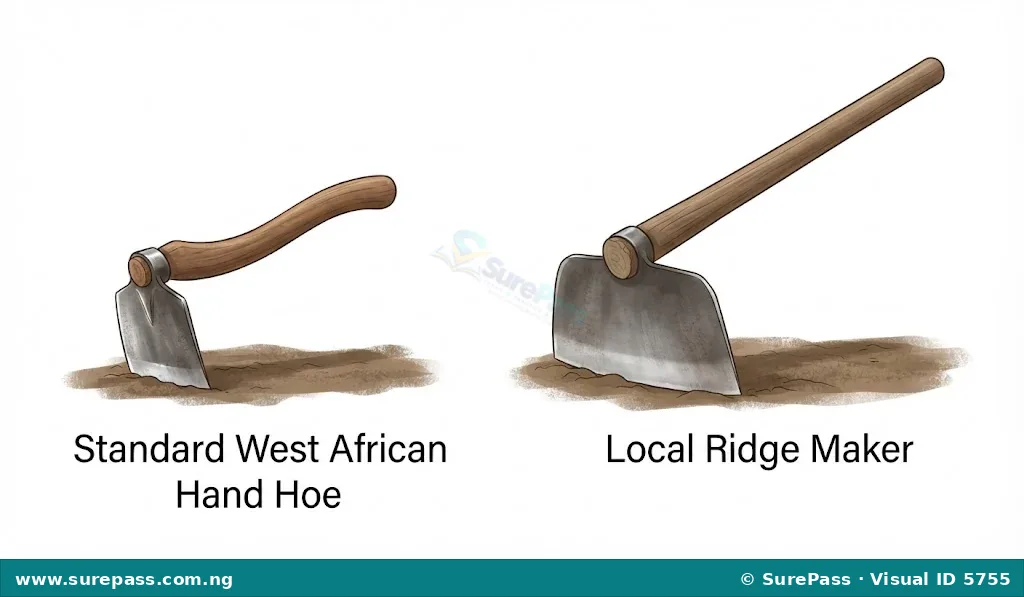
Tilling tools are used to break, loosen, turn, and lift the soil to prepare it for planting. The primary tilling tools are:
- Hand Hoe: This tool consists of a metal blade attached to a wooden handle. The handle can be short or long. It is used for digging the soil, breaking hard soil clods, and making heaps.
- Local Ridge Maker: This is a large, heavy hoe with a broad metal blade and a sturdy wooden handle. It is specifically designed and used by local farmers to construct soil ridges for planting crops like yam, cassava, and sweet potatoes.
Seedbed Preparation Tools
Seedbed preparation tools are used to level the soil, remove debris, and make the soil texture fine enough to receive seeds or seedlings. The main tools used for this purpose are:
- Rake: This tool consists of a long wooden handle attached to a metal head with strong teeth. It is used for leveling the surface of seedbeds, gathering dry leaves, and removing stones, weeds, and trash from the farm.
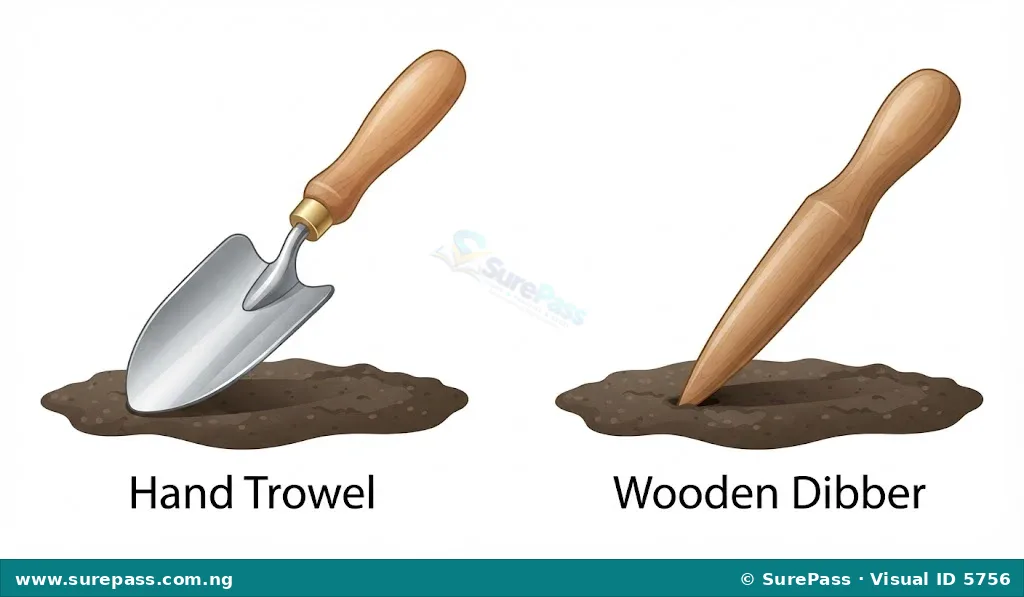
- Hand Trowel: This is a small, hand-held tool with a curved, scoop-like metal blade attached to a short handle. It is used for mixing manure with the soil on seedbeds and digging small holes.
Sowing and Planting Tools
Sowing and planting tools are used to place seeds, cuttings, or tubers into the soil at the correct depth. These tools include:
- Dibber (Planting Stick): This is a simple, pointed wooden stick or metal rod. It is used to poke small holes in the soil where seeds, small bulbs, or cuttings can be placed.
- Hand Trowel: In addition to seedbed preparation, the hand trowel is used to dig small, precise holes for planting seeds and vegetative parts.
Transplanting Tools
Transplanting tools are used to move young seedlings from nursery beds to their permanent positions in the main field. The primary tool for this operation is:
- Hand Trowel: The hand trowel is the most suitable tool for transplanting. It is used to lift the young seedling along with a ball of soil around its roots. This prevents the roots from drying up or getting damaged during the transfer.
Weeding Tools
Weeding tools are used to remove unwanted plants (weeds) that compete with crops for nutrients, water, and sunlight. The main weeding tools are:
- Hand Hoe: A light hand hoe is used to scrape the soil surface and cut weeds off at their roots.
- Scuffle Hoe: This is a type of hoe with a flat, double-edged blade that is pushed and pulled just below the soil surface to cut weeds without disturbing the soil deeply.
Harvesting Tools
Harvesting tools are used to gather mature crops from the field. The main harvesting tools include:
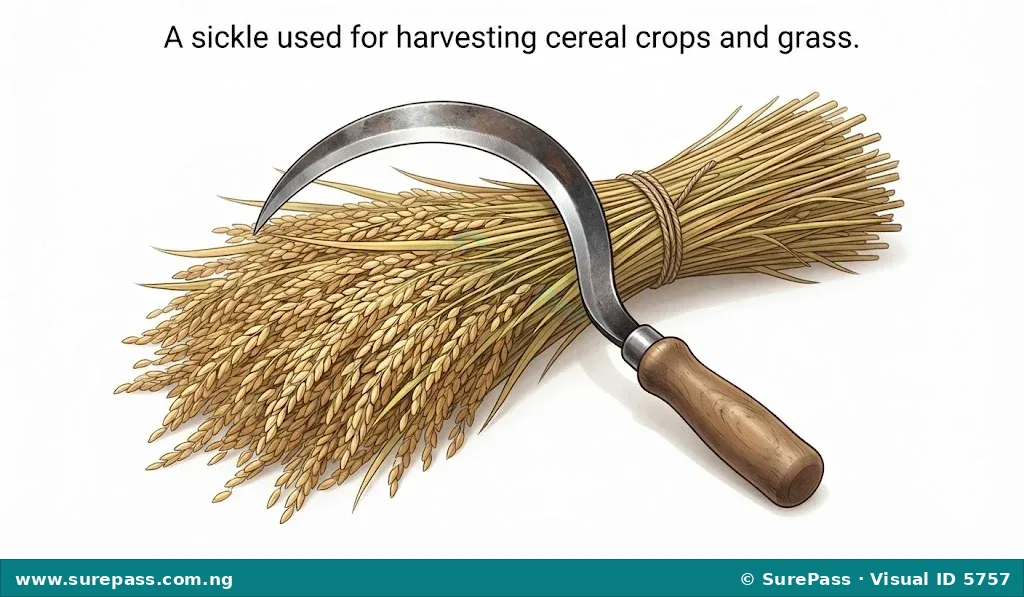
- Sickle: This tool has a curved, crescent-shaped metal blade with a sharp inner edge, attached to a short wooden handle. It is used for harvesting cereal crops like rice, wheat, and millet, as well as for cutting forage grass.
- Cutlass: The cutlass is used to harvest crops like cocoa pods, oil palm bunches, cassava roots, and yam tubers by cutting them away from the parent plant or digging them out.
- Hand Hoe: The hand hoe is used to dig up root and tuber crops, such as sweet potatoes, Irish potatoes, and yams, from the soil during harvest.
How to Draw and Label Farm Tools
Drawing farm tools helps in understanding their shapes, parts, and structures. When drawing farm tools, it is important to show the correct proportions of the handle to the metal blade, and to label the key parts clearly.
Drawing a Hand Hoe
The procedure for drawing a hand hoe involves the following steps:
- Draw a slightly curved, short wooden handle.
- At the top end of the handle, draw the metal prong or ring that holds the blade.
- Draw the broad, flat metal blade extending downwards from the prong.
- Label the following parts: Wooden Handle, Metal Prong (or Ring), and Metal Blade.
Drawing a Sickle
The procedure for drawing a sickle involves the following steps:
- Draw a short, straight wooden handle.
- From the top of the handle, draw a curved, crescent-shaped blade. Ensure the inner curve of the blade looks sharp.
- Label the following parts: Wooden Handle, Curved Metal Blade, and Sharp Inner Edge.
Safety Measures on Farm Tools Usage
Farm tools can cause serious injuries to the user or other people on the farm if they are not handled properly. Observing safety measures ensures a safe working environment and extends the lifespan of the tools.
Safe Handling of Farm Tools
Safe handling involves using and carrying tools in a manner that prevents accidents. Important safety guidelines include:
- Inspect tools before use: Ensure that handles are tight and blades are securely attached before starting any farm work. Loose handles can cause the metal head to fly off during use.
- Use the right tool for the right job: Do not use a cutlass to fell a large tree when an axe is required, and do not use a rake for digging.
- Pass tools safely: When handing a tool to another person, always hand it over by the handle, keeping the sharp edge pointing downwards and away from both individuals.
- Maintain safe working distances: Keep a safe distance from other workers when swinging tools like cutlasses, hoes, or axes to avoid accidental cuts.
- Wear protective clothing: Use appropriate protective gear, such as strong boots to protect the feet from sharp objects and gloves to protect the hands from blisters.
- Do not play with tools: Farm tools are sharp and heavy; they should never be used for play, running, or throwing.
Proper Tools Maintenance
Proper maintenance keeps farm tools in good working condition, prevents rust, and ensures they remain safe to use. Important maintenance practices include:
- Clean after use: Wash off all soil, mud, and plant sap from the tools immediately after use. Dry them thoroughly to prevent rusting.
- Sharpen cutting edges: Regularly sharpen the blades of cutlasses, axes, hoes, and sickles using a file or whetstone to keep them efficient.
- Oil metal parts: Apply a thin layer of engine oil, grease, or vegetable oil to the metal parts of tools before storing them to prevent rust.
- Store tools properly: Keep tools in a cool, dry tool shed or hang them on a tool rack. Do not leave tools lying on the ground where they can be stepped on or exposed to rain.
- Repair or replace broken parts: Replace cracked or broken wooden handles immediately. Do not use tools with damaged handles.
Summary of Farm Tools and Their Functions
The table below summarizes the functional categories of farm tools, their common examples, and their primary uses on the farm.
| Tool Category | Common Examples | Primary Use on the Farm |
|---|---|---|
| Land Clearing | Cutlass, Axe | Cutting grass, clearing bush, felling trees, and cutting roots. |
| Tilling | Hand Hoe, Local Ridge Maker | Digging soil, breaking soil clods, and making heaps or ridges. |
| Seedbeds | Rake, Hand Trowel | Leveling soil, removing debris, and mixing manure with soil. |
| Sowing and Planting | Dibber, Hand Trowel | Making small holes and placing seeds or planting materials in the soil. |
| Transplanting | Hand Trowel | Lifting seedlings with soil around their roots to move them to the field. |
| Weeding | Hand Hoe, Scuffle Hoe | Scraping and cutting weeds off at the soil surface. |
| Harvesting | Sickle, Cutlass, Hand Hoe | Cutting cereal crops, harvesting pods, and digging up root tubers. |




0 comments
Open the discussion when you need it. Comments stay collapsed until requested so the initial article remains light.