


ARTICLE CONTENTSOn this page 8 sections
Simple Machines
Performance Objectives
By the end of the lesson, students should be able to:
- state the meaning of simple machines;
- give examples of three classes of lever-based machines;
- identify simple machines around the environment;
- state the difference between simple machines and complex machines;
- describe why machines are important in our daily lives;
- create a simple lever machine.
What Are Simple Machines?
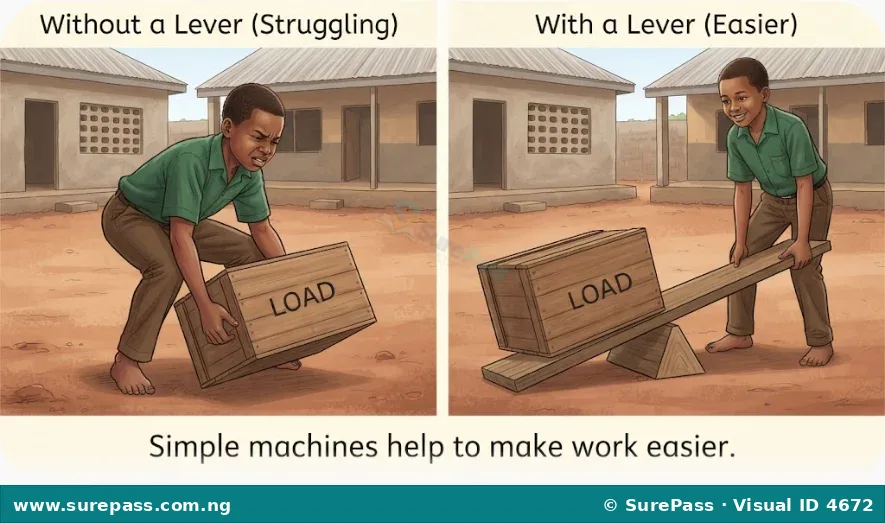
A simple machine is a tool that helps people to do work more easily.
Imagine trying to lift a heavy stone or open a tight bottle cap with only your hands. Simple machines make these tasks easier by changing the direction or strength of the force applied. They do not reduce the amount of work done, but they make it less difficult to do.
Examples of Simple Machines
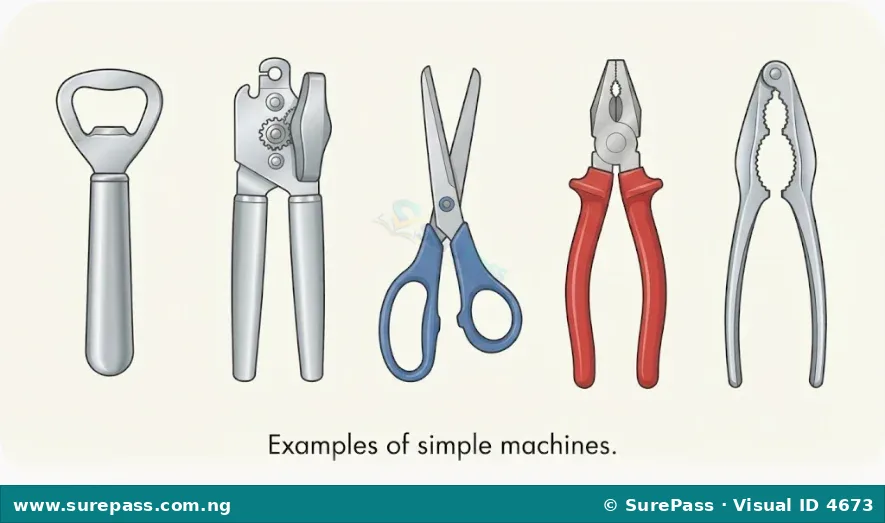
Simple machines are found everywhere around us, in our homes, schools, and communities. They are tools that have few or no moving parts.
Common examples of simple machines include:
- A bottle opener (used to remove bottle caps)
- A can opener (used to open cans)
- Scissors (used for cutting paper, fabric, or hair)
- Pliers (used for gripping, bending, or cutting wires)
- Nutcrackers (used to crack open nuts)
These tools help people perform daily tasks with less effort.
Types of Simple Machines
There are different types of simple machines, each designed to help with work in a specific way. At Primary 4, we will learn about three main types: levers, pulleys, and inclined planes.
Levers
A lever is a simple machine that consists of a rigid bar or rod that pivots around a fixed point called a fulcrum.
Levers are used to lift heavy objects, cut things, or apply force. The position of the fulcrum, the load (the object being moved), and the effort (the force applied) determines the class of the lever.
Classes of Levers
There are three classes of levers, depending on where the fulcrum, effort, and load are placed:
-
First-Class Lever: In a first-class lever, the fulcrum is located between the effort and the load.
Examples of first-class levers include scissors, a see-saw, and pliers. When using scissors, the pivot point (where the blades cross) is the fulcrum, the handles are where the effort is applied, and the material being cut is the load.
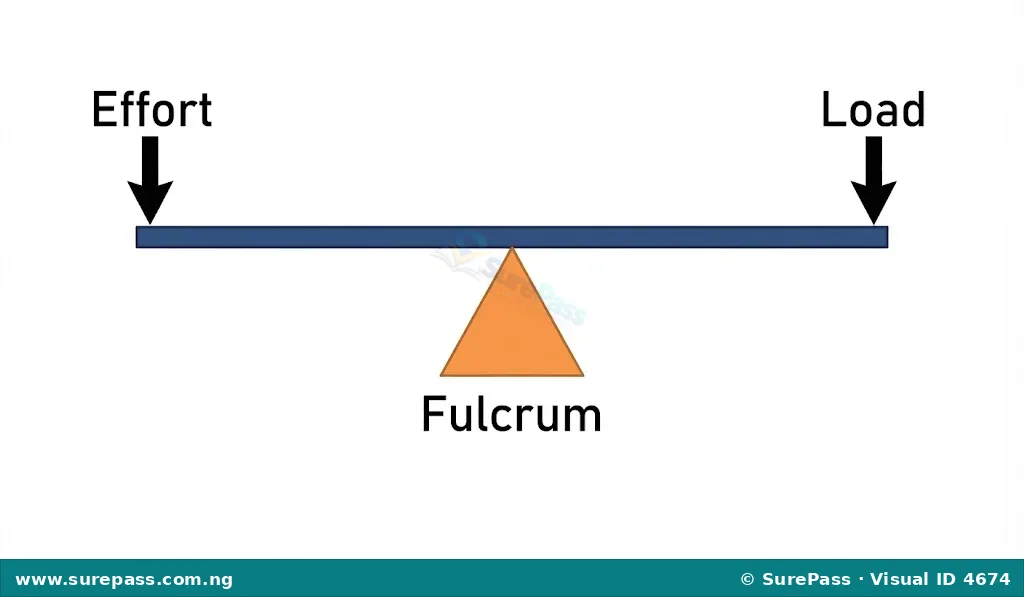
A first-class lever. -
Second-Class Lever: In a second-class lever, the load is located between the fulcrum and the effort.
Examples of second-class levers include a wheelbarrow, a bottle opener, and a nutcracker. For a bottle opener, the edge of the bottle cap acts as the fulcrum, the cap itself is the load, and the hand applying pressure is the effort.
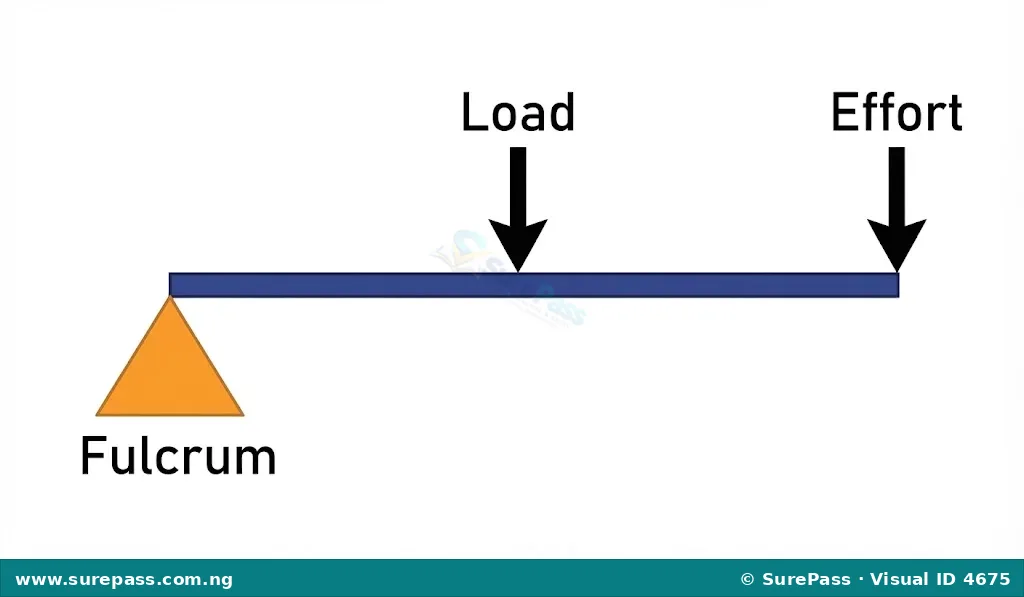
A second-class lever. -
Third-Class Lever: In a third-class lever, the effort is located between the fulcrum and the load.
Examples of third-class levers include a fishing rod, a broom, and tweezers. When sweeping with a broom, one hand acts as the fulcrum at the top, the other hand applies the effort in the middle, and the dirt being moved is the load at the bottom.
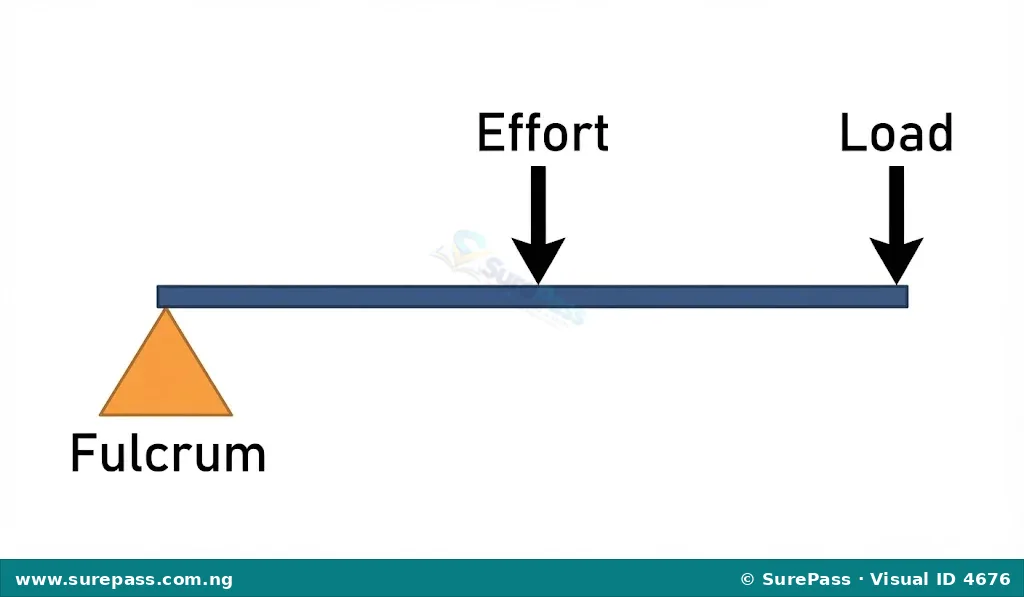
A third-class lever.
Pulleys
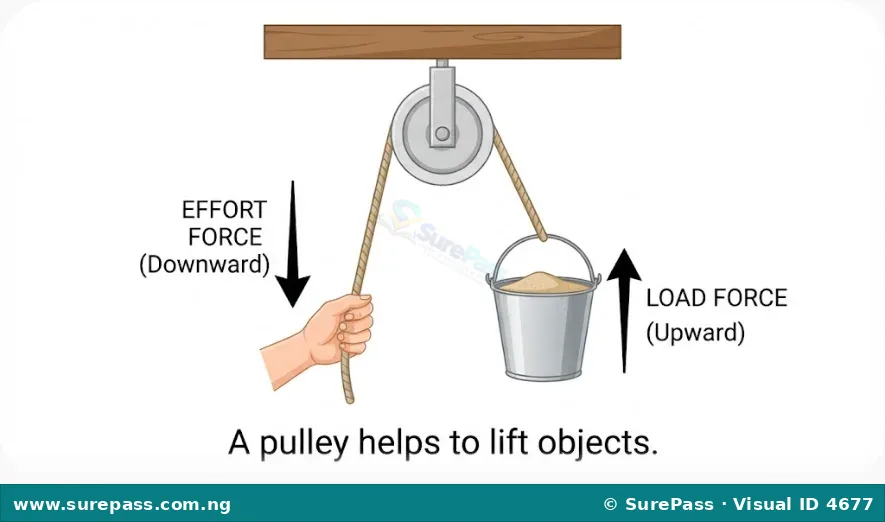
A pulley is a simple machine that uses a wheel and a rope to change the direction of a force or to lift heavy objects.
Pulleys are often used to lift things upwards. For example, a flag is raised on a flagpole using a pulley system. Construction workers also use pulleys to lift building materials to higher floors.
Inclined Planes
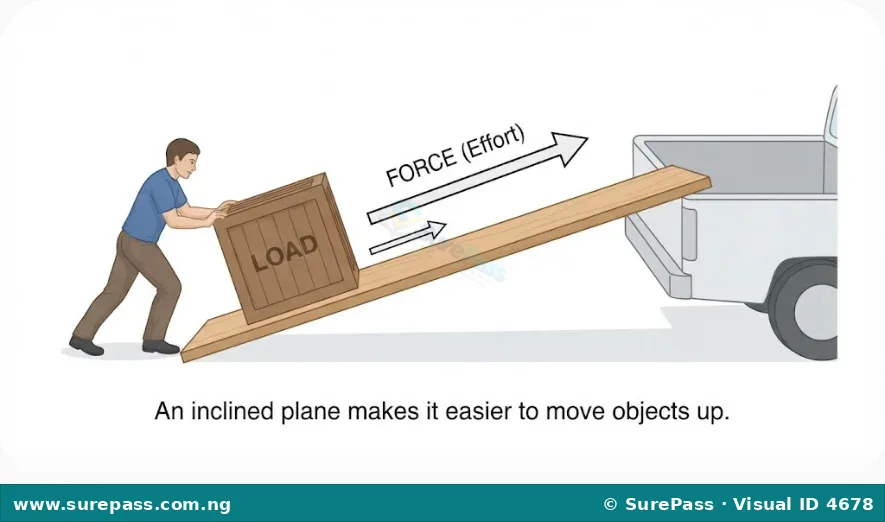
An inclined plane is a simple machine that is a flat surface tilted at an angle, with one end higher than the other.
Inclined planes make it easier to move objects up or down by spreading the work over a longer distance. Instead of lifting an object straight up, it can be pushed or pulled along the inclined plane. Examples include ramps, slides, and sloping roads.
Importance of Machines in Daily Life
Machines are very important in our daily lives because they help us to do many tasks more easily, quickly, and safely. Without machines, many everyday activities would be much harder and take a lot more time and effort.
Here are some reasons why machines are important:
- Making Work Easier: Machines reduce the amount of force needed to do a task. For example, a bottle opener makes it easy to remove a tight bottle cap that would be difficult to open with bare hands.
- Saving Time: Many machines help us complete tasks faster. Scissors cut paper much quicker than tearing it by hand.
- Reaching High Places: Pulleys allow us to lift heavy objects to high places, like raising a flag on a flagpole or lifting building materials.
- Moving Heavy Objects: Inclined planes help us move heavy objects up or down without lifting them directly, such as pushing a wheelbarrow up a ramp.
- Performing Difficult Tasks: Some tasks are too difficult or dangerous to do without machines. Nutcrackers help to crack hard nuts safely.
Simple Machines and Complex Machines
Machines can be grouped into two main categories: simple machines and complex machines.
Simple Machines
A simple machine is a basic mechanical device that changes the direction or magnitude of a force. It usually has few or no moving parts.
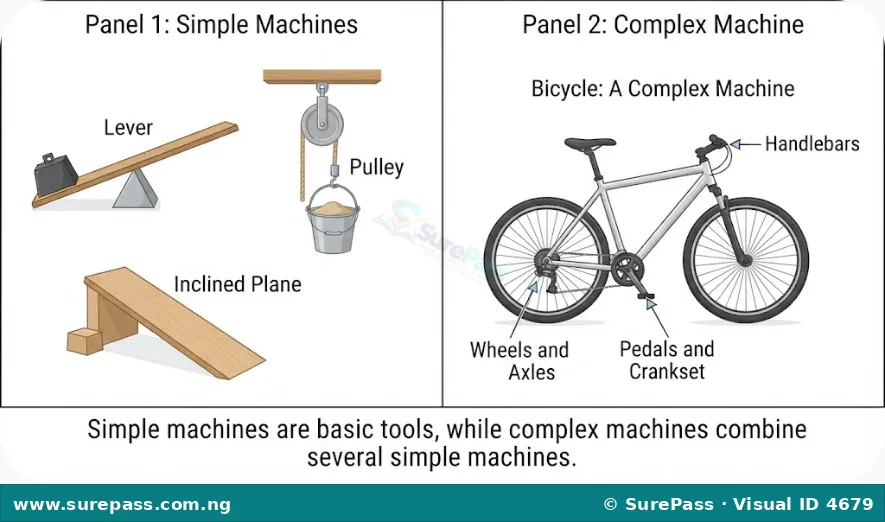
Examples of simple machines include levers, pulleys, inclined planes, wheels and axles, wedges, and screws. These are the basic building blocks of all other machines.
Complex Machines
A complex machine is a machine made up of two or more simple machines working together.
Complex machines are designed to perform more complicated tasks. For example, a bicycle is a complex machine that uses wheels and axles, levers (like the handlebars and brake levers), and screws. A car, a sewing machine, and a crane are also examples of complex machines.
Creating a Simple Lever Machine
One of the skills you can develop is to construct a simple machine. Here, we will learn how to make a simple wooden opener, which is a type of lever.
How to Make a Simple Wooden Opener
This activity will help you understand how a lever works by creating a tool that can open a bottle cap.
The required materials are:
- A flat piece of wood or strong cardboard (about 15-20 cm long and 3-4 cm wide)
- A small, sturdy stick or another small piece of wood/cardboard to act as a fulcrum (about 5 cm long)
- Strong glue or tape
- A bottle with a cap (for testing)
The procedure involves the following steps:
- Take the long flat piece of wood or cardboard. This will be the main lever arm.
- Place the small stick or piece of wood/cardboard under the main lever arm, near one end. This small piece will be your fulcrum.
- Use glue or tape to secure the fulcrum firmly in place under the lever arm. Make sure it is stable and does not move easily.
- Allow the glue to dry completely if you used glue.
- To test your wooden opener, place the short end of the lever under the edge of a bottle cap.
- Position the fulcrum close to the bottle cap, acting as the pivot point.
- Press down firmly on the longer end of the lever (the effort end). Observe how the bottle cap lifts off easily.
This simple wooden opener acts as a second-class lever, where the bottle cap (load) is between the fulcrum and the effort.


0 comments
Open the discussion when you need it. Comments stay collapsed until requested so the initial article remains light.