



ARTICLE CONTENTSOn this page 7 sections
Light Energy
Performance Objectives
By the end of the lesson, students should be able to:
- mention the sources of light;
- state the uses of light;
- list some objects that reflect light;
- use a mirror to illustrate reflection and the formation of images.
Meaning of Light Energy
Light is a form of energy that allows us to see things around us. Without light, everything would be dark, and it would be impossible to see colours, shapes, or objects.
Light travels in straight lines and can come from many different places.
Sources of Light Energy
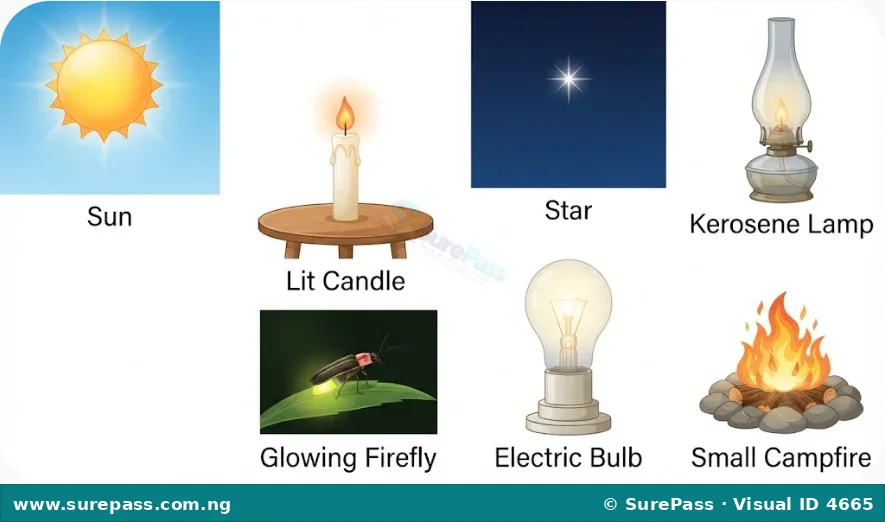
A source of light is anything that produces or gives off light. These sources can be natural, meaning they occur in nature, or artificial, meaning they are made by people.
The main sources of light energy include:
- Sun: The sun is the most important natural source of light for Earth. It gives us daylight and warmth.
- Stars: Stars are huge balls of hot gas that produce their own light. The sun is also a star.
- Candle Light or Lamps: Candles produce light from a burning wick. Lamps, like kerosene lamps, use fuel to produce light.
- Candles: A candle is a block of wax with a wick in the middle. When the wick is lit, it burns and produces light.
- Firefly: A firefly is an insect that can produce its own light through a chemical reaction in its body. This is a natural source of light.
- Electric Bulb: An electric bulb produces light when electricity passes through a thin wire inside it, making the wire glow brightly.
- Fire: Fire, from burning wood or other materials, produces both light and heat.
Uses of Light Energy
Light energy is very important in our daily lives. It helps us in many ways.
Some common uses of light energy include:
- Seeing: Light allows us to see objects, read books, and move around safely, especially during the day and in dark places with artificial light.
- Photosynthesis: Plants use sunlight to make their own food. This process is called photosynthesis, and it is essential for plant growth and for producing the air we breathe.
- Warmth: Sunlight provides warmth, which helps to keep the Earth warm and supports life.
- Photography: Cameras use light to capture images and create photographs.
- Signalling: Traffic lights, car headlights, and torchlights use light to send signals and communicate.
- Decoration: Coloured lights are used for decoration during festivals and celebrations.
Reflection of Light
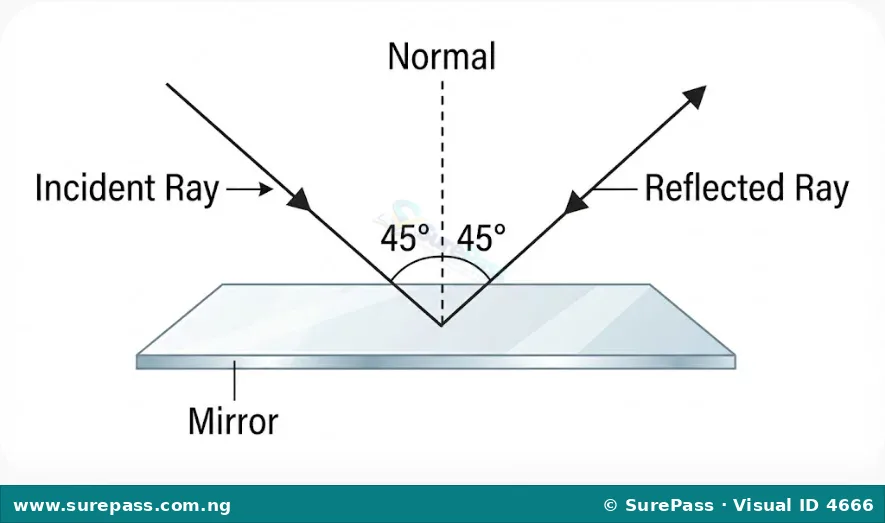
When light hits a surface and bounces back, it is called reflection. Some surfaces reflect light better than others.
When you look into a mirror, you see your image because light from your body hits the mirror and bounces back to your eyes.
Some objects that reflect light include:
- Mirrors: Mirrors have very smooth, shiny surfaces that reflect almost all the light that hits them.
- Shiny metals: Polished spoons, aluminium foil, and other shiny metal objects can reflect light.
- Still water: When water is calm and still, it can act like a mirror and reflect images of the sky or surrounding objects.
- Glass: Although glass is transparent, it can also reflect some light, especially when it is clean and smooth.
How to Demonstrate Reflection Using a Mirror
This activity will help you understand how light reflects and how images are formed in a mirror.
The required materials are:
- A small mirror (like a hand mirror)
- A torchlight or a smartphone with a flashlight
- A dark room or a shaded area
- A white wall or a piece of white paper
The procedure involves the following steps:
- Find a dark room or a shaded area where you can easily see the light beam.
- Hold the mirror in one hand.
- Hold the torchlight or smartphone flashlight in your other hand.
- Point the torchlight at the mirror.
- Observe how the light from the torchlight hits the mirror and bounces off.
- Try to direct the reflected light beam onto a white wall or a piece of white paper. You will see a bright spot of light.
- Now, stand in front of the mirror and look at your face. You will see your image. This image is formed by the light reflecting off the mirror and entering your eyes.
- Move closer to the mirror and then further away. Observe how your image changes in size or position.
Safety Tip: Do not shine the torchlight directly into anyone’s eyes, as it can be harmful.




0 comments
Open the discussion when you need it. Comments stay collapsed until requested so the initial article remains light.