



ARTICLE CONTENTSOn this page 5 sections
Human Body: The Mouth
Performance Objectives
By the end of the lesson, students should be able to:
- identify the different parts of the mouth;
- explain the functions of the lips, tongue and teeth in the mouth;
- draw and label parts of the mouth.
What is the Mouth?
The mouth is an important opening in the face of humans and animals. It is the first part of the digestive system and is used for taking in food.
The mouth also plays a big role in how people speak and make different sounds. It helps in breathing and showing feelings like smiling or frowning.
Parts of the Mouth and Their Functions
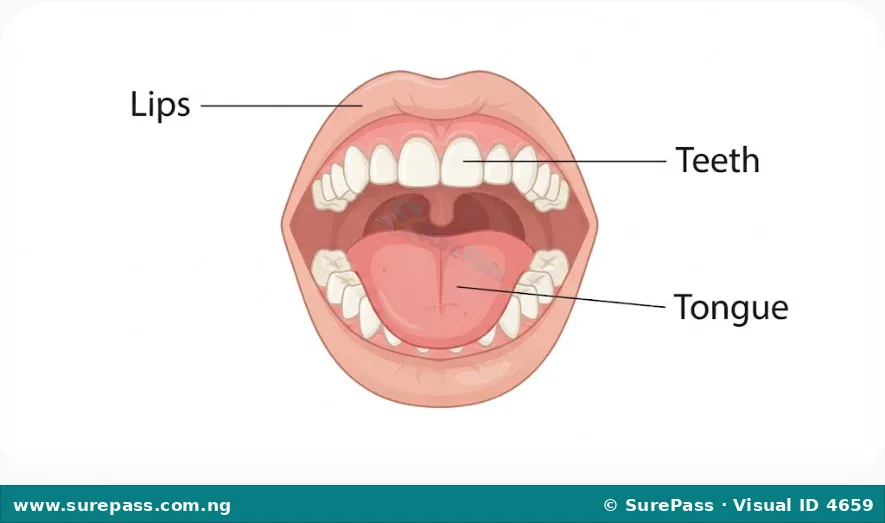
The mouth has several important parts that work together. These parts include the lips, the tongue, and the teeth.
The Lips
The lips are the soft, fleshy folds that form the outer boundary of the mouth. They are located at the front of the mouth.
The functions of the lips include:
- Eating: Lips help to hold food and drink inside the mouth. They also help to suck liquids, like when drinking with a straw.
- Speaking: Lips are important for making many speech sounds, such as ‘p’, ‘b’, and ‘m’.
- Expression: Lips help to show feelings like smiling, frowning, or pouting.
- Protection: Lips protect the teeth and tongue inside the mouth from harm.
The Tongue
The tongue is a strong, muscular organ located inside the mouth. It is covered with small bumps called taste buds.
The functions of the tongue include:
- Tasting: The tongue helps to taste different flavours like sweet, sour, bitter, and salty.
- Swallowing: The tongue pushes food to the back of the mouth so it can be swallowed.
- Speaking: The tongue moves to form different sounds and words when a person speaks.
- Chewing: The tongue helps to move food around the mouth, pushing it towards the teeth for chewing.
The Teeth
The teeth are hard, white structures found along the jaws inside the mouth. Humans have different types of teeth, but at Primary 4, we focus on their general uses.
The functions of the teeth include:
- Chewing: Teeth cut, tear, and grind food into smaller pieces, making it easier to swallow and digest.
- Speaking: Teeth help to form certain speech sounds, like ‘f’ and ‘v’.
- Appearance: Healthy teeth contribute to a nice smile and the shape of the face.
Drawing and Labelling Parts of the Mouth
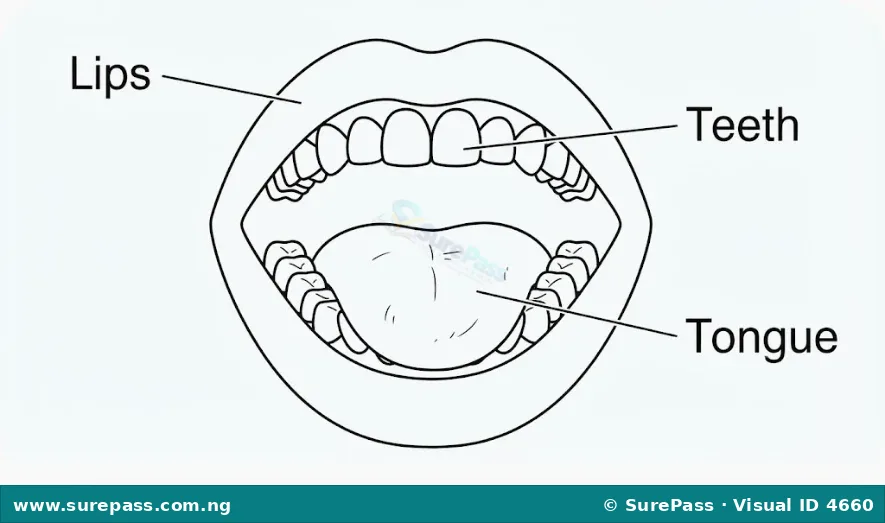
Drawing and labelling the parts of the mouth helps to understand where each part is located and what it looks like. This skill allows for clear communication about the mouth’s structure.
How to Draw and Label the Parts of the Mouth
The procedure for drawing and labelling the parts of the mouth involves the following steps:
- Prepare your materials: Get a clean sheet of paper, a pencil, and an eraser.
- Draw the basic shape: Start by drawing the outline of a human head or just the lower part of the face, focusing on the mouth area.
- Draw the lips: Carefully draw the upper and lower lips, showing them slightly open.
- Draw the teeth: Inside the open lips, draw the upper and lower rows of teeth. Show enough detail to make them look like teeth.
- Draw the tongue: Draw the tongue resting inside the mouth, between the rows of teeth.
- Add labels: Use straight lines to point from each part (lips, tongue, teeth) to its name written clearly beside it.
- Review your drawing: Check if all the main parts are present and correctly labelled.





0 comments
Open the discussion when you need it. Comments stay collapsed until requested so the initial article remains light.