



ARTICLE CONTENTSOn this page 8 sections
Justification by Faith
Performance Objectives
By the end of the lesson, students should be able to:
- explain the meaning of justification by faith;
- discuss the need for justification by faith;
- discuss faith in Jesus as a condition for justification;
- discuss the fruits of justification.
Memory Verse
Romans 1:17: “For therein is the righteousness of God revealed from faith to faith: as it is written, The just shall live by faith.”
Bible Reading
The principal Bible passages supporting this lesson are:
- Romans 1:16-17
- Romans 3:23
- Romans 4:1-5
- Romans 5:22
- Galatians 2:16-17
- Galatians 2:19-21
- Galatians 3:19-21
- Galatians 5:22
Meaning of Justification by Faith
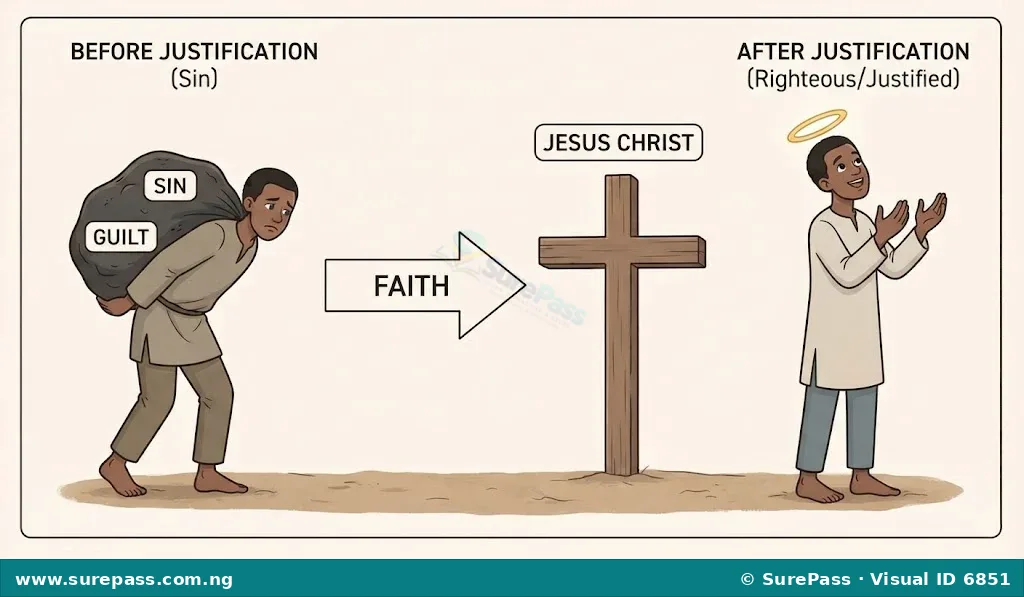
Justification by faith is a core Christian doctrine that describes how a person is declared righteous in the sight of God.
It is a legal declaration from God, where He pronounces a sinner to be righteous, not based on their own good deeds or adherence to the Law, but solely on their faith in Jesus Christ. This means that God looks at the believer and sees the perfect righteousness of Jesus Christ, which is credited to them.
Justification is not about a person becoming inherently perfect in themselves at the moment of faith, but rather about a change in their legal standing before God. It is an act of God’s grace, making a sinner acceptable to Him.
The Need for Justification by Faith
Humanity needs justification by faith because all people have sinned and fallen short of God’s perfect standard.
The Bible clearly states in Romans 3:23 that “all have sinned, and come short of the glory of God.” This means that no one can earn their way to God or achieve righteousness through their own efforts or good works. Sin creates a barrier between humanity and a holy God, making it impossible for people to stand righteous before Him on their own.
Furthermore, the Law, given through Moses, was not intended to justify people. Galatians 3:19-21 explains that the Law was added because of transgressions, to show people their sin and their need for a Saviour. It acts like a mirror, revealing sin, but it cannot remove sin or make a person righteous. The Law exposes sin and brings a curse upon those who fail to keep it perfectly, which all people do. Therefore, a different path to righteousness is needed, one that does not depend on human performance of the Law.
Faith in Jesus as a Condition for Justification
Faith in Jesus Christ is the sole condition for receiving justification from God.
Romans 1:16-17 declares that the gospel is the power of God unto salvation to everyone that believes, “for therein is the righteousness of God revealed from faith to faith: as it is written, The just shall live by faith.” This highlights that God’s righteousness is made available through faith. It is not about believing in a general sense, but specifically placing trust and reliance on Jesus Christ and His atoning work on the cross.
The example of Abraham in Romans 4:1-5 illustrates this principle clearly. Abraham believed God, and his faith was “counted unto him for righteousness.” This happened before the Law was given, showing that justification has always been by faith, not by works. God credits righteousness to those who believe, just as He did for Abraham.
Galatians 2:16-17 further emphasises this, stating that “a man is not justified by the works of the law, but by the faith of Jesus Christ.” Even believers, who were once under the Law, understood that they needed to believe in Christ to be justified. This means that trying to keep the Law or perform good deeds cannot make a person righteous before God. Justification is a gift received through faith in Jesus, not something earned.
Romans 5:22 summarises this by stating that “the righteousness of God which is by faith of Jesus Christ unto all and upon all them that believe.” This means that God’s righteousness is given to all who believe in Jesus, making faith the essential condition for justification.
Fruits of Justification
When a person is justified by faith, their life begins to show certain positive changes and characteristics, which are known as the fruits of justification.
Galatians 2:19-21 speaks of a profound transformation. The justified person is “crucified with Christ” and no longer lives for themselves, but Christ lives in them. The life they now live in the flesh is lived “by the faith of the Son of God, who loved me, and gave himself for me.” This means that the justified person’s life is now directed by Christ and His purposes, leading to a life of obedience and devotion to God.
Another significant fruit of justification is the presence of the Fruit of the Spirit, as described in Galatians 5:22. These are qualities that develop in the life of a believer who is walking in the Spirit, and they serve as evidence of their new life in Christ. The Fruit of the Spirit includes:
- Love: A selfless, divine love for God and others.
- Joy: An inner gladness that is not dependent on circumstances.
- Peace: A sense of calm and well-being, both with God and within oneself.
- Longsuffering (Patience): The ability to endure difficult situations or people without giving up.
- Gentleness (Kindness): Being tender-hearted and compassionate towards others.
- Goodness: Moral excellence and integrity.
- Faith (Faithfulness): Loyalty, trustworthiness, and firm belief in God.
- Meekness (Gentleness): Humility and submission to God’s will.
- Temperance (Self-control): The ability to control one’s desires and passions.
These fruits are not the cause of justification, but rather the natural outcome and evidence of a life that has been declared righteous by God through faith in Jesus Christ. They demonstrate a transformed character and a new relationship with God.





0 comments
Open the discussion when you need it. Comments stay collapsed until requested so the initial article remains light.