



ARTICLE CONTENTSOn this page 7 sections
The Fruit of the Spirit
Performance Objectives
By the end of the lesson, students should be able to:
- explain the meaning of the fruit of the Spirit;
- discuss ways to bear the fruit of the Spirit;
- explain the works of the flesh.
Memory Verse
But the fruit of the Spirit is love, joy, peace, longsuffering, gentleness, goodness, faith, Meekness, temperance: against such there is no law. (Galatians 5:22-23 KJV)
Bible Reading
The principal Bible passages supporting this lesson are:
- Galatians 5:19-25
- Acts 2:38
- Romans 10:9-10
Meaning of the Fruit of the Spirit
The fruit of the Spirit refers to the character qualities that the Holy Spirit produces in the life of a Christian. It is not something a person can achieve through their own effort or willpower alone, but rather a supernatural outcome of allowing the Holy Spirit to guide and control one’s life. The Bible describes it as one “fruit” with nine distinct aspects, showing that these qualities are interconnected and grow together.
Galatians 5:22-23 lists these nine aspects:
- Love: This is not just an emotion, but a selfless, unconditional affection and goodwill towards God and others. It seeks the highest good of others, even at personal cost.
- Joy: A deep-seated gladness and cheerfulness that comes from God, independent of circumstances. It is a spiritual delight that remains even in difficult times.
- Peace: An inner calmness and tranquility that comes from a right relationship with God. It is freedom from anxiety and a sense of wholeness and well-being.
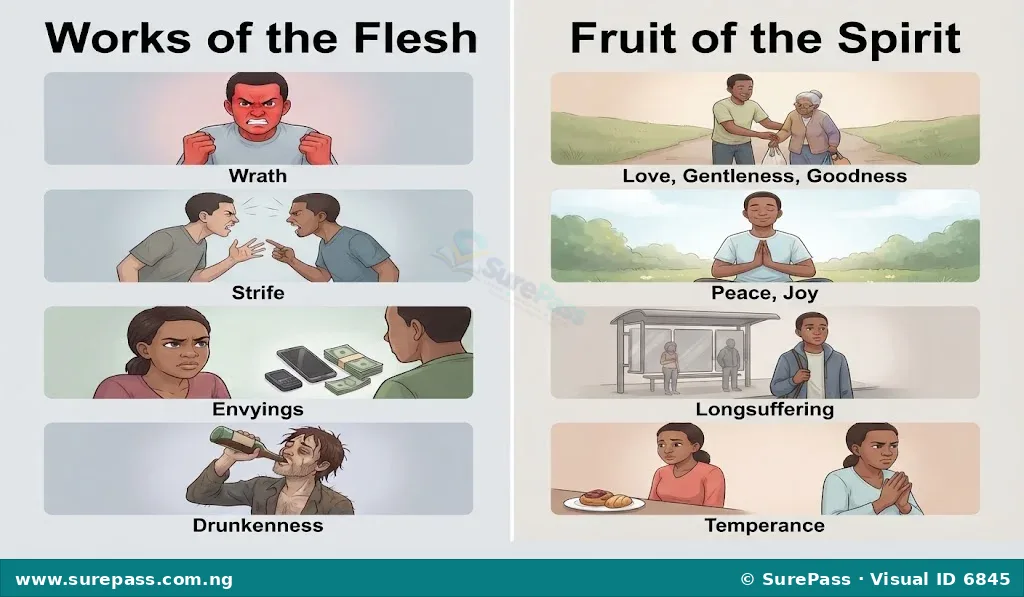
- Longsuffering (Patience): The ability to endure difficult situations, people, or trials without giving up or becoming angry. It involves forbearance and perseverance.
- Gentleness (Kindness): A tender and compassionate disposition towards others. It involves being considerate, benevolent, and helpful.
- Goodness: Moral excellence and virtue. It is the quality of being morally upright, righteous, and actively seeking to do good to others.
- Faith (Faithfulness): Loyalty, trustworthiness, and reliability. It means being dependable and true to one’s word and commitments, especially to God.
- Meekness (Gentleness): Humility and submission to God’s will, coupled with a gentle and mild attitude towards others. It is strength under control, not weakness.
- Temperance (Self-control): The ability to control one’s desires, appetites, and passions. It involves discipline over one’s thoughts, words, and actions.
These qualities are evidence that a person is truly walking in the Spirit and allowing God’s nature to be expressed through them. They are essential for Christian living and for building healthy relationships with God and with other people.
Ways to Bear the Fruit of the Spirit
Bearing the fruit of the Spirit is a process that begins when a person accepts Jesus Christ as their Lord and Saviour and receives the Holy Spirit. It continues as they live a life surrendered to God’s will. The Bible provides clear guidance on how to cultivate these spiritual qualities:
- Accepting Jesus Christ as Lord and Saviour: According to Romans 10:9-10, believing in one’s heart that God raised Jesus from the dead and confessing with one’s mouth that Jesus is Lord leads to salvation. This is the foundational step to receiving the Holy Spirit, who then begins the work of transformation.
- Repentance and Baptism: Acts 2:38 teaches that repentance (turning away from sin) and baptism in the name of Jesus Christ are necessary for the forgiveness of sins and for receiving the gift of the Holy Spirit. The Holy Spirit empowers believers to live a new life.
- Daily Prayer: Regular communication with God through prayer helps a believer to stay connected to the Holy Spirit. Prayer allows a person to express their needs, confess sins, and seek God’s guidance, which strengthens their spiritual life and helps the fruit to grow.
- Studying God’s Word (The Bible): The Bible is God’s instruction manual for life. Reading, studying, and meditating on scripture helps believers understand God’s will and character. The Holy Spirit uses the Word to teach, correct, and train believers in righteousness, leading to the development of spiritual fruit.
- Obedience to God’s Commands: As believers learn God’s will from the Bible, they must strive to obey it. Obedience demonstrates love for God and creates an environment where the Holy Spirit can work freely, producing His fruit. Disobedience hinders the Spirit’s work.
- Fellowship with Other Believers: Being part of a Christian community (church) provides support, encouragement, and accountability. Through fellowship, believers can learn from one another, serve together, and practice the fruit of the Spirit in their interactions.
- Yielding to the Holy Spirit’s Guidance: This means consciously choosing to follow the promptings and leading of the Holy Spirit rather than one’s own desires or the influences of the world. It involves surrendering personal will and allowing the Spirit to direct thoughts, words, and actions.
Bearing the fruit of the Spirit is a lifelong journey of growth and transformation, where the believer cooperates with the Holy Spirit to become more like Christ.
The Works of the Flesh
In contrast to the fruit of the Spirit, the Bible also describes the “works of the flesh.” These are the sinful actions and attitudes that arise from human nature when it is not controlled by the Holy Spirit. Galatians 5:19-21 lists many examples of these works, highlighting the destructive nature of a life lived apart from God’s Spirit.
The works of the flesh include:
- Adultery: Sexual intercourse between a married person and someone other than their spouse.
- Fornication: Sexual intercourse between unmarried people.
- Uncleanness: Moral impurity, especially in sexual matters, including lustful thoughts and actions.
- Lasciviousness (Sensuality): Open display of sexual desire, indecency, and unrestrained indulgence in sensual pleasures.
- Idolatry: Worshipping anything or anyone other than the one true God. This can include money, power, possessions, or even oneself.
- Witchcraft (Sorcery): The practice of magic, divination, or communication with evil spirits.
- Hatred: Intense dislike or ill-will towards others, often leading to animosity and hostility.
- Variance (Discord): Disagreement, strife, and contention among people.
- Emulations (Jealousy): Resentment or envy of someone else’s possessions, achievements, or qualities.
- Wrath (Fits of Rage): Violent outbursts of anger and uncontrolled fury.
- Strife (Selfish Ambition): Contentiousness, rivalry, and a desire to be superior to others.
- Seditions (Dissensions): Promoting disunity, rebellion, or division within a group or community.
- Heresies (Factions): Divisions caused by false doctrines or beliefs, leading to sectarianism.
- Envyings: A feeling of discontent or covetousness towards someone else’s advantages or possessions.
- Murders: The unlawful killing of another human being.
- Drunkenness: Intoxication from alcohol, leading to impaired judgment and behaviour.
- Revellings (Carousing): Wild, unrestrained parties and excessive feasting, often accompanied by immoral behaviour.
The Bible warns that those who consistently practice these works of the flesh will not inherit the kingdom of God. This serves as a strong contrast to the life of a believer who is led by the Spirit and produces the fruit of righteousness.





0 comments
Open the discussion when you need it. Comments stay collapsed until requested so the initial article remains light.