



ARTICLE CONTENTSOn this page 8 sections
Christian Giving
Performance Objectives
By the end of the lesson, students should be able to:
- explain the meaning of Christian giving;
- outline reasons and ways of giving;
- discuss the rewards of giving.
Memory Verse
Every man according as he purposeth in his heart, so let him give; not grudgingly, or of necessity: for God loveth a cheerful giver. (2 Corinthians 9:7 KJV)
Bible Reading
The following Bible passages support the lesson on Christian giving:
- 2 Corinthians 8:3-5
- 2 Corinthians 9:1-15
- Philippians 4:14-20
Meaning of Christian Giving
Christian giving is the act of willingly sharing one’s resources, such as money, possessions, time, talents, and skills, out of love for God and neighbour. It is a response to God’s grace and generosity, motivated by faith and obedience to biblical principles.
This form of giving is not done out of compulsion or for personal gain, but from a cheerful heart that seeks to honour God and support His work, as well as to meet the needs of others. It is an act of worship and an expression of stewardship, recognising that all resources ultimately belong to God.
Reasons for Christian Giving
Christian giving is rooted in several important biblical principles and motivations. These reasons encourage believers to give generously and cheerfully:
- Love for God and Neighbour: Giving is a practical expression of love for God and fellow human beings. When Christians give, they demonstrate their devotion to God and their care for the community, especially those in need.
- Gratitude for God’s Grace: Christians give in response to the immense grace and salvation they have received from God through Jesus Christ. As 2 Corinthians 8:9 states, “For you know the grace of our Lord Jesus Christ, that though he was rich, yet for your sakes he became poor, so that you through his poverty might become rich.” Giving reflects thankfulness for this ultimate gift.
- Obedience to God’s Command: The Bible teaches that giving is a command from God. It is an act of obedience to His will and a demonstration of trust in His provision.
- Support for God’s Work: Christian giving provides the necessary resources to advance the mission of the church. This includes funding evangelism, missionary work, church maintenance, pastoral care, and various ministries that serve the community and spread the gospel.
- Following Christ’s Example: Jesus Christ Himself is the ultimate example of giving. He gave His life completely for humanity. Believers are called to imitate His selfless generosity.
- Sharing with Those in Need: A significant reason for giving is to alleviate poverty, suffering, and injustice. Giving helps to provide food, shelter, education, and medical care for the less fortunate, reflecting God’s compassion for the poor. 2 Corinthians 9:12 highlights that this service not only supplies the needs of God’s people but also overflows in many expressions of thanks to God.
- Spiritual Growth: Giving helps believers to grow spiritually by fostering a generous heart, reducing materialism, and increasing reliance on God. It cultivates virtues like compassion, selflessness, and faith.
Ways of Christian Giving
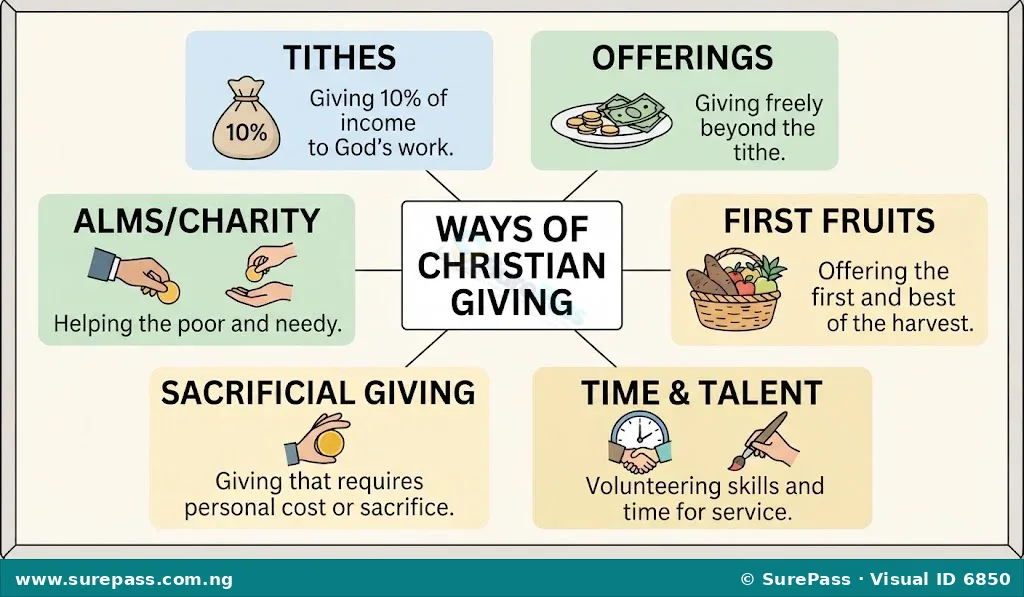
Christian giving takes various forms, each contributing to the overall purpose of honouring God and serving others. The Bible encourages different ways of giving, often emphasising the attitude of the giver:
- Tithes: This refers to giving a tenth (10%) of one’s income or produce to God, typically through the local church. It is often seen as a foundational act of giving, acknowledging God as the source of all blessings.
- Offerings: These are freewill gifts given beyond the tithe. Offerings can be designated for specific purposes, such as missions, building projects, or special needs within the church or community.
- Alms/Charity: This involves giving directly to the poor, needy, or those facing hardship. It is an act of compassion and social responsibility, reflecting God’s heart for the vulnerable.
- First Fruits: This practice involves giving the first and best portion of one’s harvest, income, or increase to God. It signifies putting God first and trusting Him for future provision.
- Sacrificial Giving: As seen in 2 Corinthians 8:3-4, where the Macedonian churches gave “beyond their ability,” sacrificial giving involves giving even when it means personal hardship or inconvenience. It demonstrates deep commitment and faith.
- Giving of Time and Talent: Christian giving is not limited to financial contributions. It also includes dedicating one’s time, skills, and abilities to serve God and others. This can involve volunteering in church ministries, helping neighbours, or using professional skills for charitable causes.
- Cheerful Giving: The attitude with which one gives is crucial. 2 Corinthians 9:7 states, “God loveth a cheerful giver.” Giving should be done willingly, joyfully, and without grudging or compulsion.
- Systematic and Proportional Giving: This involves planning one’s giving regularly and proportionally to one’s income or blessings, rather than giving impulsively. This approach ensures consistency and reflects thoughtful stewardship.
Rewards of Christian Giving
The Bible promises various rewards for those who practice Christian giving. These rewards are not always material wealth, but often include spiritual blessings and a deeper relationship with God. Philippians 4:14-20 speaks of God’s provision and approval for the Philippians’ generosity:
- God’s Blessing and Provision: God promises to meet the needs of those who give generously. Philippians 4:19 assures believers, “But my God shall supply all your need according to his riches in glory by Christ Jesus.” This means God ensures that givers will not lack what they truly need.
- Spiritual Growth and Righteousness: Giving helps to develop a more Christ-like character, fostering virtues such as compassion, humility, and faith. 2 Corinthians 9:9 mentions that the righteous acts of the generous giver “endure forever.”
- Joy and Peace: Givers often experience a deep sense of joy, contentment, and peace that comes from knowing they are honouring God and making a positive impact on others. This inner satisfaction is a significant reward.
- Thanksgiving to God from Others: Generous giving often leads recipients to give thanks to God. 2 Corinthians 9:11-12 explains that the generosity of believers causes many to praise God for their obedience and for the provision of their needs.
- Fellowship with God and Others: Giving strengthens a believer’s relationship with God as they trust Him more. It also fosters a sense of community and fellowship among believers as they support one another and work together for God’s kingdom.
- Eternal Reward: Jesus taught about storing up “treasures in heaven” (Matthew 6:19-21). Christian giving contributes to an eternal reward that is far more valuable and lasting than any earthly possession.
- God’s Approval and Acceptance: Giving that is done with a cheerful heart and pure motives is pleasing to God. Philippians 4:18 describes the Philippians’ gift as “a fragrant offering, an acceptable sacrifice, pleasing to God.” This divine approval is a profound reward for the faithful giver.





0 comments
Open the discussion when you need it. Comments stay collapsed until requested so the initial article remains light.