



ARTICLE CONTENTSOn this page 8 sections
Sonship
Performance Objectives
By the end of the lesson, students should be able to:
- explain the Sonship of Jesus Christ;
- explain how Christians are children of God;
- discuss the rights and responsibilities of Christians as children of God.
Memory Verse
And if children, then heirs; heirs of God, and joint-heirs with Christ; if so be that we suffer with him, that we may be also glorified together. (Romans 8:17 KJV)
Bible Reading
The following Bible passages support this lesson:
- Romans 8:1-39
- Galatians 3:25-29
- Galatians 4:6-7
- Ephesians 1:5
Understanding Sonship in Christianity
In Christianity, sonship refers to the special relationship between God and His children. This relationship is primarily established through Jesus Christ. It describes a state of being a child of God, with all the privileges, rights, and responsibilities that come with such a relationship.
The concept of sonship is central to understanding God’s plan for humanity and the identity of believers. It distinguishes between those who are merely creatures of God and those who have entered into a covenant relationship with Him as His beloved children.
Jesus Christ, the Son of God
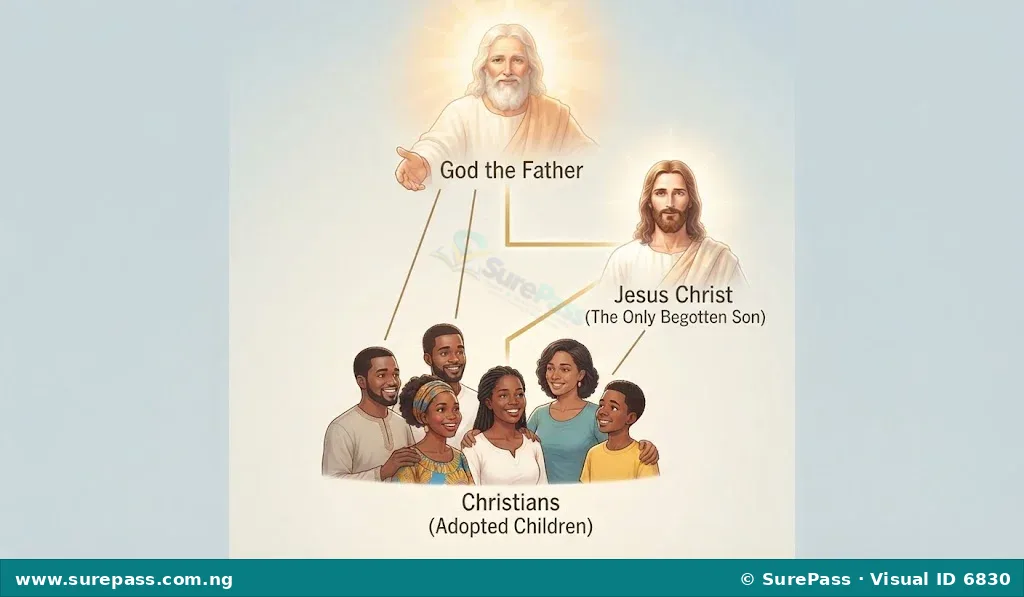
Jesus Christ holds a unique and supreme position as the Son of God. He is not merely a prophet, a good teacher, or a human being chosen by God. The Bible teaches that Jesus is God incarnate, the second person of the Holy Trinity, who existed with the Father from eternity. His sonship is eternal and divine, meaning He is of the same nature and essence as God the Father.
The Bible clearly affirms Jesus’ divine sonship. Romans 8:3 states that God sent “His own Son in the likeness of sinful flesh,” indicating Jesus’ pre-existence and divine origin. Romans 8:32 further emphasises this by saying, “He that spared not His own Son, but delivered Him up for us all.” This highlights the Father’s ultimate sacrifice through His unique Son.
As the Son of God, Jesus shares in the Father’s glory, power, and authority. He is the perfect representation of God, and through Him, humanity can know God. His sonship is foundational to Christian belief, establishing His authority to forgive sins, teach divine truth, and offer salvation.
Christians as Children of God
While Jesus is the only begotten Son of God, Christians are also called children of God. This sonship is different from Jesus’ divine sonship; it is an adopted sonship. Through faith in Jesus Christ, believers are adopted into God’s family and become His spiritual children.
Romans 8:14-16 explains this transformation: “For as many as are led by the Spirit of God, they are the sons of God. For ye have not received the spirit of bondage again to fear; but ye have received the Spirit of adoption, whereby we cry, Abba, Father. The Spirit itself beareth witness with our spirit, that we are the children of God.” This passage shows that the Holy Spirit confirms our new identity as God’s children.
Galatians 3:26-29 further clarifies that “ye are all the children of God by faith in Christ Jesus.” This means that our status as children of God is not earned by works or by following the law, but by believing in Jesus. Galatians 4:6-7 adds that because we are sons, God has sent the Spirit of His Son into our hearts, crying, “Abba, Father,” and that we are no longer servants but sons and heirs through God.
Ephesians 1:5 states that God “predestinated us unto the adoption of children by Jesus Christ to Himself, according to the good pleasure of His will.” This highlights God’s loving initiative in choosing to adopt believers into His family, granting them a new identity and relationship with Him.
Rights and Responsibilities of Christians as Children of God
Becoming a child of God through faith in Jesus Christ comes with both precious rights and important responsibilities. These aspects define the new life and relationship believers have with God.
Rights of Children of God
As children of God, Christians are granted several divine privileges:
- Heirship and Inheritance: Romans 8:17 declares, “And if children, then heirs; heirs of God, and joint-heirs with Christ.” This means believers are co-heirs with Jesus Christ, inheriting eternal life, God’s blessings, and His kingdom. Galatians 4:7 also confirms, “Wherefore thou art no more a servant, but a son; and if a son, then an heir of God through Christ.”
- Access to God: Children have direct access to their Father. Ephesians 2:18 states that “through Him we both have access by one Spirit unto the Father.” This means believers can approach God directly in prayer, worship, and fellowship, without needing human intermediaries.
- Guidance by the Holy Spirit: Romans 8:14 says, “For as many as are led by the Spirit of God, they are the sons of God.” Children of God receive the Holy Spirit, who guides them, teaches them, and empowers them to live according to God’s will.
- Divine Love and Care: God, as a loving Father, cares for His children. Romans 8:28-39 assures believers of God’s unwavering love and protection, stating that nothing can separate them from the love of God in Christ Jesus. This includes His provision, comfort, and faithfulness in all circumstances.
- Forgiveness and Reconciliation: Through Christ, children of God receive forgiveness for their sins and are reconciled to God. This right ensures that their relationship with God is restored and maintained, even when they stumble.
Responsibilities of Children of God
With these rights come duties that reflect the character of their heavenly Father:
- Obedience to God: Just as earthly children are expected to obey their parents, children of God are called to obey their heavenly Father. Jesus said in John 14:15, “If ye love me, keep my commandments.” Obedience demonstrates love and respect for God’s authority and wisdom.
- Living a Life that Honours God: Christians are called to live in a way that brings glory and honour to God. Ephesians 5:1-2 encourages believers to “be ye therefore followers of God, as dear children; And walk in love, as Christ also hath loved us.” This involves reflecting God’s character in their daily lives.
- Bearing the Fruit of the Spirit: As children of God, believers are expected to manifest the qualities of the Holy Spirit in their lives. Galatians 5:22-23 lists these as “love, joy, peace, longsuffering, gentleness, goodness, faith, Meekness, temperance.” These fruits are evidence of God’s Spirit working within them.
- Witnessing for Christ: Children of God have a responsibility to share the good news of salvation with others. Acts 1:8 states, “But ye shall receive power, after that the Holy Ghost is come upon you: and ye shall be witnesses unto me.” This involves telling others about Jesus and inviting them to become children of God too.
- Loving Fellow Believers: Jesus commanded His disciples to love one another. John 13:34-35 says, “A new commandment I give unto you, That ye love one another; as I have loved you, that ye also love one another. By this shall all men know that ye are my disciples, if ye have love one to another.” This love extends to all members of God’s family.
- Submitting to God’s Will: A child of God learns to trust and submit to God’s perfect will, even when it is difficult. This involves seeking God’s guidance and accepting His plans for their lives.




0 comments
Open the discussion when you need it. Comments stay collapsed until requested so the initial article remains light.