



ARTICLE CONTENTSOn this page 8 sections
Rights and Responsibilities of Family Members
Performance Objectives
By the end of the lesson, students should be able to:
- identify types of families;
- explain the rights and responsibilities of family members;
- discuss the consequences of family members not carrying out their responsibilities.
Memory Verse
Children, obey your parents in the Lord: for this is right. Honour thy father and mother; which is the first commandment with promise; (Ephesians 6:1-2 KJV)
Bible Reading
- Colossians 2:18-21
- Ephesians 6:1-2
- 1 Samuel 2:12
- 1 Samuel 3:13-22
Understanding the Family
The family is the most basic unit of society, established by God Himself. It is a group of people related by blood, marriage, or adoption, living together and sharing common goals and values. In a Christian context, the family is seen as a sacred institution, designed by God for companionship, procreation, mutual support, and the upbringing of children in faith and moral values.
Each member of a family plays a unique role, and with these roles come specific rights and responsibilities. When family members understand and fulfil their duties, the family unit thrives, creating an environment of love, peace, and growth. Conversely, when responsibilities are neglected, it can lead to conflict, breakdown, and negative consequences for everyone involved.
Types of Families
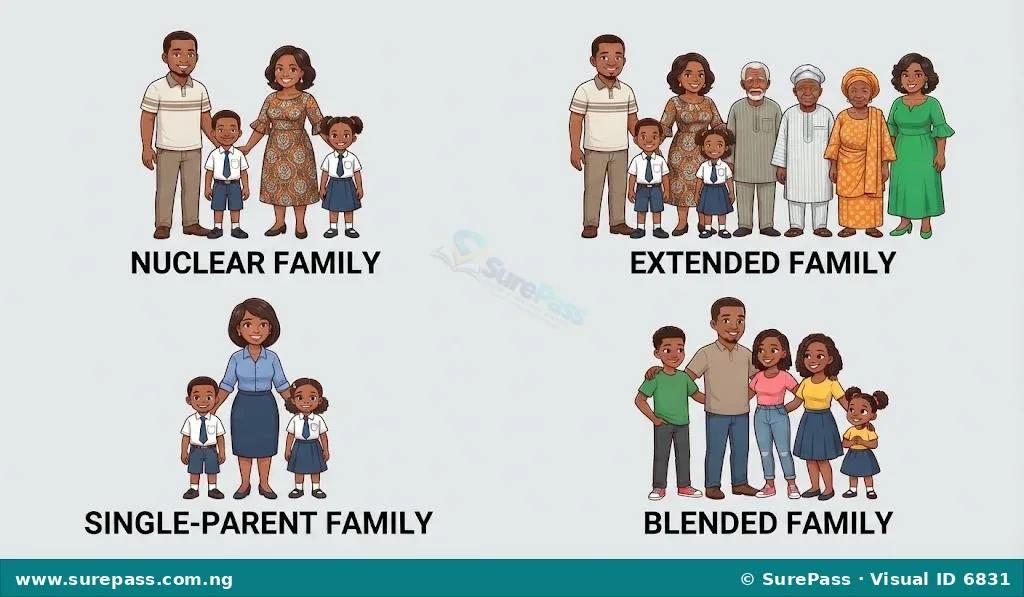
Families come in different forms, each with its own structure and dynamics. Understanding these types helps to appreciate the diverse ways families are formed and function in society.
The main types of families include:
- Nuclear Family: This is the most common type, consisting of a father, a mother, and their children living together. It is often considered the traditional family unit.
- Extended Family: This type includes the nuclear family along with other relatives such as grandparents, aunts, uncles, and cousins, all living together or in close proximity and maintaining strong ties. In many Nigerian cultures, the extended family plays a significant role in raising children and providing support.
- Single-Parent Family: This family unit consists of one parent (either the mother or the father) raising one or more children. This can result from divorce, separation, death of a spouse, or a parent choosing to raise a child alone.
- Childless Family: This refers to a married couple who do not have children, either by choice or due to circumstances. They still form a complete family unit.
- Blended Family (or Stepfamily): This family is formed when two separate families are brought together through marriage. It typically includes a married couple, children from previous relationships, and sometimes children born to the new couple.
Rights and Responsibilities of Family Members
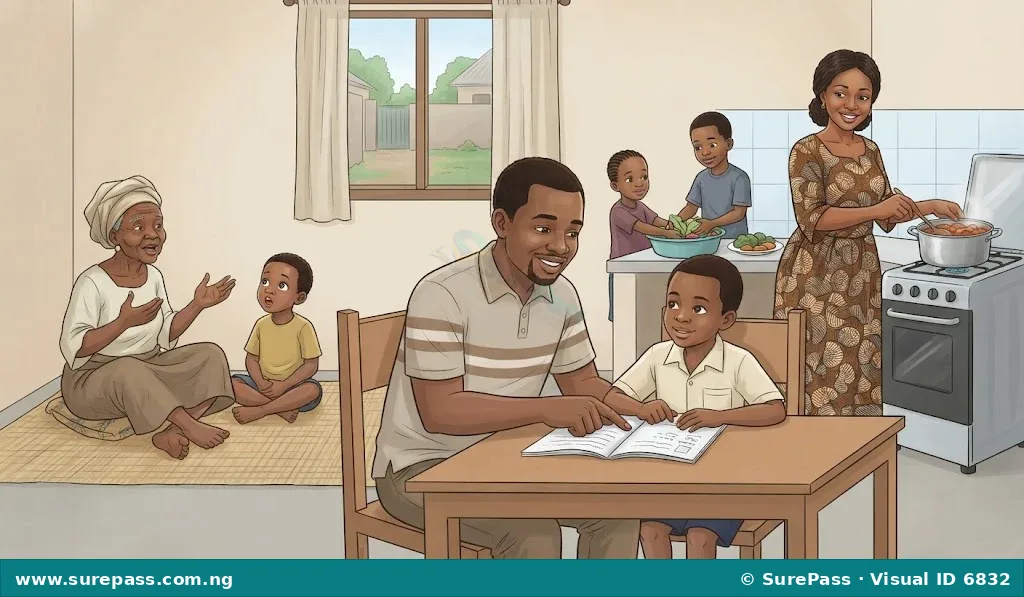
In a Christian family, every member has rights that should be respected and responsibilities that must be fulfilled. These roles are guided by biblical principles of love, respect, and service.
Rights of Family Members
The rights of family members include:
- Right to Love and Affection: Every family member has the right to be loved, cared for, and shown affection.
- Right to Protection and Security: Children have the right to be protected from harm, neglect, and abuse, and all members have a right to feel safe within the home.
- Right to Provision: Children have the right to be provided with basic necessities like food, shelter, clothing, and education.
- Right to Respect: All family members, regardless of age, have the right to be treated with dignity and respect.
- Right to Guidance and Discipline: Children have the right to be guided, taught moral values, and disciplined appropriately for their growth and development.
Responsibilities of Family Members
Responsibilities are duties that each person is expected to carry out for the well-being of the family. These roles are complementary, meaning they work together to strengthen the family unit.
The responsibilities of family members include:
- Parents’ Responsibilities:
- Love and Care: Parents are responsible for loving their children unconditionally and providing for their physical, emotional, and spiritual needs.
- Provision: Fathers and mothers are expected to work and provide food, shelter, clothing, and education for their children.
- Protection: Parents must protect their children from danger and harmful influences.
- Guidance and Discipline: They are responsible for teaching their children right from wrong, instilling Christian values, and disciplining them with love and wisdom.
- Setting a Good Example: Parents are role models for their children and should live lives that reflect Christian principles.
- Children’s Responsibilities:
- Obedience: Children are commanded to obey their parents in the Lord, as this is pleasing to God (Ephesians 6:1).
- Respect and Honour: Children should show respect and honour to their parents and elders.
- Help and Support: As they grow, children should help with household chores and support their parents, especially in their old age.
- Learning: Children have a responsibility to learn from their parents’ guidance and education.
- Spouses’ Responsibilities (Husband and Wife):
- Mutual Love and Respect: Husbands and wives are called to love and respect each other, submitting to one another in the fear of God (Ephesians 5:21-33).
- Faithfulness: Both partners are responsible for being faithful to their marriage vows.
- Partnership: They should work together in raising their children and managing the household.
While Colossians 2:18-21 does not directly address specific family roles, it speaks to the broader Christian conduct, warning against false teachings and human traditions that distract from Christ. Living a life rooted in Christ, free from such errors, contributes to a disciplined and righteous character expected of all believers, including how they interact within their families. This general call to spiritual integrity underpins the ability of family members to fulfil their God-given roles.
Consequences of Family Members Not Carrying Out Their Responsibilities
When family members fail to fulfil their responsibilities, the consequences can be severe, affecting not only the individuals but also the entire family and even the wider community. The Bible provides a clear example of such consequences in the story of Eli and his sons.
The Story of Eli and His Sons (1 Samuel 2:12, 3:13-22)
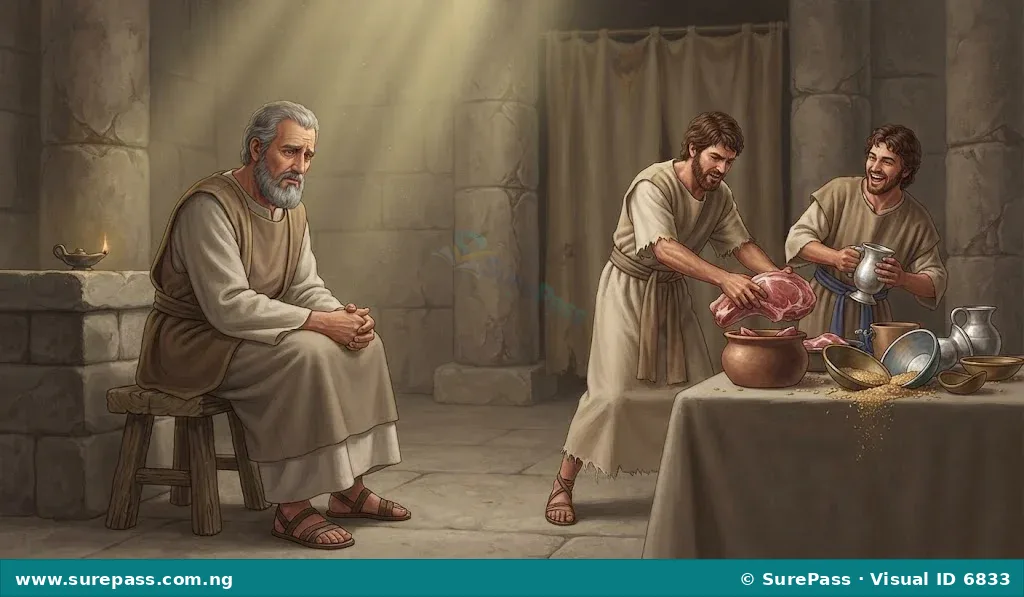
Eli was a high priest in Israel, a respected leader. However, his sons, Hophni and Phinehas, were wicked men who did not know the Lord (1 Samuel 2:12). They abused their priestly office by taking the best parts of the sacrifices for themselves and committing immorality at the entrance of the tabernacle.
Eli, as their father and a spiritual leader, had a responsibility to discipline his sons and correct their evil ways. Although he rebuked them, his actions were not strong enough to stop their wickedness. God observed Eli’s failure to restrain his sons, even though he knew of their abominable acts.
Because of Eli’s failure to carry out his responsibility as a father and a priest, and his sons’ blatant disregard for God’s laws and their duties, God sent a prophet to Eli with a message of judgment. The prophet declared that God would cut off Eli’s strength and the strength of his father’s house. Both Hophni and Phinehas would die on the same day, and Eli’s priestly line would be replaced.
Later, God spoke directly to young Samuel, confirming the severe judgment against Eli’s house. God said, “For I have told him that I will judge his house for ever for the iniquity which he knoweth; because his sons made themselves vile, and he restrained them not” (1 Samuel 3:13 KJV). This prophecy came to pass when the Philistines defeated Israel, captured the Ark of God, and killed Hophni and Phinehas. Upon hearing the news, Eli fell backward, broke his neck, and died (1 Samuel 4:11-18).
General Consequences of Neglected Responsibilities
The story of Eli serves as a powerful warning about the consequences of neglecting family responsibilities. Some general consequences include:
- Breakdown of Trust: When members fail to do their part, trust is eroded, leading to suspicion and resentment within the family.
- Conflict and Discord: Unfulfilled responsibilities often lead to arguments, disagreements, and a lack of peace in the home.
- Lack of Provision and Security: If parents neglect their duties to provide, children may suffer from hunger, lack of education, and insecurity.
- Moral Decay: When parents fail to discipline and guide their children, or when children disrespect authority, it can lead to moral decline and involvement in harmful behaviours.
- Spiritual Weakness: Neglect of spiritual responsibilities, such as family prayers or teaching biblical values, can lead to spiritual emptiness and a drifting away from God.
- Emotional Distress: Family members may experience sadness, anger, loneliness, and other emotional problems due to a dysfunctional family environment.
- Societal Problems: Families are the building blocks of society. When families break down due to neglected responsibilities, it can contribute to wider societal issues like crime, poverty, and social instability.
Therefore, it is crucial for every family member to understand and diligently fulfil their God-given rights and responsibilities to ensure a healthy, loving, and thriving family unit.




0 comments
Open the discussion when you need it. Comments stay collapsed until requested so the initial article remains light.