



ARTICLE CONTENTSOn this page 9 sections
Ayyukan Mutanen Gida
Performance Objectives
By the end of the lesson, students should be able to:
- bayyana ma’anar aikin gida (explain the meaning of household chores);
- tantance nau’o’in mutanen gida (identify the types of household members);
- kawo ire-iren ayyukan mutanen cikin gida (list the types of duties of household members);
- bayyana muhimmancin taimakon mutane a ayyukan gida (explain the importance of helping people with household chores).
Ma’anar Aikin Gida (Meaning of Household Chores)
Aikin gida yana nufin duk wani aiki ko hidima da ake yi a cikin gida domin tsaftace gida, samar da abinci, ko kula da jin daɗin mutanen da ke zaune a ciki.
In English, household chores refer to any work, task, or service performed within the home to maintain cleanliness, prepare food, or care for the well-being of the family members living together. These activities are essential for keeping the home organized, safe, and comfortable for everyone.
Nau’o’in Mutanen Gida (Types of Household Members)
In Hausa culture, a household is typically made up of different individuals, each playing a specific role. Understanding these categories helps in identifying who is responsible for various tasks within the home.
The main types of household members in a Hausa home include:
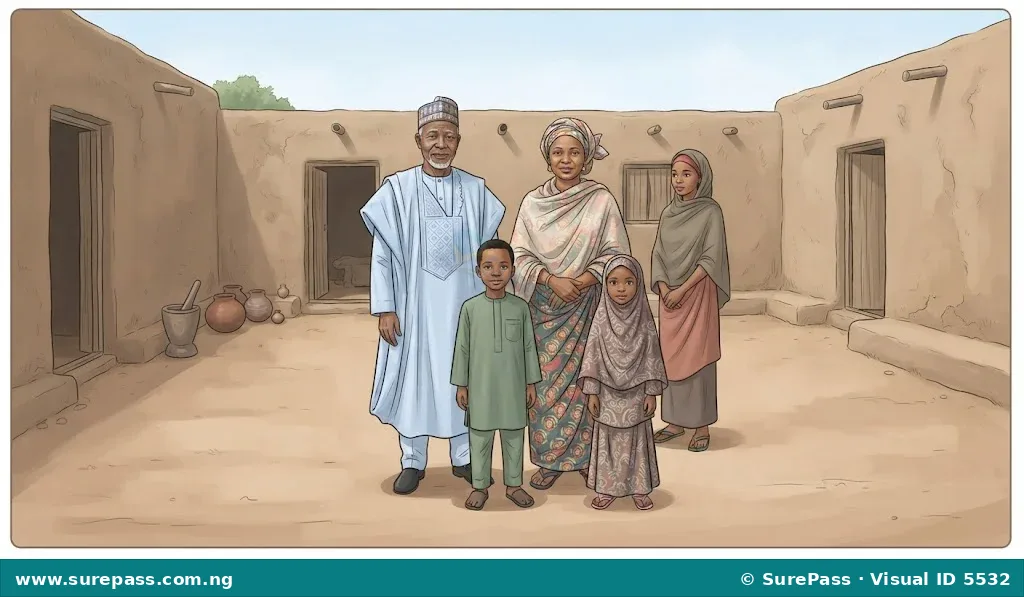
- Maigida (The Head of the Household): This is usually the father or husband. The maigida is responsible for providing food, shelter, clothing, security, and general leadership for the entire family.
- Matar Gida (The Housewife or Mother): This is the wife or mother in the home. The matar gida manages the domestic affairs, supervises cooking, ensures cleanliness, and takes care of the children.
- Ɗa / Ɗiya (The Child – Son or Daughter): These are the children of the family. They assist their parents with various daily chores and learn important life skills through obedience and participation.
- Bara / Yaron Gida (The Domestic Helper or Ward): This refers to helpers, servants, or relatives living within the household. They assist with daily domestic tasks and are treated as part of the extended household.
Observe the illustration below showing the different members of a traditional Hausa household.
Ire-iren Ayyukan Gida (Types of Household Chores)
Household chores are divided among members based on age, strength, and cultural roles. These tasks ensure that the home remains clean, healthy, and functional.
Common household chores in a Hausa home include:
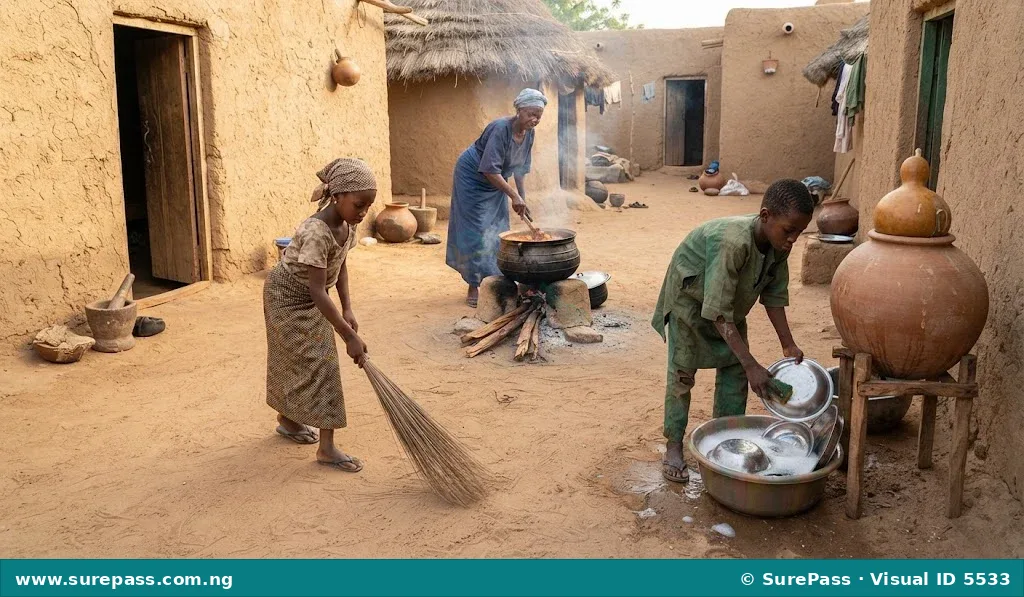
- Shara (Sweeping): This involves using a broom (tsanyawa or tsatstsar gida) to clean the rooms, veranda, and the main compound (tsakar gida). It is usually done early in the morning.
- Girki (Cooking): This is the preparation of meals for the household. It includes grinding ingredients, fetching firewood or setting up the stove, and cooking traditional meals like tuwo, miya, or fura.
- Wanki (Washing): This includes washing clothes (wankin tufafi) and washing cooking utensils and dishes (wankin kwanuka). It helps maintain personal hygiene and prevents diseases.
- Aike zuwa Kasuwa (Errands to the Market): This involves going to the local market or neighborhood shops to buy food items, ingredients, or other household necessities. Children are often sent on these errands.
- Debar Ruwa (Fetching Water): In areas without indoor plumbing, fetching water from wells, boreholes, or public taps is a vital daily chore for cooking, washing, and bathing.
Look at the visual representation below showing household members performing different chores.
Yadda Ake Taimakon Mutane a Ayyukan Gida (How to Help People with Household Chores)
Cooperation and helping one another (taimakekeniya) are core values in Hausa society. Helping other household members makes work easier, faster, and fosters love and unity within the family.
Ways of helping people with household chores include:
- Taimaka wa Mahaifiya da Girki (Assisting the Mother with Cooking): Children can help by washing vegetables, peeling yams, or bringing cooking utensils to the kitchen area.
- Karɓar Aike (Running Errands Promptly): Going on errands to the market or neighbors’ houses without complaining or delaying.
- Kula da Ƙanne (Caring for Younger Siblings): Older children can watch over, bathe, or feed their younger brothers and sisters while parents are busy with other heavy tasks.
- Taimaka wa Na-gaba (Helping Elders): Assisting grandparents or elderly relatives by fetching water for their ablution (alwala) or sweeping their rooms.
How to Sweep the Compound Safely and Correctly
Sweeping is one of the most common daily chores that students can perform to assist at home. Doing it correctly ensures a clean environment and prevents dust from causing health issues.
The required materials are:
- A local straw broom (tsanyawa)
- A dustpan or an old plastic container for collecting dirt
- A waste bin or designated dumping site
The procedure involves the following steps:
- Sprinkle a little water on the sandy floor if it is very dry, to prevent dust from rising into the air.
- Hold the broom firmly with the dominant hand, bending slightly at the waist to reach the ground comfortably.
- Sweep from the inner corners of the compound or room outward toward the center.
- Gather the swept dirt into a single pile.
- Use the dustpan to collect the dirt and empty it into the waste bin or designated disposal area.
- Wash the hands with soap and clean water after completing the task.
Muhimmancin Taimako da Ayyukan Gida ga Al’ummar Hausawa (Importance of Household Chores and Cooperation)
In Hausa culture, performing household chores and helping one another is not just about keeping the house clean; it is a vital part of moral training and community development.
The main benefits of household chores and cooperation include:
- Koyon Ladabi da Tarbiyya (Character and Moral Training): Doing chores teaches children obedience, humility, and responsibility, which are highly valued traits in Hausa society.
- Tsafta da Lafiya (Cleanliness and Health): Regular sweeping, washing, and proper waste disposal prevent the spread of diseases, keeping the family healthy.
- Sauƙaƙa Aiki (Reducing the Workload): When household members help each other, difficult tasks are completed quickly, leaving more time for rest and study.
- Ƙarfafa Dankon Zumunci (Strengthening Family Bonds): Working together creates a sense of unity, love, and mutual respect among family members.
Summary of Key Hausa Vocabulary
The following table pairs key Hausa terms used in this unit with their English meanings for easy reference:
| Hausa Term | English Meaning |
|---|---|
| Aikin gida | Household chores / duties |
| Maigida | Head of the household / Husband |
| Matar gida | Housewife / Wife / Mother |
| Bara | Domestic helper / Servant |
| Shara | Sweeping |
| Girki | Cooking |
| Wanki | Washing (clothes or dishes) |
| Aike | Errand |
| Taimakekeniya | Mutual assistance / Cooperation |
Questions for Evaluation
Answer the following questions to test your understanding of the lesson:
- Bayyana ma’anar aikin gida da harshen Hausa ko Ingilishi. (Explain the meaning of household chores in Hausa or English.)
- Tantance nau’o’in mutanen gida guda uku da aka sani a ƙasar Hausa. (Identify three types of household members known in Hausaland.)
- Kawo ire-iren ayyukan gida guda huɗu da yara za su iya yi domin taimaka wa iyaye. (List four types of household chores that children can do to help their parents.)
- Bayyana muhimmancin taimaka wa juna a ayyukan gida ga al’ummar Hausawa. (Explain the importance of helping one another with household chores in the Hausa community.)



0 comments
Open the discussion when you need it. Comments stay collapsed until requested so the initial article remains light.