


ARTICLE CONTENTSOn this page 7 sections
Waƙar Baka
Performance Objectives
By the end of the lesson, students should be able to:
- Bayanin waƙar baka (Explain oral poetry);
- Misalan waƙar baka (Give examples of oral poetry);
- Muhimmancin waƙar baka (Explain the importance of oral poetry).
Meaning of Waƙar Baka (Ma’anar Waƙar Baka)
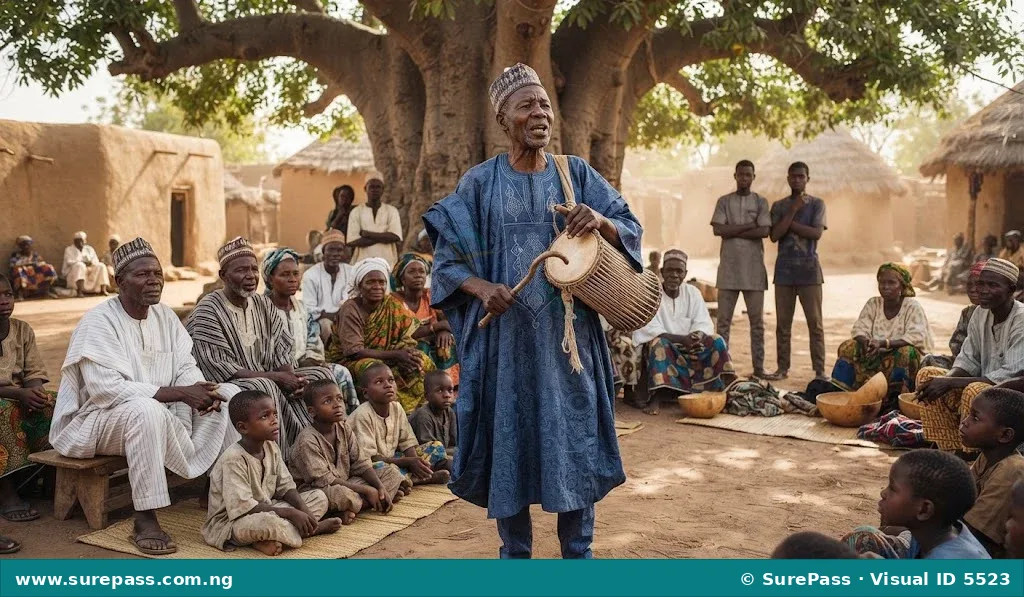
Waƙar baka is a form of oral literature in Hausa culture that consists of songs, chants, or poems composed and performed by word of mouth without being written down.
The term is derived from two Hausa words: “waƙa” (song or poem) and “baka” (mouth). In Hausa tradition, literature was primarily oral before the widespread adoption of writing. Performers of waƙar baka rely on memory, improvisation, and vocal skills to deliver their messages to an audience. These songs are often accompanied by traditional musical instruments or rhythmic handclapping.
Observe the image below.
Examples of Waƙar Baka (Misalan Waƙar Baka)
Hausa oral poetry is diverse and covers different aspects of daily life, work, and social celebrations. The main categories of waƙar baka include:
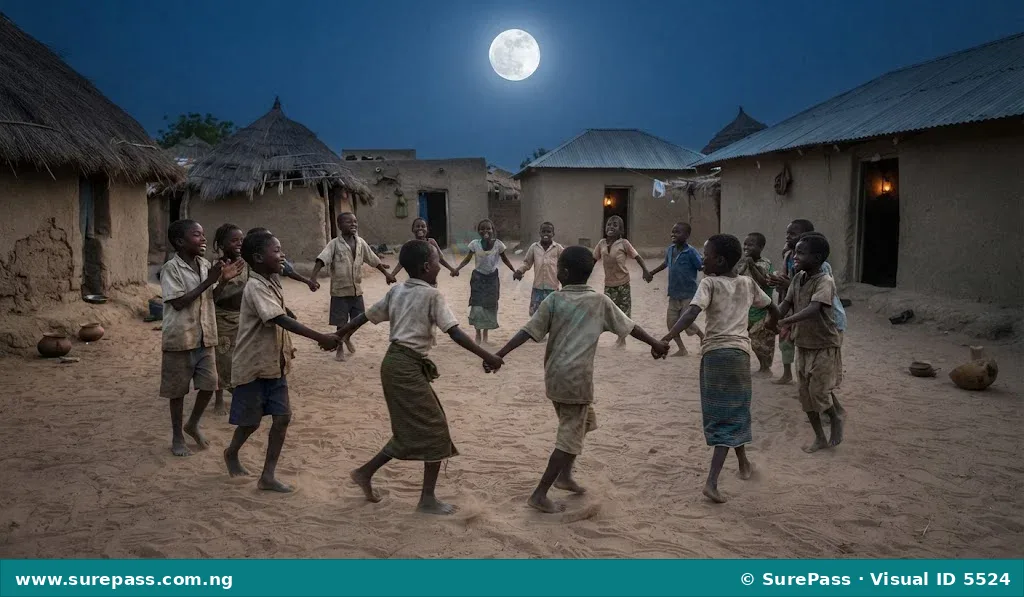
- Waƙar Yara (Children’s Songs and Rhymes): These are simple, rhythmic songs sung by children during play, especially under the moonlight. An example is the popular moon-sighting song:
Hausa:
“Wata fari ƙanƙan da dare,
Garinmu da nisa,
Ba doki ba sirdi,
Sai rariya ta daka.”English Translation:
“The bright white moon of the night,
Our town is far away,
Without a horse or a saddle,
Only a sieve to ride.” - Waƙar Sana’a (Occupational Songs): These are songs sung by professionals to motivate themselves and others during work. Examples include songs for farmers (manoma), blacksmiths (maƙera), hunters (maharba), and fishermen (masu su). A common farming song is:
Hausa:
“Noma na duke tsohon ciniki,
Kowa ya zo duniya kai ya tarar.”English Translation:
“Farming is an ancient, honorable trade,
Whoever comes to this world meets it.” - Waƙar Biki (Ceremonial Songs): These are songs performed during social events such as weddings (bikin aure), naming ceremonies (bikin suna), or installations of traditional titles. An example of a wedding song sung by women is:
Hausa:
“Gari ya waye, amarya za ta gidan miji,
Allah ya ba ku zaman lafiya.”English Translation:
“The day has broken, the bride is going to her husband’s house,
May God grant you a peaceful home.” - Waƙar Shagali ko Wasa (Recreational and Play Songs): These are general songs performed for entertainment, wrestling matches (dambe or kokawa), or community festivals.
Observe the image below.
Importance of Waƙar Baka (Muhimmancin Waƙar Baka)
Waƙar baka plays a vital role in the preservation of Hausa culture and social values. The main benefits of oral poetry include:
- Ilimantarwa (Education): It serves as a tool for teaching moral lessons, history, and cultural values to younger generations.
- Nishaɗantarwa (Entertainment): It provides joy, relaxation, and amusement during festivals, ceremonies, and leisure hours.
- Gidajen Sana’a (Boosting Work Morale): It reduces boredom and physical exhaustion during hard labor, such as farming or building, by keeping workers energized.
- Adana Al’ada (Preservation of Culture): It preserves the Hausa language, idioms, proverbs, and historical events without the need for written records.
- Haɗin Kai (Social Unity): It brings community members together during shared performances, fostering a sense of belonging and cooperation.
How to Recite and Sing Oral Poetry (Rera Waƙoƙin Baka)
Performing waƙar baka requires an understanding of rhythm, voice control, and pronunciation. This practical guide outlines how to recite a traditional Hausa oral poem:
The procedure involves the following steps:
- Select a specific category of oral song, such as a children’s play song (Waƙar Yara) or an occupational song (Waƙar Sana’a).
- Listen to the natural rhythm of the words, noting where the voice rises, falls, or pauses.
- Pronounce the Hausa words clearly, paying attention to the correct vowel lengths and tones (high and low tones).
- Clap hands or tap a surface gently to establish a steady beat that matches the tempo of the song.
- Recite the lines aloud, maintaining the established rhythm and adding simple body movements or facial expressions to convey the meaning of the words.
Listening and Identifying Types of Oral Poetry (Sauraro da Tantance Waƙoƙin Baka)
Modern technology, such as mobile phones and MP3 players, can be used to listen to recorded oral poetry. This helps learners identify and distinguish between different types of waƙar baka.
The identification process involves the following steps:
- Play a recorded audio file of a Hausa oral song on a mobile phone or MP3 player.
- Listen carefully to the background sounds and instruments, such as drums (gangan), calabashes (ƙwarya), or flutes (sarewa).
- Pay close attention to the lyrics and the vocabulary used by the singer.
- Determine the main theme of the song based on the words used (for example, references to crops and soil indicate a farming song, while references to play and the moon indicate a children’s song).
- Classify the song into its correct category, such as Waƙar Yara, Waƙar Sana’a, or Waƙar Biki.



0 comments
Open the discussion when you need it. Comments stay collapsed until requested so the initial article remains light.