


ARTICLE CONTENTSOn this page 5 sections
Bukukuwa
Performance Objectives
By the end of the lesson, students should be able to:
- explain the meaning of festivals (bayanin bukukuwa);
- list the various types of festivals (kawo ire-iren bukukuwa);
- state the importance of festivals in society (muhimmancin bukukuwa).
Meaning of Festival (Ma’anar Buki)
A festival, known as buki in Hausa, is a special social gathering or period of celebration, performance, and merrymaking organized by a community or society to mark an important cultural, historical, or religious event.
In Hausa society, festivals are deeply rooted in the culture (al’ada) and religion (addini) of the people. These celebrations bring people together to express joy, show gratitude, and display their rich cultural heritage. They are often characterized by special clothing, traditional music, dancing, feasts, and community gatherings.
Types of Festivals (Ire-iren Bukukuwa)
Festivals in Hausaland are broadly classified into two main categories:
- Traditional Festivals (Bukukuwan Al’ada)
- Religious Festivals (Bukukuwan Addini)
Traditional Hausa Festivals (Bukukuwan Hausawa na Al’ada)
Traditional festivals are cultural celebrations that have been passed down through generations. They reflect the history, occupation, and social values of the Hausa people.
Common traditional Hausa festivals include:
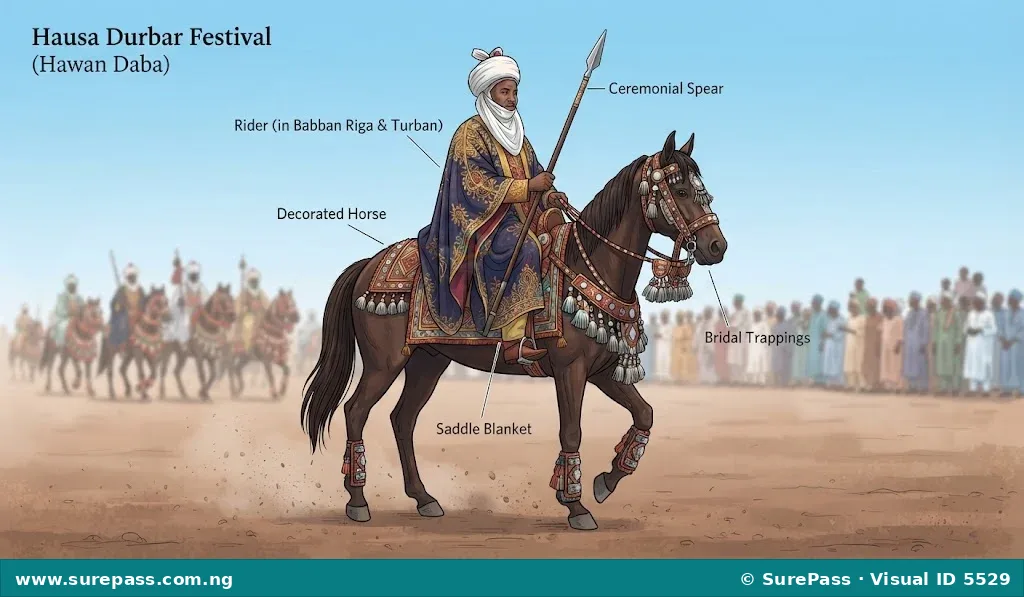
- Bikin Hawan Daba (The Durbar Festival): This is a grand equestrian (horse riding) festival celebrated in major Hausa emirates such as Kano, Katsina, Zazzau (Zaria), Sokoto, and Daura. It features beautifully decorated horses, riders in colorful traditional attire, and displays of loyalty to the Emir (Sarki).
- Bikin Kamun Kifi na Argungu (Argungu Fishing Festival): This is a famous annual fishing festival held in Kebbi State. Thousands of fishermen compete to catch the largest fish in the Rima River using only traditional hand nets and large gourds.
- Bikin Kalankuwa: This is a traditional harvest festival celebrated by young men and women in Hausa villages. It is held after the harvesting season to show gratitude for a successful farming year, featuring drama, traditional wrestling (Kokawa), and dancing.
- Bikin Sharo ko Shadi: This is a cultural festival of bravery practiced mainly by the Fulani and some Hausa communities, where young men undergo a public whipping test to prove their maturity, courage, and readiness for marriage.
Religious Hausa Festivals (Bukukuwan Hausawa na Addini)
Religious festivals are celebrated based on Islamic beliefs, which is the predominant religion of the Hausa people.
The main religious festivals celebrated by the Hausa people include:
- Bikin Sallah (Eid-el-Fitr and Eid-el-Kabir): These are the two major Islamic celebrations. Eid-el-Fitr (Sallar Azumi) marks the end of the Ramadan fast, while Eid-el-Kabir (Sallar Laiha) involves the slaughtering of rams to commemorate the sacrifice of Prophet Ibrahim.
- Bikin Maulidi (Maulud): This festival is held to celebrate the birth of the Holy Prophet Muhammad (Peace Be Upon Him). It involves public gatherings, religious lectures, and songs of praise.
Importance of Festivals (Muhimmancin Bukukuwa)
Festivals play a vital role in the social, cultural, and economic life of the Hausa community.
The main benefits and importance of festivals in the society include:
- Cultural Preservation (Kiyaye Al’ada): Festivals help to preserve and pass down Hausa customs, traditional music, clothing, and values to the younger generation.
- Unity and Peace (Haɗin Kai da Zaman Lafiya): These celebrations bring people from different places together, fostering friendship, reconciliation, and peaceful coexistence.
- Entertainment and Joy (Nishaɗi da Murna): Festivals provide a period of rest, happiness, and entertainment through music, dancing, sports, and drama.
- Economic Benefits (Haɓaka Tattalin Arziki): Festivals attract visitors and tourists, which helps local traders, craftsmen, and food sellers to make money.
- Expression of Gratitude (Nuna Godiya): Celebrations like harvest festivals allow the community to thank God for a successful farming season and abundant food.

0 comments
Open the discussion when you need it. Comments stay collapsed until requested so the initial article remains light.