



ARTICLE CONTENTSOn this page 7 sections
Culture
Performance Objectives
By the end of the lesson, students should be able to:
- explain the meaning of culture;
- list types of culture;
- demonstrate different cultural display.
Meaning of Culture
Culture is the total way of life of a group of people, which includes their beliefs, values, language, food, clothing, music, and customs.
Culture is not inborn; it is learned and passed down from one generation to another. It influences how people behave, interact, speak, and solve problems within their community. Every society has its unique culture, which gives the members of that society a sense of identity and belonging.
Types of Culture
Culture is broadly divided into two main types. These types help people understand which aspects of culture are physical and which aspects are ideas or behaviors.
The two main types of culture are:
- Material culture
- Non-material culture
Material Culture
Material culture consists of the physical, tangible objects that people create, use, and share.
These are things that can be seen, touched, and measured. They reflect the technology, environment, and resources available to a group of people.
Examples of material culture include:
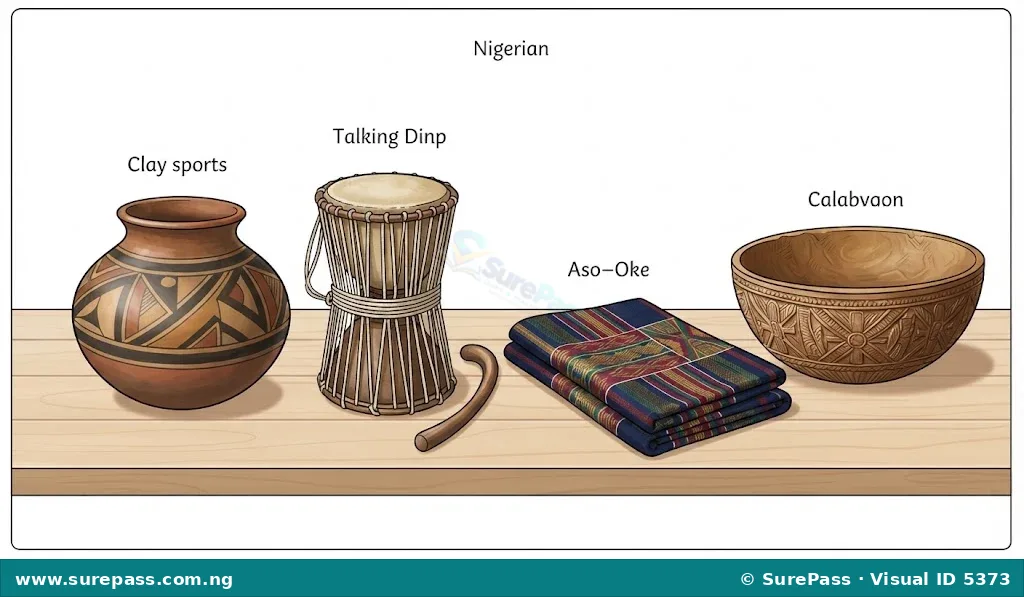
- Traditional clothing and ornaments (such as Aso-Oke, beads, and hand-woven fabrics).
- Local food and drinks (such as pounded yam, fufu, tuwo shinkafa, and palm wine).
- Shelter and architectural designs (such as mud houses, thatched roofs, and modern buildings).
- Tools and weapons (such as hoes, cutlasses, bows, and arrows).
- Arts and crafts (such as pottery, wood carvings, bronze castings, and woven baskets).
- Traditional musical instruments (such as talking drums, flutes, and gongs).
Non-Material Culture
Non-material culture consists of the intangible, non-physical ideas, beliefs, values, and rules that shape a society.
These aspects of culture cannot be touched or held physically, but they are expressed through human behavior, thoughts, and communication.
Examples of non-material culture include:
- Language and dialects used for communication.
- Religious beliefs and traditional worship systems.
- Moral values, ethics, and societal norms (such as respect for elders and honesty).
- Traditional music, songs, and folklore.
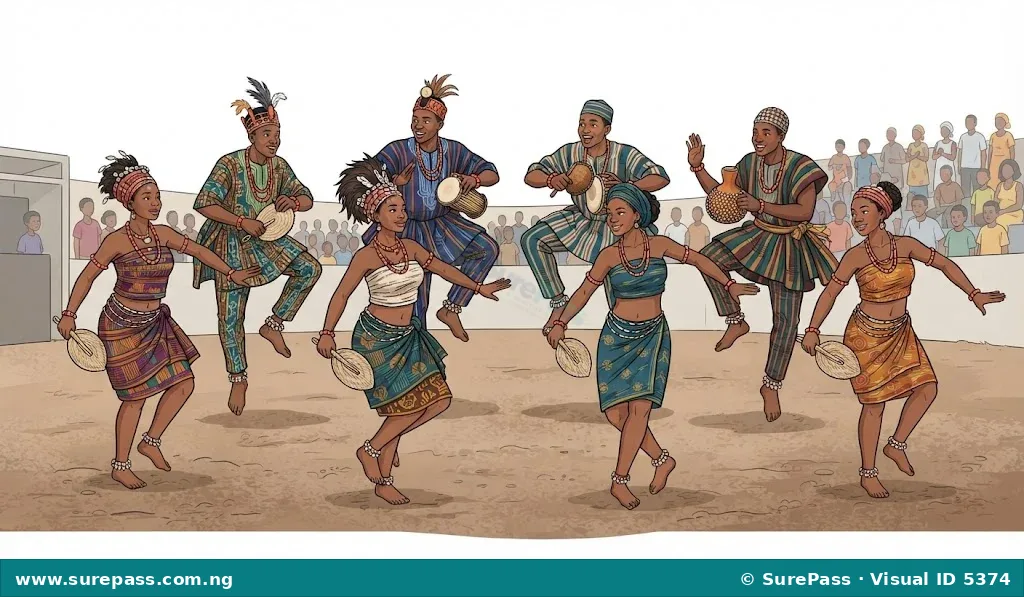
- Traditional dances and theatrical performances.
- Greetings and social etiquette (such as kneeling or prostrating to greet elders).
- Institutions like marriage customs and coronation rites.
Cultural Displays
A cultural display is a public exhibition or performance that showcases the traditions, arts, clothing, music, and dances of a specific group of people.
Cultural displays are important because they preserve heritage, promote unity, and allow different ethnic groups to share their unique identities with others. In Nigeria, cultural displays are common during festivals, national celebrations, weddings, and coronation ceremonies.
The main forms of cultural displays in Nigeria include:
- Traditional Festivals: These are periodic celebrations that mark historical events, seasons, or religious rites. Examples include the Argungu Fishing Festival in Kebbi State, the New Yam Festival (Iri Ji) in Igboland, the Eyo Festival in Lagos, and the Durbar Festival in Northern Nigeria.
- Traditional Dances: These are rhythmic movements performed to traditional music. Examples include the energetic Atilogwu dance of the Igbo, the graceful Bata dance of the Yoruba, and the colorful Koroso dance of the Hausa and Fulani.
- Traditional Attire Exhibitions: This involves wearing and parading the unique clothing of different ethnic groups to show beauty, status, and identity.
- Traditional Music and Drama: This includes performances using indigenous instruments, storytelling, and folk songs that teach moral lessons.
Cultural Outfits of Different Nigerian Tribes
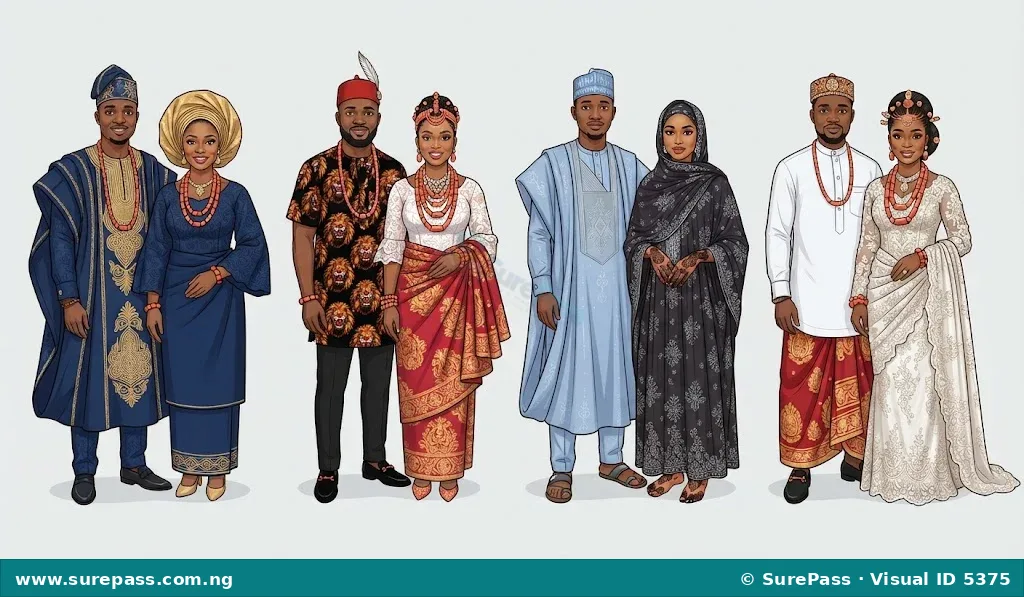
Nigeria is a multi-ethnic nation with over two hundred and fifty ethnic groups. Each group has distinct traditional outfits that make them easily identifiable.
The traditional outfits of some major Nigerian ethnic groups include:
Yoruba Traditional Attire
The Yoruba people of Southwestern Nigeria are known for their rich, flowing garments made from fabrics like Aso-Oke, Adire, and lace.
The key components of Yoruba traditional attire are:
- Men: They wear a large, flowing robe called Agbada over a long-sleeved shirt (Buba) and trousers (Sokoto). They complete the outfit with a traditional cap called Fila.
- Women: They wear a blouse (Buba) and a wrapped skirt (Iro). They tie a heavy headtie called Gele and drape a shoulder sash called Ipele.
Igbo Traditional Attire
The Igbo people of Southeastern Nigeria wear outfits that signify royalty, strength, and cultural pride, often adorned with beautiful coral beads.
The key components of Igbo traditional attire are:
- Men: They wear a patterned shirt called Isiagu (which features lion head prints) over a wrapper or trousers. They wear a red or black woolen cap (Okpu Agu) and carry a traditional hand fan (Akupe).
- Women: They wear a beautiful blouse over two layers of George or Ankara wrappers. They adorn their necks, wrists, and ankles with red coral beads (Ife) and tie a matching headtie.
Hausa and Fulani Traditional Attire
The Hausa and Fulani people of Northern Nigeria wear loose, comfortable clothing designed for the warm climate, often decorated with detailed embroidery.
The key components of Hausa and Fulani traditional attire are:
- Men: They wear a wide, embroidered robe called Babariga (or Kaftan) over trousers. They wear a decorated cap called Fula.
- Women: They wear a long, flowing dress or a blouse with a wrapper (Abaya or Mudukare), accompanied by a matching shawl or hijab. They often decorate their hands and feet with beautiful henna designs (Lalle).
Efik and Ibibio Traditional Attire
The Efik and Ibibio people of Southern Nigeria wear elegant, elaborate outfits that reflect their rich coastal history.
The key components of Efik and Ibibio traditional attire are:
- Men: They wear a long white shirt over a wrapped fabric called Usobo. They tie a long neck-cloth called Okpon-to and carry a walking stick.
- Women: They wear a grand, flowing gown called Onyonyo, which is heavily decorated. They style their hair in high, beaded structures and wear colorful beaded necklaces.
How to Demonstrate and Display Cultural Outfits
Demonstrating a cultural display involves dressing in correct traditional attire and presenting the associated movements, greetings, and postures of a specific ethnic group.
The required materials for this activity are:
- Traditional garments (such as Agbada, Isiagu, Babariga, or wrappers).
- Accessories (such as Gele, Fila, coral beads, hand fans, and walking sticks).
- Traditional background music matching the selected culture.
The procedure involves the following steps:
- Select an ethnic group to represent (such as Yoruba, Igbo, Hausa, or Efik).
- Identify and gather all the necessary clothing items and accessories for the chosen culture.
- Put on the traditional attire correctly, ensuring that headties, caps, wrappers, and beads are properly positioned.
- Learn the traditional greeting posture of the selected culture (for example, prostrating or kneeling for Yoruba, or bowing with a hand fan for Igbo).
- Walk gracefully in a procession to showcase the outfit to the class, keeping the body posture upright and dignified.
- Perform a brief, simple traditional dance step or movement that matches the rhythm of the background music.
- Explain the name and significance of the outfit to the observers.



0 comments
Open the discussion when you need it. Comments stay collapsed until requested so the initial article remains light.