


ARTICLE CONTENTSOn this page 8 sections
Dance
Performance Objectives
By the end of the lesson, students should be able to:
- define dance;
- state the forms of dance;
- identify traditional/folk dances in Nigeria;
- perform the basic steps of a traditional/folk dance in Nigeria.
Meaning of Dance
Dance is the rhythmic movement of the body in space and time, usually accompanied by music, to express ideas, emotions or tell a story.
Dance is a fundamental form of human expression and non-verbal communication. It combines physical movement, rhythm and expression to convey cultural values, celebrate events or provide entertainment. The key elements that make up dance include body movement, rhythm, space and time.
Forms of Dance
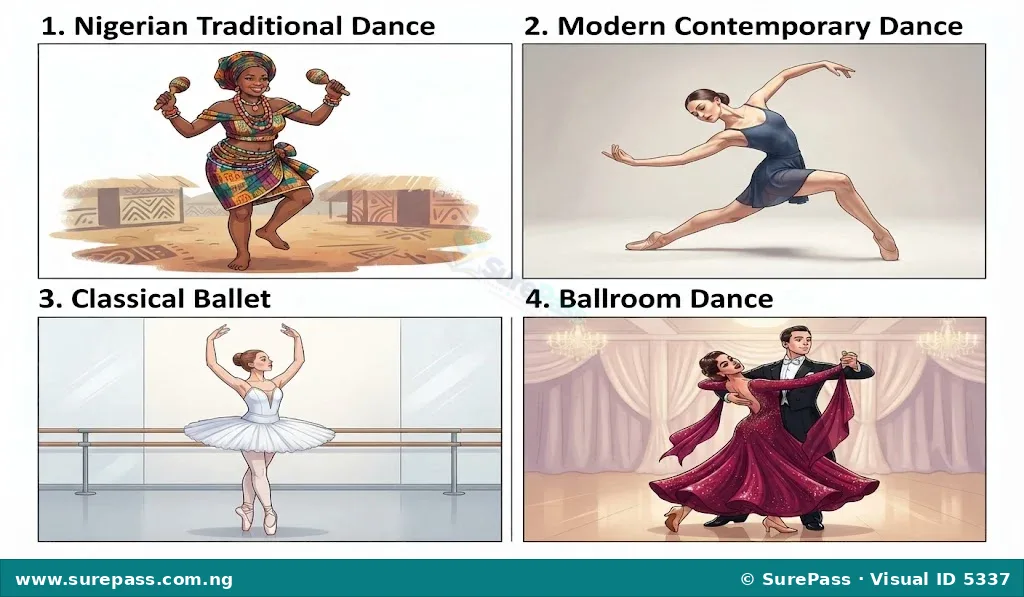
Dance exists in various forms across different cultures and eras. The major forms of dance include:
- Traditional or Folk Dance: Dances created by a specific community or ethnic group that reflect their culture, history, occupations and beliefs.
- Modern or Contemporary Dance: An expressive style of dance that rejects the strict rules of classical dance, focusing instead on freedom of movement and personal expression.
- Ballet: A highly disciplined and classical form of dance that originated in European courts, characterized by precise, graceful movements and specific techniques.
- Social or Ballroom Dance: Partner dances performed for recreation, socialising and entertainment, such as the Waltz, Salsa or Quickstep.
Nigerian Traditional and Folk Dances
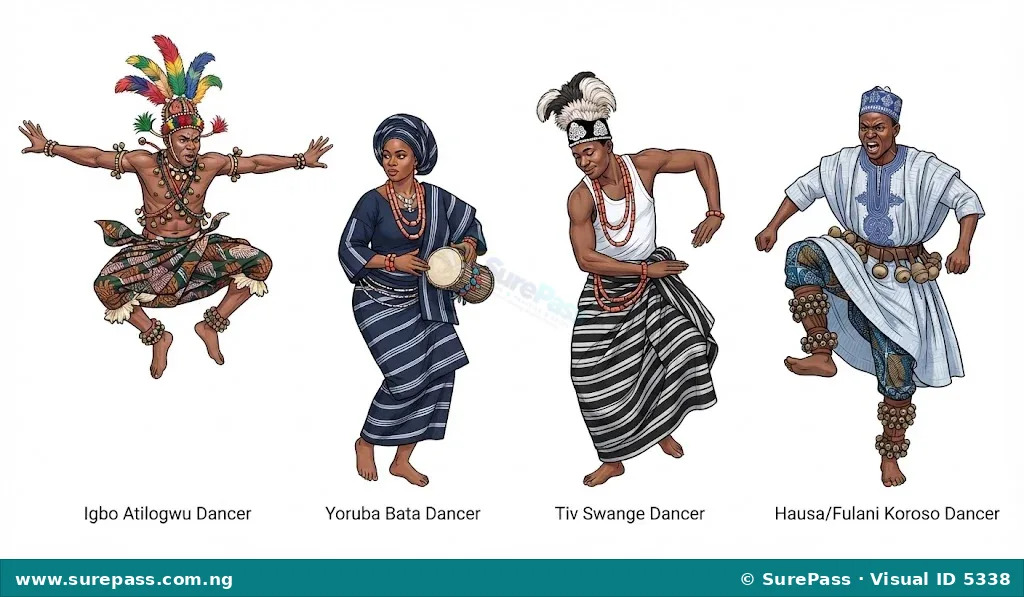
Nigerian traditional dance is a cultural art form performed by specific ethnic groups to celebrate heritage, mark life events and preserve history through rhythmic body movements.
These dances are deeply rooted in the customs and beliefs of the people. They are performed during special occasions such as festivals, weddings, funerals, coronation ceremonies and harvest seasons. Traditional dances are usually accompanied by indigenous musical instruments, songs and specific costumes that represent the identity of the ethnic group.
Common examples of traditional dances in Nigeria include:
- Atilogwu Dance: A fast-paced, acrobatic dance performed by the Igbo people of southeastern Nigeria. It involves high jumps, flips and vigorous footwork, accompanied by traditional instruments like the metal gong (ogene) and flute (oja).
- Bata Dance: An energetic and rhythmic dance associated with the Yoruba people of southwestern Nigeria, particularly linked to Sango, the deity of thunder. It features sharp, jerky body movements that match the complex rhythms of the Bata drums.
- Swange Dance: A fluid, sensual dance from the Tiv people of Benue State in middle-belt Nigeria. It is characterized by slow, snake-like body contortions and rhythmic waist movements, accompanied by both traditional horns and modern brass instruments.
- Koroso Dance: A lively, energetic dance performed by the Hausa and Fulani people of northern Nigeria. Dancers wear rattles around their ankles, which produce rhythmic sounds as they stamp their feet, leap and spin in unison.
Basic Steps in Nigerian Traditional Dance
Traditional dances in Nigeria rely on specific body movements that form the foundation of each dance style. These movements are coordinated with the rhythm of the drums and other percussion instruments.
The fundamental steps and movements in Nigerian traditional dance include:
- Foot Stamping: Striking the sole of the foot firmly against the ground to emphasize the heavy beats of the drum. This step is common in Koroso and Atilogwu dances.
- Body Swaying: Tilting the upper body from side to side or forward and backward in a smooth, rhythmic motion. This is often used to transition between faster dance steps.
- Waist Wriggling: Rhythmic shaking or rotating of the hips and waist, which is a prominent feature in Swange and various southern Nigerian maiden dances.
- Hand Gestures and Arm Movements: Extending, waving or clapping the hands to tell a story, welcome guests or signal changes in the dance pattern.
- Leaping and Jumping: Springing off the ground with one or both feet. These athletic movements are used to show strength, agility and excitement, especially in male-led traditional dances.
- Shoulder Shaking: Rapidly moving the shoulders forward and backward or up and down, often seen in dances from the Niger Delta and northern regions.
How to Perform Basic Steps of a Nigerian Folk Dance
This practical activity guides learners through the execution of basic rhythmic steps common to Nigerian traditional dances. The performance combines foot coordination, body posture and rhythmic timing.
The required materials and instruments for this activity are:
- Percussion instruments such as a hand drum, metal gong (ogene) or shaker (shekere).
- A traditional folk song or recorded rhythmic drumbeat.
- Comfortable clothing that allows free movement.
The procedure involves the following steps:
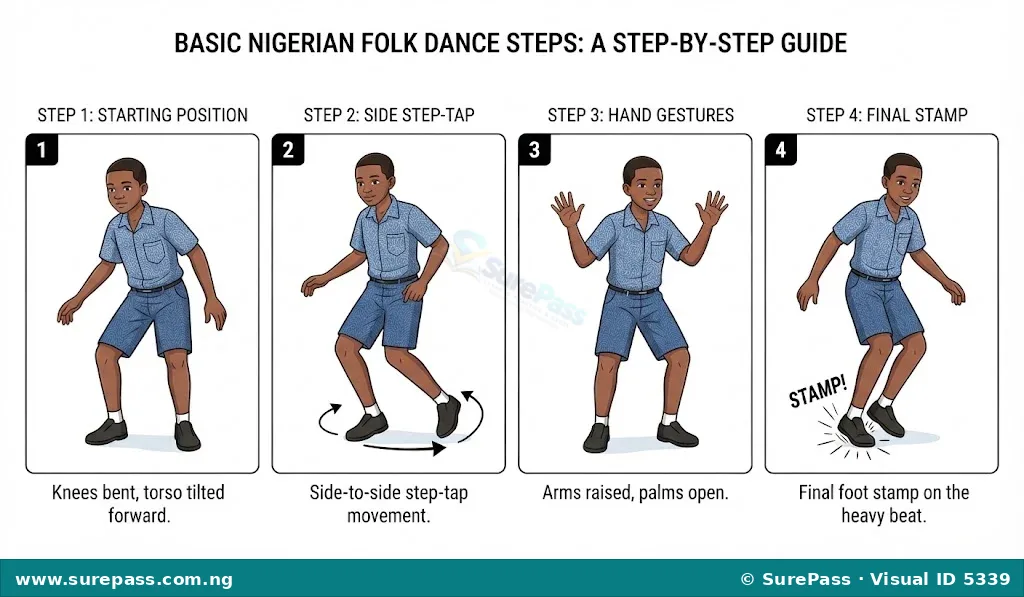
- Assume the Starting Position: Stand with the feet slightly apart, knees slightly bent, and the upper body tilted slightly forward. This grounded posture is essential for balance in African traditional dance.
- Establish the Rhythm: Listen to the drumbeat or percussion instrument. Clap hands or nod the head to match the steady pulse of the rhythm.
- Execute the Step-Tap (The Basic Footwork): Step to the right with the right foot on beat one, then tap the left foot next to the right foot on beat two. Step to the left with the left foot on beat three, then tap the right foot next to the left foot on beat four.
- Add the Body Sway: As the feet move from side to side, gently sway the upper body in the same direction as the stepping foot. Keep the shoulders relaxed.
- Introduce Hand Gestures: Extend both arms forward with open palms facing upward on the step, and pull the elbows back toward the waist on the tap. This gesture symbolizes welcoming or offering.
- Incorporate Foot Stamping: On every fourth beat, replace the simple tap with a firm stamp of the foot against the floor to accentuate the main drum accent.
- Maintain Coordination: Repeat the entire sequence continuously, ensuring that every movement aligns perfectly with the tempo of the percussion instrument.
Review Exercises
Answer the following questions to test understanding of the lesson:
- Explain the meaning of dance.
- List four major forms of dance.
- Describe two Nigerian traditional dances, stating their origin and characteristics.
- Demonstrate the basic steps of a Nigerian folk dance, focusing on posture, rhythm and footwork.


0 comments
Open the discussion when you need it. Comments stay collapsed until requested so the initial article remains light.