



ARTICLE CONTENTSOn this page 7 sections
Introduction to Art
Performance Objectives
By the end of the lesson, students should be able to:
- explain the meaning of art;
- list two main types of art;
- identify the branches of art;
- state the importance of art;
- trace the history and origin of art.
Meaning of Art
Art is the expression of human creative skill and imagination, usually in a visual form like painting or sculpture, or in a performance form like music or dance.
It is a way for people to share their ideas, feelings, and observations about the world around them. Art can be found in many forms and places, from drawings on paper to songs played on the radio, and even in the clothes people wear.
Types of Art
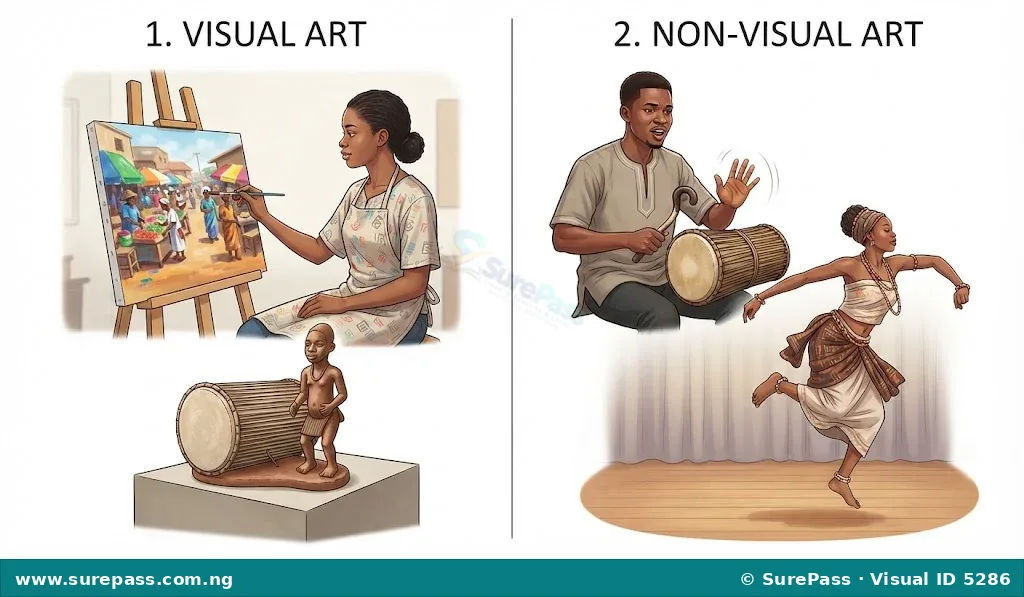
Art can be broadly divided into two main types based on how it is experienced:
- Visual Art (Fine and Applied Arts)
- Non-Visual Art (Performance Art)
Visual Art (Fine and Applied Arts)
Visual art refers to art forms that can be seen and often touched. These are creations that exist as physical objects or images. They appeal to the sense of sight.
Examples of visual art include paintings, sculptures, drawings, and designs on fabrics or pottery.
Non-Visual Art (Performance Art)
Non-visual art, also known as performance art, refers to art forms that are experienced through sound, movement, or live action. These are often temporary and involve a performance by artists.
Examples of non-visual art include music, dance, and theatre.
Branches of Art
Within the two main types, there are many different branches of art. These branches specify the particular medium or method used to create the art.
Branches of Fine and Applied Arts
Fine and Applied Arts include branches where artists create objects or images that can be seen and appreciated.
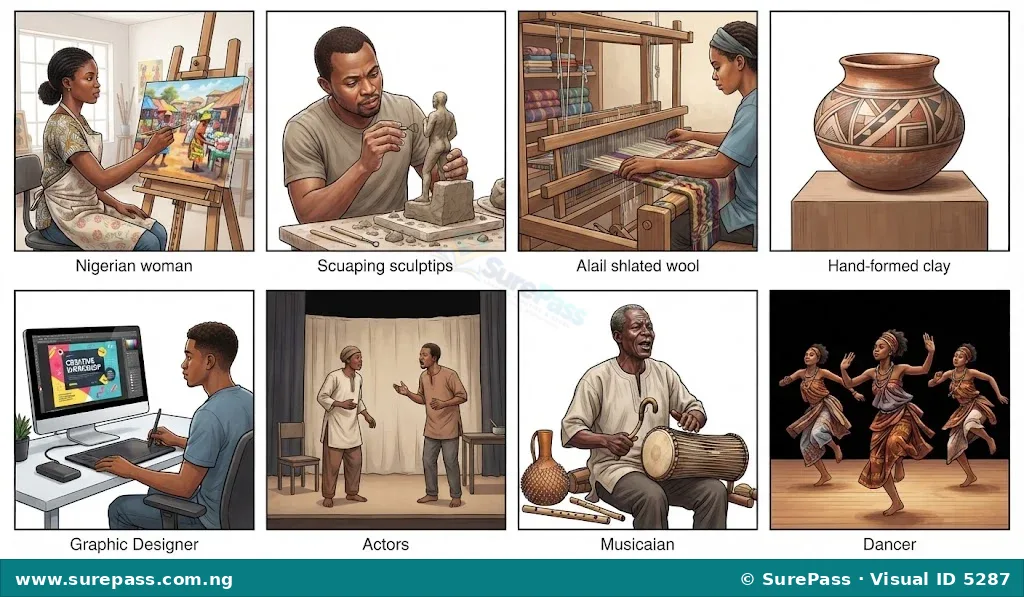
- Painting: This involves using colours, pigments, and brushes to create images on surfaces like canvas, paper, wood, or walls. Painters express ideas, emotions, or scenes through their use of colour and form.
- Sculpture: Sculpture is the art of creating three-dimensional forms. Sculptors use materials such as clay, wood, stone, metal, or plastic to carve, model, or assemble figures and objects.
- Textile: Textile art involves creating designs and patterns on fabrics. This can include weaving, dyeing, printing, embroidery, and knitting to make clothes, carpets, tapestries, and other fabric items.
- Ceramics: Ceramics is the art of making objects from clay and other raw materials, which are then shaped and hardened by heat. Examples include pottery, plates, cups, and decorative tiles.
- Graphics: Graphic art involves creating visual designs for communication. This includes designing logos, posters, book covers, advertisements, and digital images using various tools and techniques.
Branches of Performance Art
Performance art includes branches where artists use their bodies, voices, or instruments to create live experiences for an audience.
- Theatre/Drama: This is the art of performing stories through acting, dialogue, movement, and stagecraft. Actors portray characters and situations to entertain and convey messages to an audience.
- Music: Music is the art of arranging sounds in a way that creates harmony, melody, rhythm, and expression. Musicians use instruments or their voices to compose, sing, or play musical pieces.
- Dance: Dance is the art of expressing ideas and emotions through rhythmic body movements. Dancers use their bodies to tell stories, celebrate events, or simply move to music.
Importance of Art
Art plays a very important role in human life and society. Its importance can be seen in several ways:
- Expression of Feelings and Ideas: Art provides a way for people to express their deepest thoughts, emotions, and experiences that might be difficult to put into words.
- Communication: Art can communicate messages, stories, and cultural values across different generations and communities, even without spoken language.
- Preservation of Culture and History: Through art, traditions, customs, and historical events are recorded and passed down. It helps to keep cultural heritage alive.
- Entertainment and Enjoyment: Art forms like music, dance, and drama provide entertainment and bring joy and relaxation to people.
- Decoration and Aesthetics: Art makes our surroundings beautiful. Paintings, sculptures, and well-designed buildings add beauty to homes, schools, and public spaces.
- Education and Learning: Art can be a powerful tool for teaching and learning about different subjects, cultures, and perspectives.
- Economic Value: Art can also provide a source of income for artists and contribute to the economy through sales of artworks, performances, and tourism.
Origin of Art
The origin of art can be traced back to the earliest periods of human existence, long before written history. Early humans used art as a fundamental way to understand and interact with their world.
The first forms of art appeared thousands of years ago, during the Stone Age. People living in caves created drawings and paintings on cave walls. These cave paintings often depicted animals they hunted, human figures, and symbols. These artworks are believed to have been created for spiritual reasons, to record events, or to teach hunting techniques.
Alongside visual art, early humans also engaged in non-visual art forms. They used their voices and simple instruments to create music, and they performed dances for rituals, celebrations, or storytelling. The creation of simple tools and decorated objects also shows an early human desire for beauty and expression beyond mere function.
As human societies developed, art continued to evolve. Ancient civilisations in places like Egypt, Greece, and Nigeria created elaborate sculptures, architecture, and decorative arts that reflected their beliefs, power, and daily lives. This long history shows that art is a natural and essential part of being human.



0 comments
Open the discussion when you need it. Comments stay collapsed until requested so the initial article remains light.