


ARTICLE CONTENTSOn this page 8 sections
Craft
Performance Objectives
By the end of the lesson, students should be able to:
- explain the meaning of crafts;
- identify materials, methods and tools used in making them;
- select suitable materials for making craft;
- identify the methods of making craft.
Meaning of Crafts
Crafts are activities where people make useful or decorative objects by hand, often using simple tools and various materials.
Crafts involve skill, creativity, and careful work to transform raw materials into finished products. These products can be used in the home, worn as accessories, or displayed as art.
Craft Materials
Crafts require different types of materials. The choice of material depends on the type of craft being made and the desired outcome.
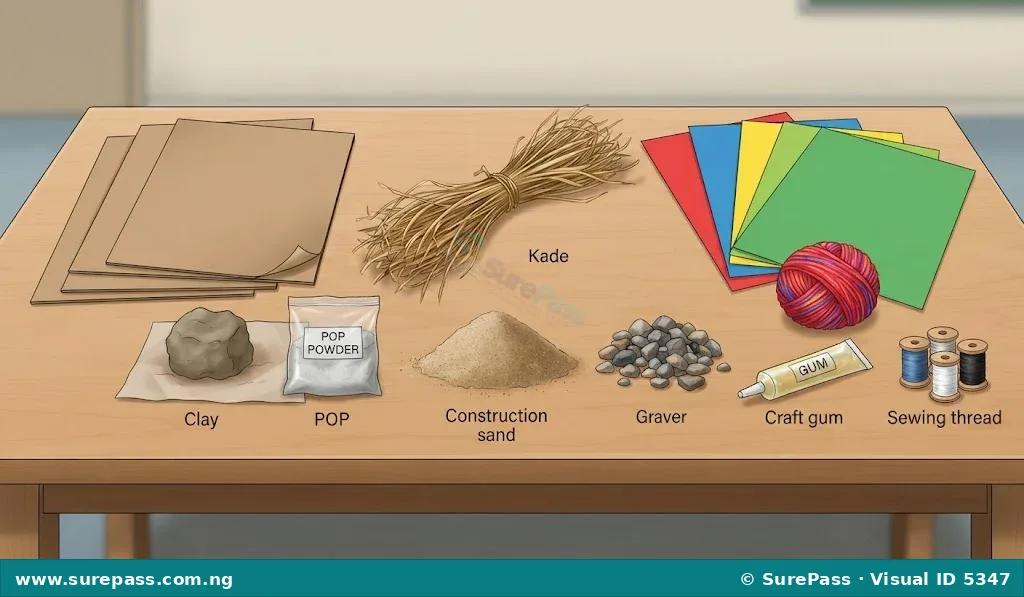
Common craft materials include:
- Cardboard: A thick, stiff paper material used for making models, boxes, and other structured items.
- Gravel: Small stones used for decorative purposes, mosaics, or adding texture to craft projects.
- Straw: Dried stalks of grain, often used for weaving mats, baskets, or making decorative figures.
- Clay: A natural, soft earth material that can be moulded into various shapes and hardened by drying or firing.
- Sand: Fine particles of rock, used for sand art, adding texture, or as a component in some moulding mixtures.
- Paper: A versatile material used for cutting, folding, drawing, and constructing many different craft items.
- Wool: Soft fibres from sheep, used for weaving, knitting, threading, or making decorative tassels.
- Gum: An adhesive material used to stick different parts of a craft together.
- POP (Plaster of Paris): A white powder that mixes with water to form a paste, which then hardens quickly, used for casting and moulding.
- Thread: A thin strand of cotton, silk, or other material, used for sewing, joining, or decorative threading.
Craft Tools
Tools are instruments that help craft makers shape, cut, join, or finish their materials. The right tool makes a craft easier to create and often improves its quality.
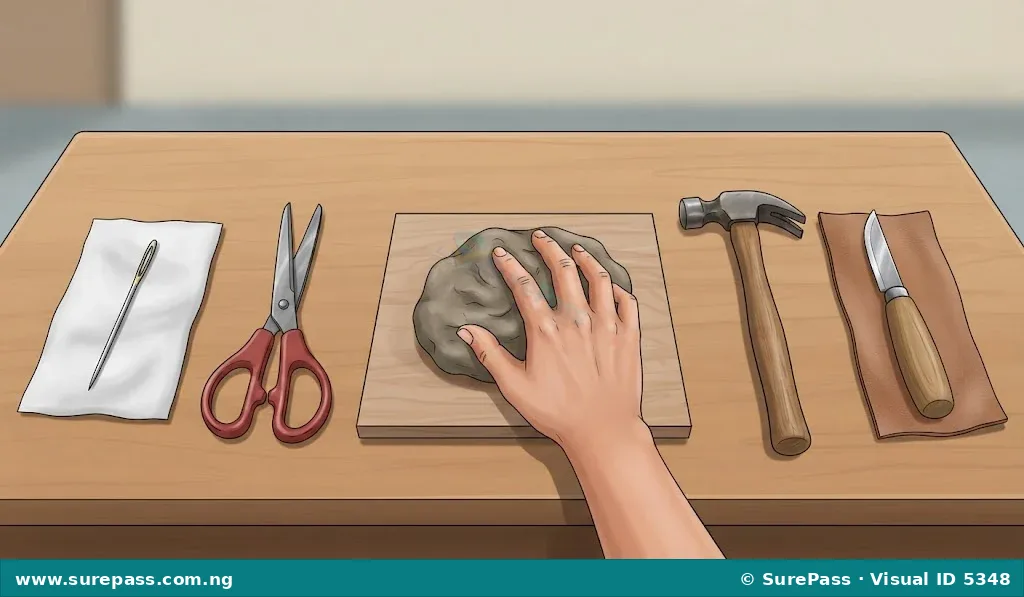
Some common craft tools include:
- Needle: A thin, sharp tool with an eye, used for passing thread through materials for sewing or threading.
- Scissors: A cutting tool with two blades, used for cutting paper, cardboard, fabric, and other soft materials.
- Hands: The most basic and versatile tools, used for moulding, shaping, pinching, and joining materials like clay.
- Hammer: A tool with a heavy head and a handle, used for striking, especially in blacksmithing or for joining materials with nails.
- Carving Tools: Sharp instruments like knives or chisels, used for shaping materials by removing parts, such as in wood or soap carving.
Safety Tip: Always handle sharp tools like needles, scissors, knives, and carving tools with great care. Ask an adult for help or supervision when using potentially dangerous tools.
Selecting Suitable Materials for Craft Making
Choosing the correct materials is a crucial step in craft making. The suitability of a material depends on the type of craft, the method to be used, and the desired appearance and function of the finished product.
When selecting materials, consider the following:
- Purpose of the Craft: Is the craft meant to be decorative, useful, or both? For example, a strong material like clay is suitable for a useful pot, while paper is good for a decorative card.
- Method of Making: Different methods require specific materials. Moulding needs pliable materials like clay or POP. Weaving requires flexible materials like straw or wool. Constructing often uses rigid materials like cardboard or paper.
- Durability: How long should the craft last? If it needs to be strong and long-lasting, choose durable materials.
- Availability and Cost: Are the materials easy to find and affordable? Many crafts use local and recycled materials.
- Texture and Colour: The look and feel of the material contribute to the final appearance of the craft.
For example, if making a woven mat, straw or wool would be suitable because they are flexible and can be interlaced. If making a small sculpture, clay or POP would be suitable because they can be easily shaped and hardened.
Methods of Making Crafts
Crafts are made using various techniques or methods. Each method involves specific actions to transform materials into a finished product.
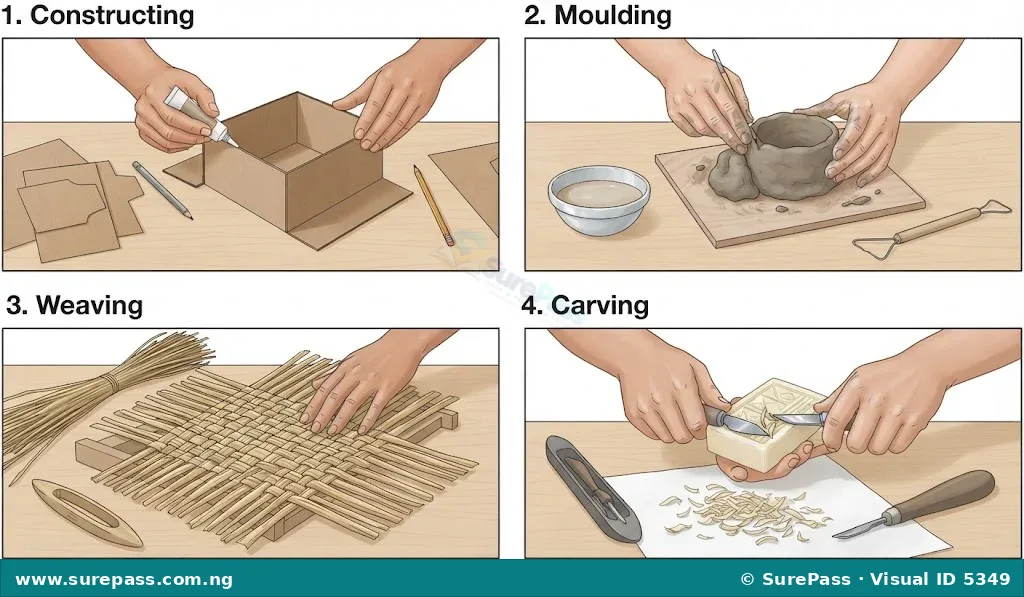
The different methods of making crafts include:
- Constructing: This method involves joining different pieces of material together to build a new form or object. Materials like paper, cardboard, and gum are often used in constructing. Examples include paper models, cardboard houses, or collages.
- Moulding: Moulding involves shaping a soft, pliable material with the hands or by pressing it into a mould. Materials such as clay, sand, or POP are commonly used. Examples include clay pots, sculptures, or plaster casts.
- Weaving: Weaving is the process of interlacing two or more sets of materials (threads, fibres, or strips) to form a fabric or mat. Straw, wool, and raffia are common materials for weaving. Examples include woven baskets, mats, or fabric.
- Blacksmithing: This is the craft of shaping metal, usually iron, by heating it in a forge and then hammering, bending, and cutting it. Blacksmithing requires specialised tools and high temperatures. Examples include metal gates, tools like hoes and cutlasses, or decorative ironwork.
- Carving: Carving involves shaping a material by cutting away parts of it using sharp tools. Wood, soap, and stone are common materials for carving. Examples include carved wooden figures, soap sculptures, or stone ornaments.
- Threading: Threading involves passing a thread, string, or wire through beads, small objects, or other materials to create a sequence or pattern. Needles and threads are essential tools for this method. Examples include beaded necklaces, bracelets, or decorative garlands.
- Firing: Firing is a process where moulded clay objects are heated to very high temperatures in a special oven called a kiln. This process makes the clay hard, durable, and waterproof. Examples include ceramic pots, plates, and tiles.
Practical Activity: Moulding a Clay Pot
This activity will guide you through making a simple pot using the moulding method with clay. This helps to develop your skill in selecting and using materials for craft making.
The required materials are:
- A lump of soft clay
- A flat surface (e.g., a table covered with newspaper)
- A small bowl of water
- A simple blunt tool (e.g., a plastic knife or a stick) for smoothing (optional)
The procedure involves the following steps:
- Prepare the Clay: Take a lump of clay and knead it with your hands. This removes air bubbles and makes the clay more pliable.
- Form a Ball: Roll the clay into a smooth, round ball in your palms.
- Create the Base: Place the clay ball on your flat surface. Gently press your thumb into the centre of the ball, leaving a thick base at the bottom.
- Shape the Walls: Begin to pinch the clay evenly between your thumb and fingers, slowly rotating the clay as you pinch. Work your way up from the base to create the walls of the pot. Keep the walls even in thickness.
- Smooth the Surface: Dip your fingers lightly in water and gently smooth the outside and inside surfaces of the pot. You can also use a blunt tool to refine the shape and smooth out any rough areas.
- Refine the Rim: Carefully shape the top edge (rim) of your pot to make it even and smooth.
- Dry the Pot: Place your finished clay pot in a cool, dry place away from direct sunlight. Allow it to dry slowly for several days until it is completely hard.
Safety Tip: Keep your work area clean. Wash your hands thoroughly with soap and water after handling clay.



0 comments
Open the discussion when you need it. Comments stay collapsed until requested so the initial article remains light.