


ARTICLE CONTENTSOn this page 6 sections
Music
Performance Objectives
By the end of the lesson, students should be able to:
- define music;
- describe the forms of music;
- create music using percussion instruments.
Meaning of Music
Music is the combination of organized sounds that are pleasant to the ear.
Sound is produced when an object vibrates. However, not all sounds are classified as music. Sounds that are unorganized, irregular, and unpleasant are referred to as noise. Music is distinguished from noise because it possesses structure, rhythm, melody, and harmony, which make it organized and enjoyable to hear.
Forms of Music
Music exists in various forms depending on its purpose, structure, and how it is performed. The major forms of music include:
- Dance Drama: This is a form of drama where the story is told mainly through dance movements accompanied by music. In a dance drama, actors do not rely on spoken words to communicate. Instead, the rhythm, tempo, and mood of the music guide the dancers’ movements, gestures, and facial expressions to convey the plot, emotions, and conflict of the story to the audience. Many traditional Nigerian festival performances are excellent examples of dance drama.
- Sacred Drama: This is a form of musical drama performed for religious, spiritual, or ritual purposes. The music and performance are designed to honor a deity, teach moral lessons, or celebrate religious events. Examples include Christian nativity plays performed with Christmas carols, Easter cantatas, Islamic chants performed during religious gatherings, and traditional ritual dramas performed by priests and devotees during community festivals.
- Secular Music: This is non-religious music created for entertainment, social gatherings, and everyday activities. It is not tied to worship or sacred rituals. Secular music is used to celebrate life events such as weddings, birthdays, housewarming ceremonies, and funerals. Examples of secular music in Nigeria include highlife, afrobeats, juju, fuji, and traditional folk songs sung during storytelling, farming, or community labor.
Percussion Instruments
Percussion instruments are musical instruments that produce sound when they are struck, shaken, scraped, rubbed, or beaten. They are essential for providing rhythm, beat, and tempo in musical compositions.
Common percussion instruments used in schools and communities include:
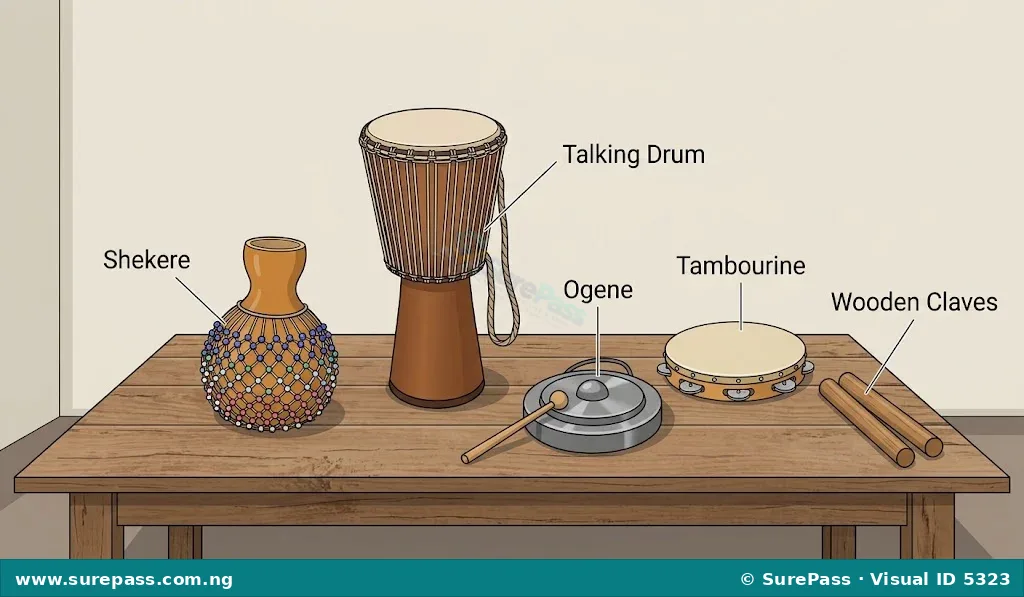
- Drums: These are hollow instruments covered with a stretched membrane or skin. They are struck with hands or sticks to produce rhythmic beats. Examples include the traditional talking drum (gangan) and the conga drum.
- Maracas and Shakers: These are instruments filled with small beads, seeds, or pebbles. They produce sound when shaken. A common Nigerian example is the shekere, which is a gourd covered with a net of beads.
- Gong: This is a metal instrument, often hollow and bell-shaped, that produces a sharp, piercing sound when struck with a wooden or metal stick. In Nigeria, the twin metal gong is commonly known as the ogene.
- Tambourine: This is a shallow, circular drum with small metal jingles attached around the frame. It can be struck, shaken, or rubbed to produce sound.
- Bell: This is a hollow metal instrument that vibrates and rings when struck by an internal clapper or an external striker.
- Claves: These are a pair of short, thick wooden sticks that produce a bright, clicking sound when struck together.
How to Create Simple Music Using Percussion Instruments
Creating simple music involves organizing different rhythmic patterns to make a cohesive and pleasant sound. This practical activity can be performed in groups using available percussion instruments.
The required materials are:
- Drums
- Shakers or maracas
- Metal gongs or bells
- Wooden claves
The procedure involves the following steps:
- Form a group: Divide the class into small groups of four to six students.
- Assign instruments: Distribute the available percussion instruments among the group members so that each student has an instrument to play.
- Establish the pulse (The Beat): The student holding the claves or the metal gong should start by playing a steady, continuous beat. This serves as the foundation or heartbeat of the music. For example, strike the claves evenly: one, two, three, four.
- Introduce the shaker rhythm: The student with the shaker or maracas should join in, playing a faster, lighter pattern that fits between the steady beats of the claves. For example, shake the instrument twice for every single strike of the claves.
- Add the drum pattern: The drummer should enter next, playing a deeper, complementary rhythm. The drum beats should emphasize the first and third beats of the steady pulse to give the music weight and structure.
- Maintain tempo and volume: All players must listen to one another to ensure they do not play too fast or too loud. The sounds must blend together harmoniously rather than competing with each other.
- End the performance: The group leader should give a visual signal, such as raising a hand, to indicate that all players should strike their instruments one last time together on the final beat and stop.


0 comments
Open the discussion when you need it. Comments stay collapsed until requested so the initial article remains light.