


ARTICLE CONTENTSOn this page 6 sections
Cultural Values in a Child
Performance Objectives
By the end of the lesson, students should be able to:
- explain the meaning of cultural values;
- state the importance of cultural values in a child.
Meaning of Cultural Values
Cultural values are the core beliefs, ideas, customs and moral standards that a society holds dear and passes down from one generation to another.
These values guide the behaviour, choices and interactions of individuals within a community. They define what is considered right, acceptable, honourable and beneficial to the society. In Nigeria, cultural values form the foundation of community life, shaping how children grow up to become responsible members of their families and the wider public.
Core Cultural Values in a Child
Societies encourage children to develop specific positive traits that reflect their cultural heritage. The key cultural values expected in a child include:
- Honesty: This is the quality of being truthful, sincere and trustworthy in all actions and speech. An honest child does not lie, steal or cheat. Honesty builds trust between children, parents, teachers and peers.
- Respect: This is the act of showing high regard, honour and consideration for elders, peers, authority figures and community rules. In Nigerian culture, respect is often demonstrated through traditional greetings, polite language and helpfulness.
- Hard Work: This is the dedication of effort, energy and diligence to complete tasks, academic studies or household chores successfully. It is highly valued because it leads to self-reliance, success and community development.
- Good Manners: These are polite and socially acceptable behaviours that show consideration for others. Examples include saying “please” and “thank you”, using the right hand to give or receive items, and speaking softly.
- Punctuality: This is the habit of arriving at a place or completing a task at the designated or agreed time. It shows respect for other people’s time and demonstrates self-discipline.
Observe the image below showing a child demonstrating positive cultural values through action.

Importance of Cultural Values in a Child
The cultivation of cultural values in children is essential for both personal growth and the well-being of the entire community.
The main reasons why cultural values are important in a child include:
- Character Development: Cultural values help to build a strong moral character, making the child honest, reliable and disciplined.
- Social Harmony: Children who practice respect and good manners promote peace, cooperation and mutual understanding within the family and community.
- Academic and Personal Success: Values like hard work and punctuality encourage children to study diligently and manage their time effectively, leading to better academic performance.
- Preservation of Heritage: Practicing cultural values ensures that the positive traditions and customs of the society are preserved for future generations.
- Good Reputation: A well-behaved child brings honour and respect to their family, school and community.
Expression of Cultural Values through Attire
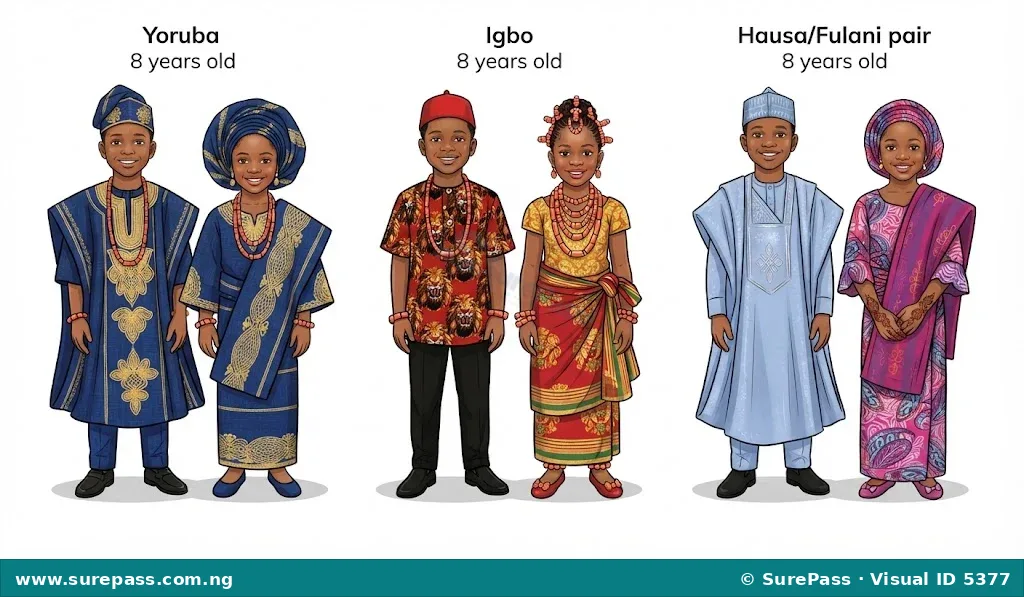
Cultural values are not only expressed through behaviour but also through physical appearance and clothing. Traditional attire is a visible expression of cultural identity, respect for tradition and modesty. Wearing traditional attire during festivals, ceremonies or designated cultural days in school shows pride in heritage and respect for the community’s values.
Examples of traditional cultural attires in Nigeria include:
- Yoruba Attire: Men wear “Agbada”, “Buba” and “Sokoto” with a cap called “Fila”, while women wear “Iro” (wrapper), “Buba” (blouse) and “Gele” (head tie).
- Igbo Attire: Men wear the “Isiagu” shirt with trousers or wrappers and a red or black cap, while women wear beautiful wrappers, blouses and head ties, often adorned with coral beads.
- Hausa and Fulani Attire: Men wear the “Babban Riga” (a large flowing gown) with a decorated cap, while women wear “Abaya” or colourful wrappers with matching blouses and hijabs or shawls.
Look at the diagram below showing different traditional attires in Nigeria.


0 comments
Open the discussion when you need it. Comments stay collapsed until requested so the initial article remains light.