



ARTICLE CONTENTSOn this page 5 sections
Art Professionals
Performance Objectives
By the end of the lesson, students should be able to:
- describe the meaning of professional artist;
- list types of art professionals;
- explain characteristics of works of professional artists (e.g. sculptor, painter, textile designer, graphic artist, ceramist, etc).
Meaning of a Professional Artist
A professional artist is an individual who has acquired specialized training, skills and knowledge in any branch of the creative or performing arts, and practices art as a career or primary means of livelihood.
Unlike hobbyists who create art solely for leisure, professional artists undergo formal education in schools, colleges or universities, or complete long-term apprenticeships under established masters. They produce works of high quality, exhibit their creations, perform for audiences, and receive financial compensation for their expertise. Professional artists contribute significantly to the economy by establishing studios, workshops, and creative businesses.
Types of Art Professionals
Art professionals are broadly classified into two main categories based on the nature of their work and how the audience experiences their creations:
- Visual artists
- Non-visual artists
Visual Art Professionals
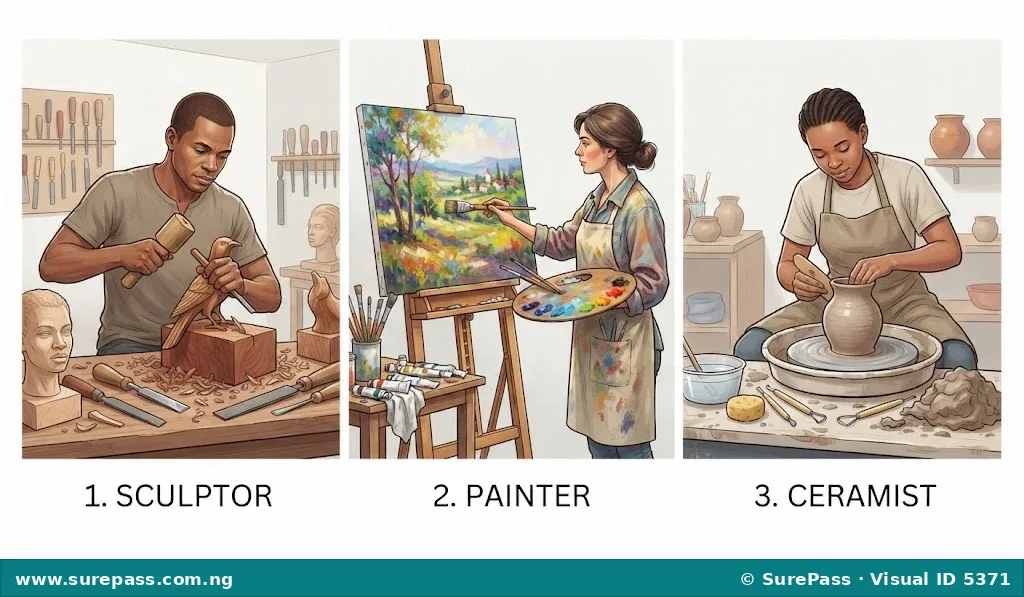
Visual artists create works of art that are primarily appreciated through the senses of sight and touch. These professionals work with physical or digital mediums to produce tangible objects or visual designs. The main types of visual art professionals include:
- Sculptors: Professionals who create three-dimensional forms by carving wood or stone, modeling clay, or casting metal.
- Painters: Professionals who apply pigments, oils, or acrylics to surfaces such as canvas, paper, or walls to create two-dimensional images.
- Textile Designers: Professionals who design patterns, prints, and structures for fabrics and clothing materials.
- Graphic Artists: Professionals who design visual concepts, logos, advertisements, and digital layouts using computer software or manual drawing tools.
- Ceramists: Professionals who shape clay into functional or decorative objects, which are then fired in a kiln to make them durable.
- Fashion Designers: Professionals who design and create clothing, footwear, and accessories.
Observe the image below to see different visual art professionals at work.
Non-Visual Art Professionals
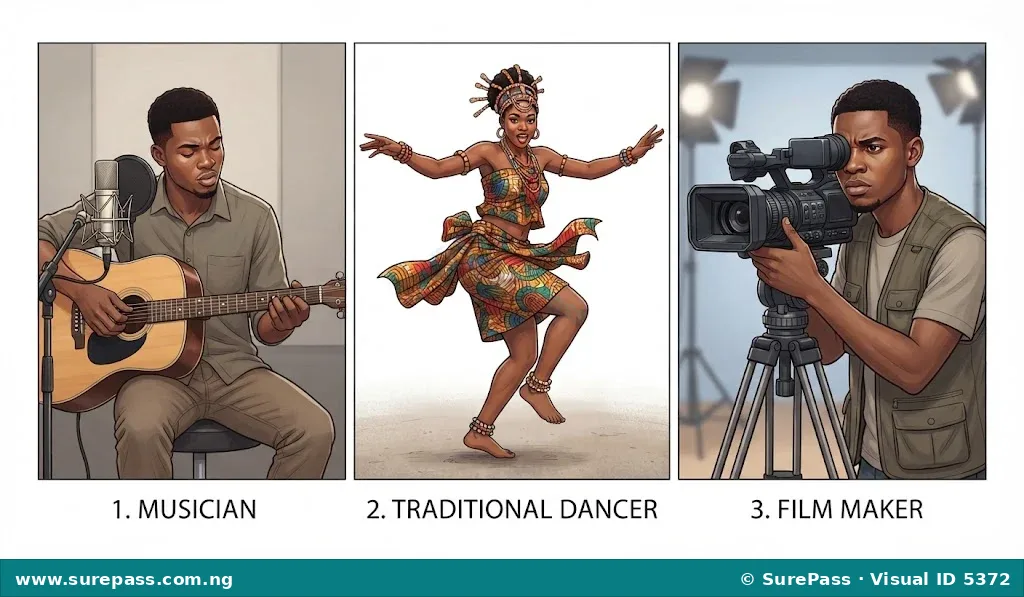
Non-visual artists, often associated with the performing and literary arts, create works that are primarily appreciated through the senses of hearing, movement, and performance. The main types of non-visual art professionals include:
- Musicians: Professionals who compose, perform, or conduct vocal or instrumental music.
- Film Makers: Professionals who direct, produce, and edit motion pictures, documentaries, or television shows.
- Dramatists: Professionals who write, direct, or act in plays and theatrical performances.
- Dancers: Professionals who express ideas, stories, or emotions through rhythmic body movements, often accompanied by music.
Observe the image below to see different non-visual art professionals performing.
Characteristics of Works of Professional Artists
The works produced by different art professionals possess distinct characteristics that distinguish them in their respective fields. These characteristics are determined by the materials used, the dimensions of the work, and the purpose of the creation.
The main characteristics of professional art works include:
- Sculptures: These works are three-dimensional, meaning they have height, width, and depth. They can be viewed from multiple angles and are made from durable materials like wood, bronze, marble, or clay. They often represent human figures, animals, or abstract concepts.
- Paintings: These works are two-dimensional, possessing only height and width. They use colour, line, texture, and light on flat surfaces to represent realistic or abstract ideas. They are usually framed and hung on walls for exhibition.
- Textile Designs: These works feature repeated patterns, motifs, and vibrant colours on fabrics. They are often functional, used for clothing, curtains, or upholstery, and can be produced through methods like weaving, dyeing (such as traditional Nigerian Adire), or printing.
- Graphic Designs: These works combine text, images, and symbols to communicate specific messages. They are highly functional, clean, and often digital, appearing in logos, posters, books, packaging, and websites.
- Ceramic Works: These works are made of clay and are hardened by heat. They include pottery, vases, plates, and tiles, which often combine functional utility with decorative surface glazes.
- Fashion Designs: These works are wearable art forms that fit the human body. They reflect cultural trends, personal style, and functional comfort, using various fabrics, stitches, and cuts.
- Musical Works: These works are auditory, consisting of organized sounds, rhythms, melodies, and harmonies. They exist in time rather than space and are experienced through hearing.
- Films: These works are audiovisual, combining moving images, spoken dialogue, sound effects, and music to tell stories or document events on screens.
- Dramatic Works: These works are live performances based on written scripts. They involve human actors, dialogue, costumes, stage lighting, and physical action to convey stories to a live audience.
- Dance Works: These works are physical and kinetic, using choreographed body movements, gestures, and rhythm to communicate feelings or cultural traditions.




0 comments
Open the discussion when you need it. Comments stay collapsed until requested so the initial article remains light.