


ARTICLE CONTENTSOn this page 6 sections
Apprenticeship and Career Opportunities in Creative and Design Arts
Performance Objectives
By the end of the lesson, students should be able to:
- explain apprenticeship;
- state the importance of apprenticeship;
- identify apprenticeship opportunities in creative and design arts;
- list the career opportunities available in creative art.
Meaning of Apprenticeship
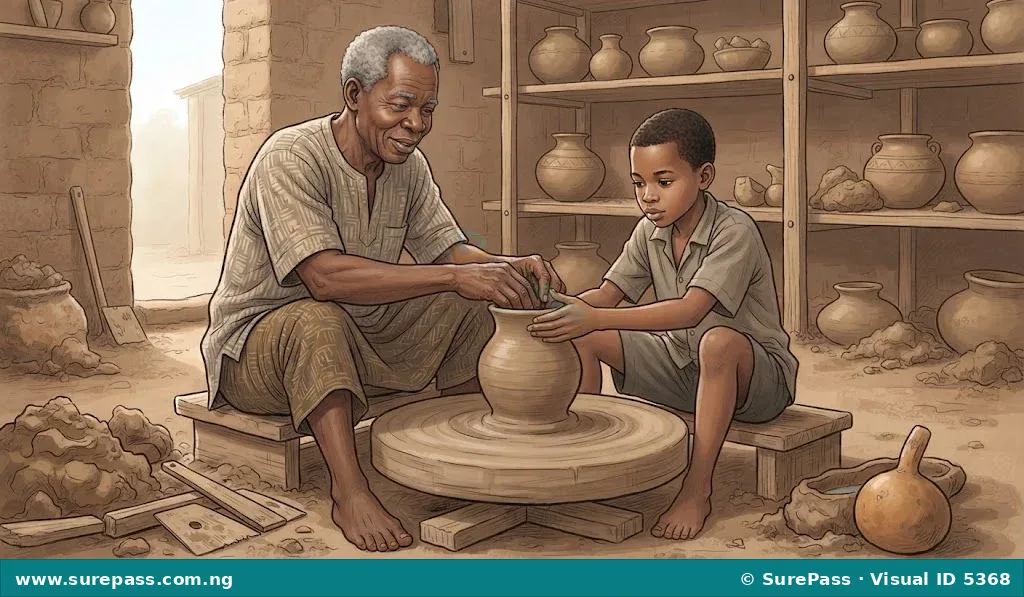
An apprenticeship is a formal or informal system of training where a person learns a practical trade, art, or craft directly from a skilled and experienced master practitioner.
In this system, the learner, who is called an apprentice, works under the close supervision of the master for a agreed period. This training allows the apprentice to gain hands-on experience, practical skills, and business knowledge required to run an independent workshop or studio in the future. In Nigeria, apprenticeship is a highly respected method of skill acquisition that exists in both traditional craft industries and modern design sectors.
Importance of Apprenticeship
The apprenticeship system plays a vital role in the development of individuals and the society. It serves as a bridge between theoretical knowledge and practical application.
The main reasons why apprenticeship is important include:
- Practical Skill Acquisition: It provides hands-on training that cannot be fully acquired from textbooks alone, allowing learners to master specific artistic techniques.
- Preservation of Cultural Heritage: Traditional Nigerian crafts, such as pottery, wood carving, and indigenous textile weaving like Aso-Oke and Adire, are preserved and passed down from one generation to another through apprenticeship.
- Entrepreneurship and Self-Employment: Apprentices learn not only the technical skills but also the business management aspects of the craft, such as customer relations, pricing, and sourcing materials, which prepares them to start their own businesses.
- Job Creation: By training young people, the apprenticeship system reduces unemployment and empowers individuals to become employers of labour.
- Affordable Learning Pathway: It offers a cheaper alternative to formal tertiary education for individuals who want to acquire practical, income-generating skills in the creative industry.
Apprenticeship Opportunities in Creative and Design Arts
The creative and design arts industry in Nigeria offers numerous areas where individuals can seek apprenticeship. These opportunities exist in both local craft centres and modern urban design studios.
Common apprenticeship opportunities in the creative and design arts include:
- Fashion Design and Tailoring Outfits: Apprentices learn garment making, pattern drafting, embroidery, and fashion illustration in established fashion houses.
- Textile Design and Weaving Centres: Opportunities exist in local centres to learn traditional tie-and-dye (Adire) production, batik, and handloom weaving.
- Pottery and Ceramic Studios: Learners train under master ceramicists to master clay preparation, wheel throwing, hand-building techniques, glazing, and kiln firing.
- Woodworking and Carving Workshops: Apprentices work with master carvers to learn furniture design, relief carving, and sculpture production.
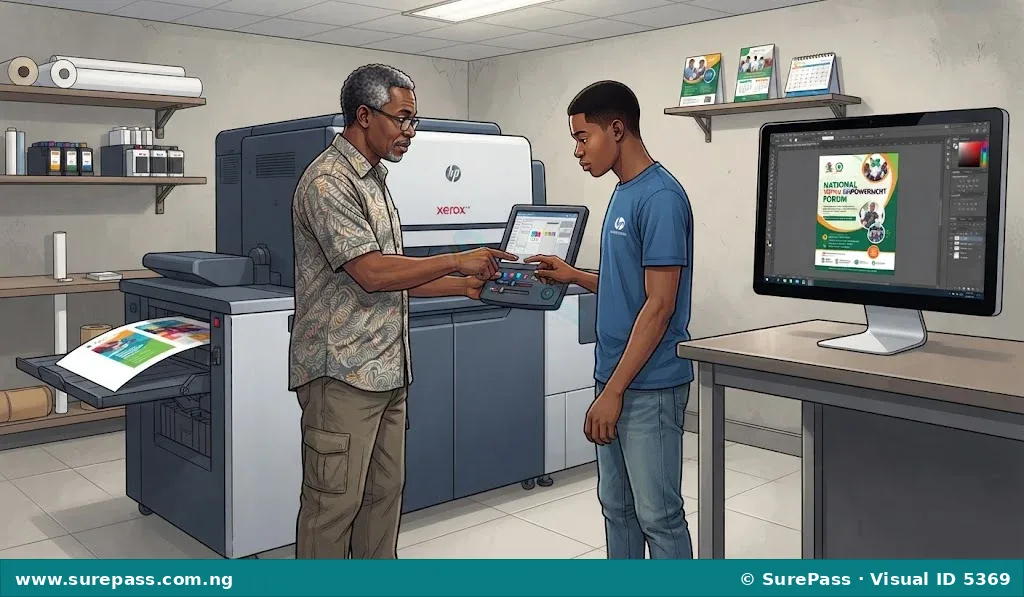
- Graphic Design and Printing Presses: Young creatives train in digital design studios and printing houses to learn layout design, branding, and the operation of printing machinery.
- Metal Smithing and Welding Workshops: Apprentices learn blacksmithing, metal fabrication, and the creation of metal sculptures and decorative gates.
Career Opportunities in Creative Art
The creative art industry is vast and offers diverse professional career paths for individuals who have acquired the necessary skills through formal education, apprenticeship, or both.
The major career opportunities available in the creative art industry include:
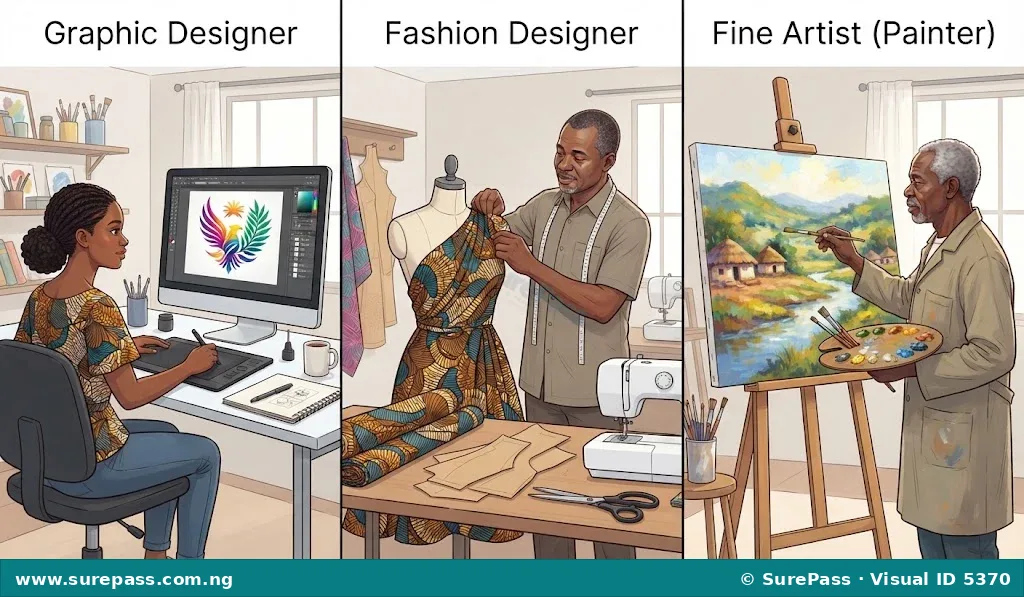
- Fine Artist (Painter or Sculptor): Creating original drawings, paintings, or sculptures for exhibition, public display, and sale to art collectors.
- Graphic Designer: Designing visual concepts, logos, advertisements, brochures, and digital media layouts for companies and organizations.
- Fashion Designer: Creating original clothing designs, footwear, and accessories, and managing fashion brands.
- Ceramicist or Studio Potter: Producing functional tableware, decorative clay items, and ceramic tiles for homes and offices.
- Art Educator or Teacher: Teaching cultural and creative arts in primary schools, secondary schools, or tertiary institutions.
- Interior Decorator: Planning, designing, and decorating the interior spaces of homes, offices, and public buildings to make them beautiful and functional.
- Illustrator: Drawing pictures for storybooks, textbooks, magazines, and digital animations.
- Industrial Designer: Designing the physical appearance and usability of manufactured products, such as automobiles, electronics, and household appliances.



0 comments
Open the discussion when you need it. Comments stay collapsed until requested so the initial article remains light.