



ARTICLE CONTENTSOn this page 5 sections
Introduction to Choreography
Performance Objectives
By the end of the lesson, students should be able to:
- explain the meaning of choreography;
- state the principles of choreography;
- create movements or dance steps for a choreography.
Meaning of Choreography
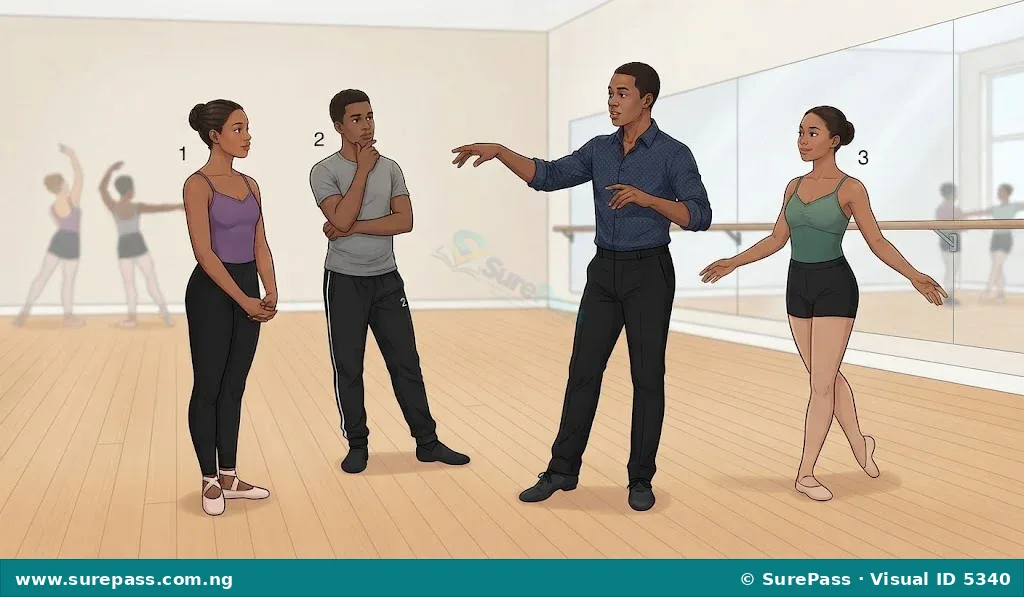
Choreography is the art of creating and arranging movements for a dance.
It involves designing dance steps, patterns, and formations that dancers perform to music or a specific rhythm. A person who creates choreography is called a choreographer. The choreographer decides what movements the dancers will make, where they will move on the stage, and how their movements will tell a story or express an idea.
Principles of Choreography
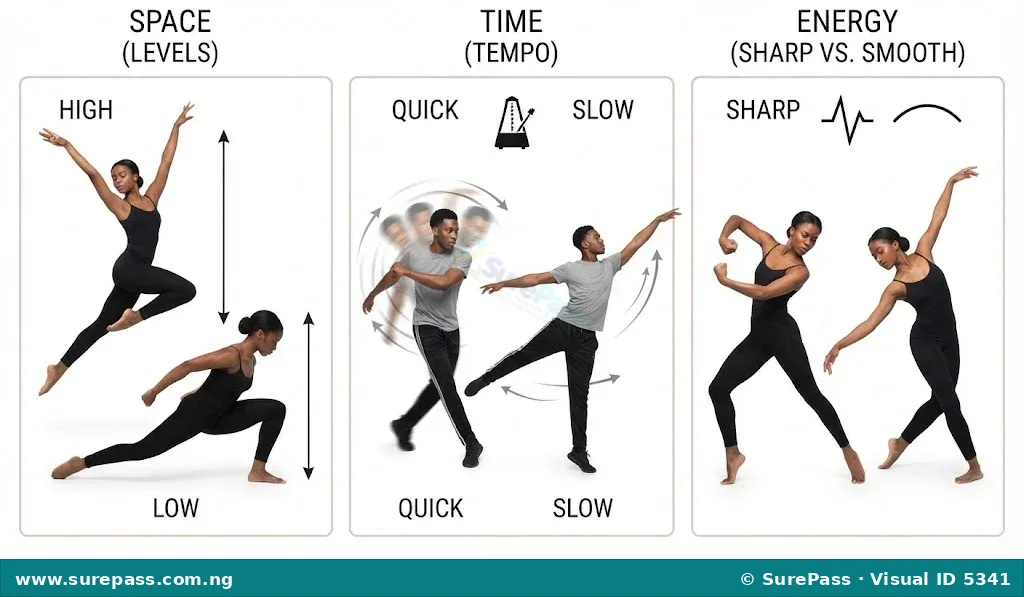
Choreographers use certain basic ideas, called principles, to create interesting and meaningful dances. These principles help to organise movements and make the dance clear and exciting for the audience. For JSS1, we will focus on some fundamental principles:
-
Space: This principle deals with how dancers use the area around them. It includes:
- Levels: Movements can be high (jumping, reaching), medium (standing, walking), or low (sitting, crawling).
- Directions: Dancers can move forward, backward, sideways, or turn in different directions.
- Pathways: Dancers can move in straight lines, curved paths, or zig-zag patterns on the floor.
- Shapes: Dancers can create different shapes with their bodies, such as wide, narrow, twisted, or symmetrical shapes.
-
Time: This principle relates to the speed and rhythm of movements. It includes:
- Tempo: How fast or slow the movements are.
- Rhythm: The pattern of strong and weak beats in the music, which guides the timing of the movements.
- Duration: How long a movement or a sequence of movements lasts.
-
Energy/Force: This principle describes the quality or feeling of the movement. It includes:
- Strong or Light: Movements can be powerful and forceful, or gentle and delicate.
- Sharp or Smooth: Movements can be sudden and quick, or flowing and continuous.
- Tense or Relaxed: Movements can show tension or be completely relaxed.
-
Relationship: This principle describes how dancers interact with each other or with objects in the dance space. It includes:
- Formations: Dancers can arrange themselves in lines, circles, squares, or other patterns.
- Mirroring: Dancers can perform the same movement facing each other, like a reflection.
- Leading and Following: One dancer can initiate a movement, and others follow.
Creating Movements for a Choreography
Creating movements for a dance involves imagination and understanding how to use the principles of choreography. Even simple movements can become part of an exciting dance when arranged thoughtfully. This skill allows a person to express ideas and feelings through physical actions.
How to Create a Simple Choreographed Dance
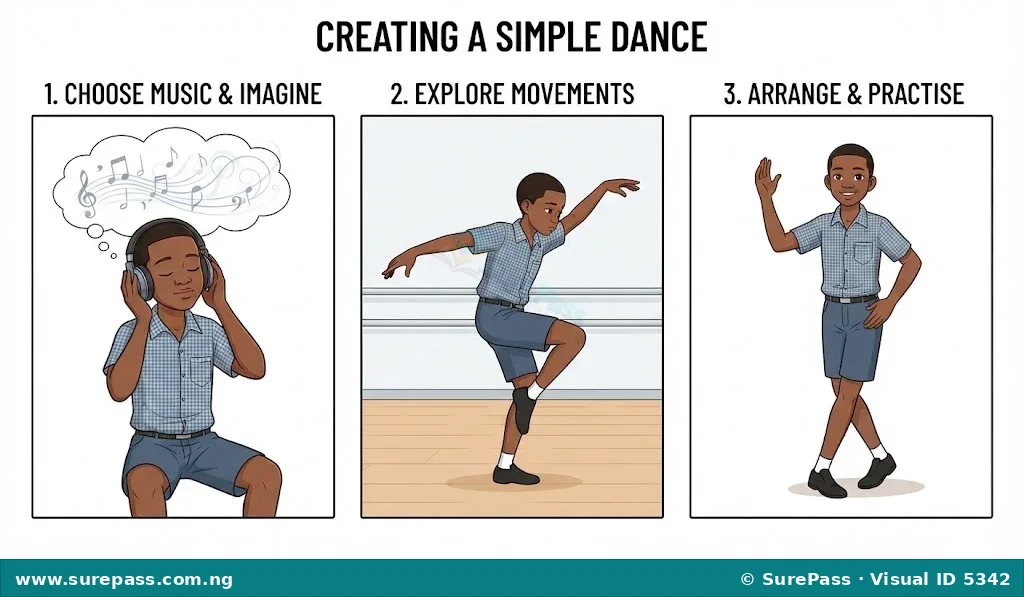
The procedure for creating a simple dance involves the following steps:
- Choose Your Music: Select a piece of music that you enjoy and that has a clear rhythm. Listen to the music several times to understand its mood, speed (tempo), and how it makes you feel. Does it make you want to move fast or slow? Is it happy or serious?
-
Explore Basic Movements: Start by moving freely to the music. Do not worry about perfect steps at first. Try different movements with your body:
- Move your arms (swinging, reaching, bending).
- Move your legs (stepping, kicking, bending knees).
- Move your head and torso (turning, bending, swaying).
- Try different levels (standing tall, crouching low, jumping).
- Move in different directions (forward, backward, sideways).
-
Develop Specific Steps: From your free movements, choose a few that you like and that fit the music. Try to make them clear and repeatable. For example, you might choose:
- A simple step-touch.
- A gentle sway from side to side.
- A small jump.
- A turn.
-
Arrange the Movements (Using Principles): Now, put your chosen movements together in a sequence. Think about the principles of choreography:
- Space: Where will you move? Will you stay in one spot, or travel across the floor? Will you make big or small shapes with your body?
- Time: How fast or slow will each movement be? Will some movements be quick and others held longer?
- Energy: Will your movements be strong and sharp, or soft and flowing?
- Relationship (if with others): If you are dancing with others, how will you stand in relation to them? Will you form a line, a circle, or move apart and come together?
-
Practise and Refine: Perform your sequence of movements to the music. Watch yourself in a mirror if possible.
- Does it flow well?
- Does it match the music?
- Are there any parts that feel awkward?
- Adjust your movements, speed, or energy until you are happy with the result.
- Repeat the sequence many times to remember it and make it smooth.



0 comments
Open the discussion when you need it. Comments stay collapsed until requested so the initial article remains light.