



ARTICLE CONTENTSOn this page 7 sections
Drama
Performance Objectives
By the end of the lesson, students should be able to:
- explain the meaning of drama;
- list the categories of drama;
- describe forms of drama;
- list the personnel involved in drama;
- participate in a dramatic presentations.
Meaning of Drama
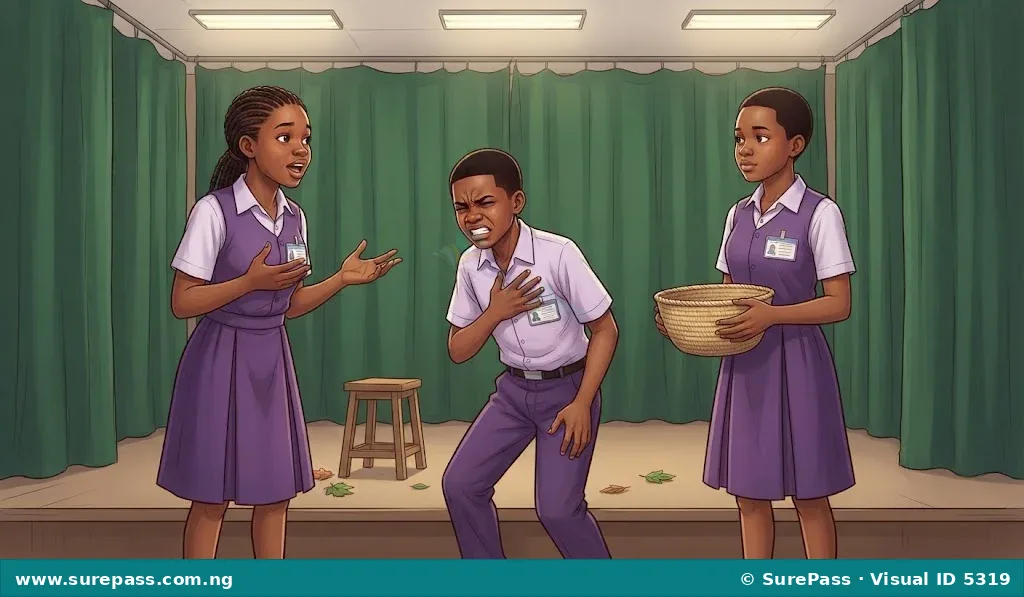
Drama is a type of performance where a story is told through actions and dialogue, usually by actors on a stage.
It is a way of showing real-life situations, imaginary events, or historical stories to an audience. Drama can be seen in school plays, community theatre, and even on television or in films. It helps people understand different feelings, ideas, and experiences.
Categories of Drama
Drama can be divided into different categories based on how the story and dialogue are prepared. The two main categories are scripted drama and non-scripted drama.
Scripted Drama
Scripted drama is a performance where actors follow a written text called a script.
The script contains all the dialogue (what the characters say) and stage directions (instructions for actions, movements, and settings). Actors learn their lines and movements from the script, ensuring that the story is told exactly as the writer intended. School plays, many television shows, and most professional theatre productions are examples of scripted drama.

Non-Scripted Drama
Non-scripted drama is a performance where there is no pre-written script.
Actors create their dialogue and actions spontaneously, or on the spot, often based on a general idea, theme, or situation. This type of drama is also known as improvisation. It requires actors to be quick-thinking and creative. Role-playing games, some traditional storytelling performances, and spontaneous skits are examples of non-scripted drama.
Forms of Drama
Drama takes various forms, each with its own style and purpose. These forms help to classify plays based on their content, mood, and how they affect the audience.
Tragedy
Tragedy is a form of drama that tells a serious story, often about a main character who faces great difficulties or a sad ending.
These plays often explore serious themes like loss, pain, or difficult choices. The audience usually feels pity or sadness for the characters.
Comedy
Comedy is a form of drama that aims to entertain and make the audience laugh.
Comedies usually have a lighthearted tone, funny situations, and a happy ending. They often use humour to show everyday life or to make fun of certain behaviours.
Static Drama
Static drama is a form of drama where there is little physical movement or action on stage.
The focus is mainly on the dialogue, the characters’ thoughts, or their feelings. Characters might sit or stand in one place for long periods, and the story unfolds mostly through their conversations.
Farce
Farce is a type of comedy that uses exaggerated, silly situations, physical humour, and misunderstandings to create laughter.
The plots are often very complicated and unbelievable, with characters getting into ridiculous predicaments. The main goal of farce is to make the audience laugh loudly through slapstick and absurd events.
Melodrama
Melodrama is a form of drama that features exaggerated emotions, clear good and evil characters, and exciting, often unrealistic events.
The stories in melodramas are usually very dramatic, with heroes, villains, and damsels in distress. Music is often used to highlight the strong emotions and dramatic moments.
Personnel in Drama
Many people work together to bring a drama production to life. Each person has an important role to play.
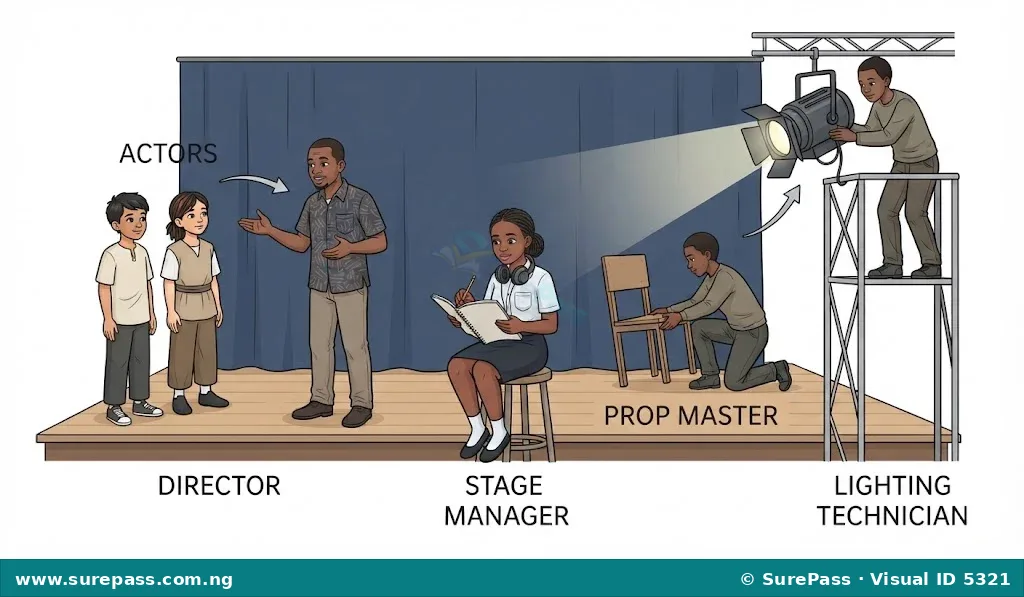
- Actors: These are the people who perform the roles of the characters in the play. They speak the dialogue and act out the story.
- Director: The director is in charge of the entire production. They guide the actors, decide how the play should look and feel, and ensure everyone works together to tell the story effectively.
- Playwright: For scripted drama, the playwright is the person who writes the script, including the dialogue and stage directions.
- Stage Manager: The stage manager organises everything backstage. They make sure props are in place, actors are ready, and cues for lighting and sound are given at the right time.
- Costume Designer: This person creates or chooses the clothes (costumes) that the actors wear to help them look like their characters.
- Set Designer: The set designer creates the scenery and background for the stage, which helps to show where the story is taking place.
- Lighting Designer: This person plans and controls the lights on stage to create different moods and highlight specific areas or characters.
- Sound Engineer: The sound engineer manages all the sound effects and music used in the play.
- Audience: The audience consists of the people who watch the drama. Their reactions and presence are very important to a performance.
Participating in a Simple Drama Activity
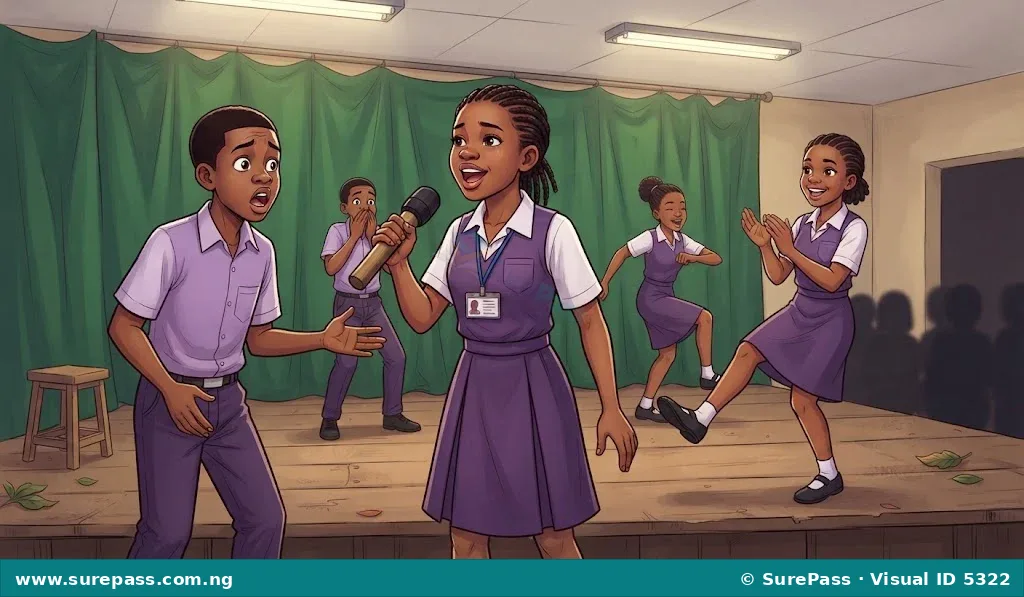
Participating in drama involves using your body, voice, and imagination to bring a story or character to life. It helps to develop confidence, teamwork, and creative expression. This section will guide you on how to perform acting, singing, and dancing in a simple drama.
How to Act in a Drama
Acting involves taking on the role of a character and behaving as that character would. It requires using your voice, facial expressions, and body language.
The procedure involves the following steps:
- Understand Your Character: Read about your character in the script or listen to the description. Think about how they feel, what they want, and how they would react in different situations.
- Use Your Voice: Speak clearly and loudly enough for the audience to hear. Change your tone and speed to show your character’s emotions (e.g., happy, sad, angry).
- Show Emotions with Your Face: Use your facial expressions to show what your character is feeling. A smile for happiness, a frown for sadness, or wide eyes for surprise.
- Use Your Body: Move your body like your character. Stand tall if they are confident, slouch if they are shy, or make big gestures if they are excited.
- Interact with Others: Listen to what other characters say and react naturally as your character would.
How to Sing in a Drama
Sometimes, drama includes songs to express feelings or move the story forward. Singing in drama means performing these songs with emotion and clarity.
The procedure involves the following steps:
- Learn the Song: Practise the melody and words of the song until you know them well.
- Sing Clearly: Open your mouth properly and project your voice so that the words are understandable.
- Express Emotion: Sing with feeling that matches the song’s message. If the song is sad, sing with a sad tone. If it’s joyful, sing with energy.
- Combine with Acting: While singing, continue to use your facial expressions and body language to show your character’s emotions and actions.
How to Dance in a Drama
Dancing in drama can add excitement, show celebration, or express feelings without words. It involves moving your body in a rhythmic and expressive way.
The procedure involves the following steps:
- Understand the Dance: Learn the dance steps and movements that are part of the drama.
- Move with Rhythm: Follow the beat of the music. Your movements should match the speed and mood of the song.
- Use Your Whole Body: Engage your arms, legs, and body to make the dance expressive.
- Show Character: Even while dancing, remember your character. Your dance movements can show if your character is happy, angry, or playful.
- Practise Regularly: Regular practice helps you remember the steps and perform them smoothly and confidently.





0 comments
Open the discussion when you need it. Comments stay collapsed until requested so the initial article remains light.